In short
- Reaches 25–35 m; a tree for parks and large plots, not for a small garden.
- Casts the deepest shade in the Polish forest — almost nothing grows under a mature beech.
- Young specimens and hedges show marcescence — they hold their brown leaves through the winter.
- Requires well-drained soil; tolerates neither waterlogging nor drought (shallow roots).
- Beech mast is slightly toxic when raw (fagin); edible after roasting.
Botanical data
- Family
- Fagaceae (Fagaceae)
- Height
- 25–35 m
- Width
- 15–25 m
- Habit
- Spreading
- Growth rate
- Slow
- Position
- Full sun, Partial shade, Shade
- Soil
- Humus-rich, Loamy, Chalky
- pH reaction
- pH 5–7.5
- Moisture
- Moderate
- Bloom
- April–May
- Hardiness
- USDA 4a–7b
- Propagation
- From seed, By layering
Characteristics
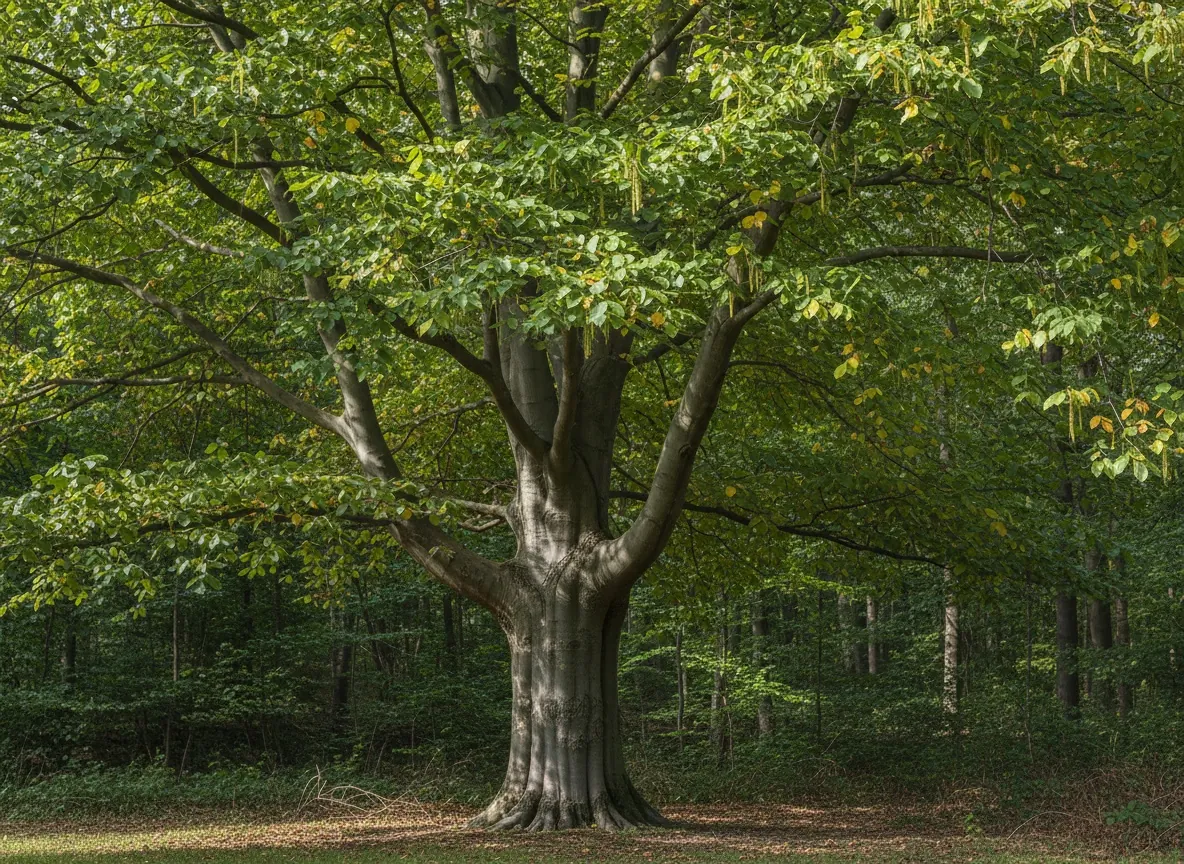
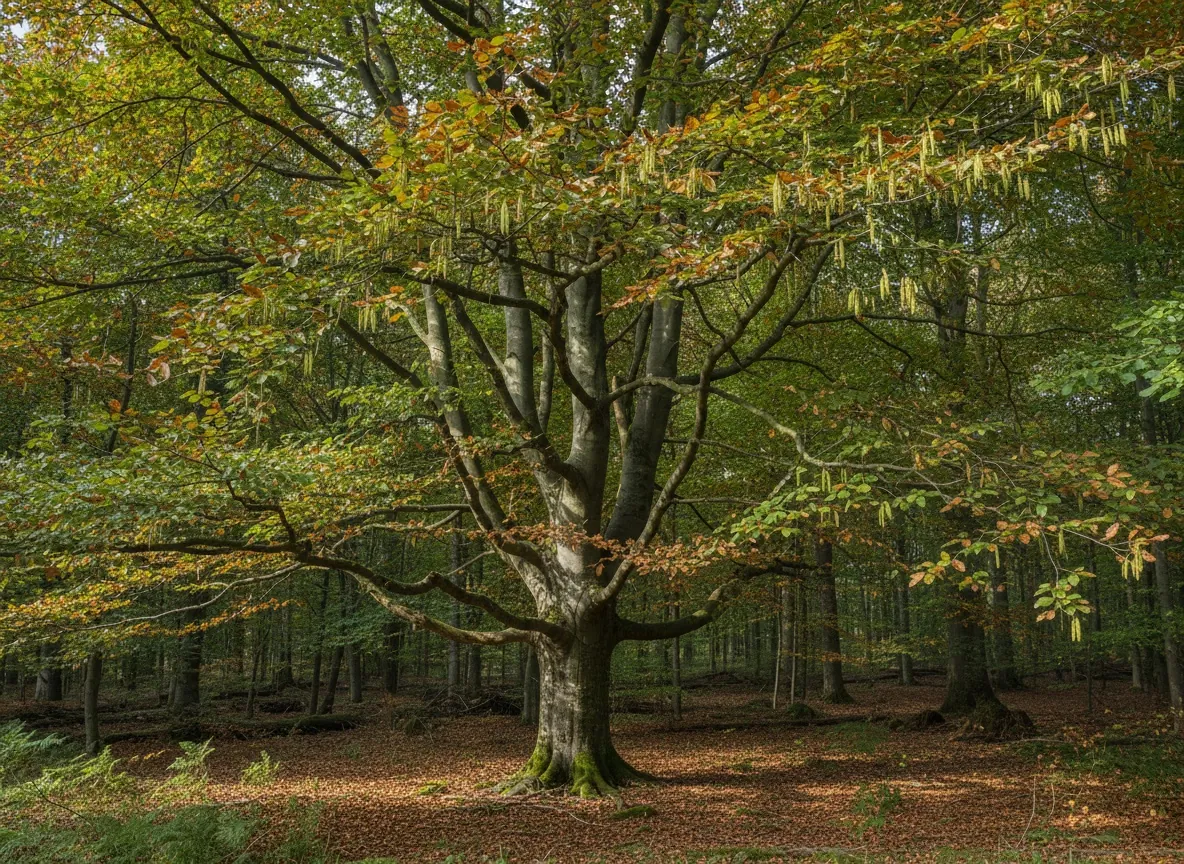
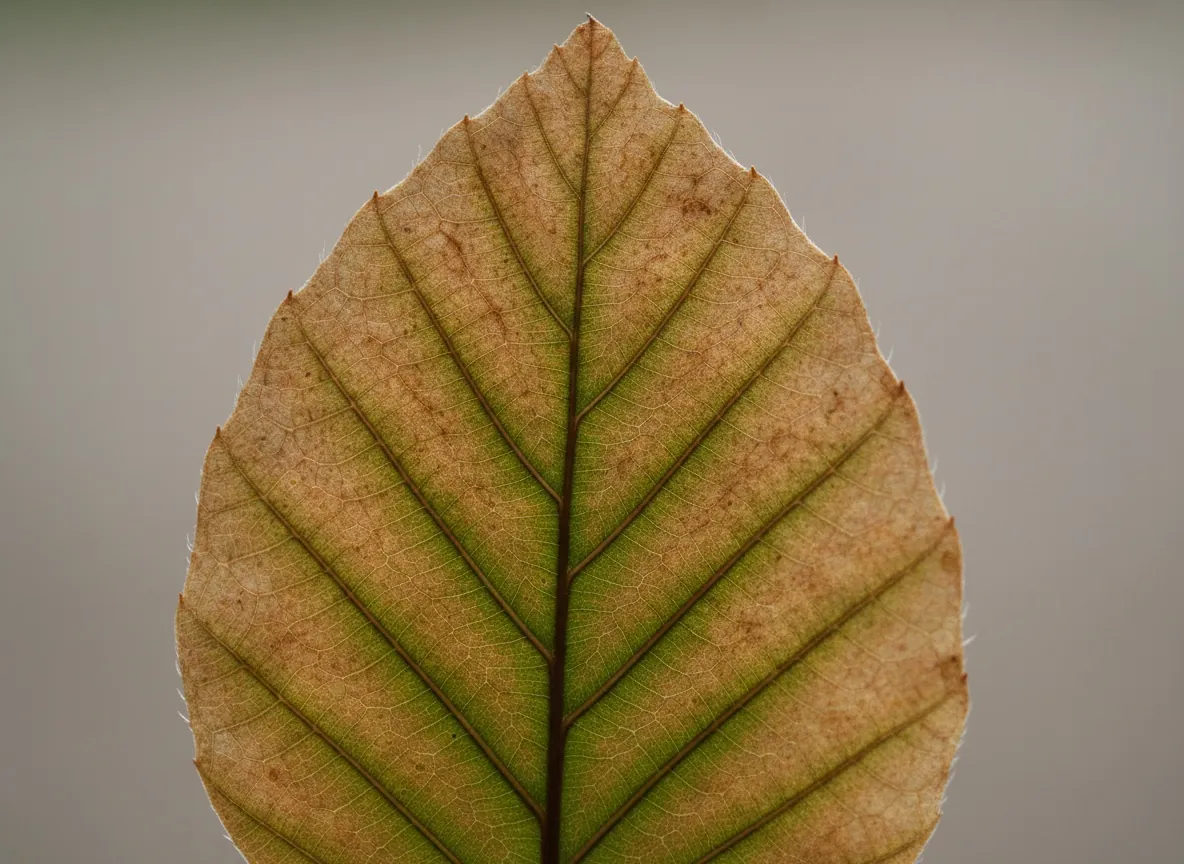
A tree with a massive trunk and a high-set, domed crown. The bark stays smooth and silvery-grey throughout its life, which sets the beech apart from most native trees. The leaves are ovate, wavy-edged, silkily hairy in spring, turning coppery in autumn. The fruits are three-sided nuts, two at a time in a spiny husk known as beech mast.
Growing and care
Watering
Beech has a shallow root system and copes badly with both drought and standing water. Water young trees and hedges regularly in hot weather.
Fertilizing
Mulching with compost under the crown is more beneficial than mineral fertilising — it protects the shallow roots from drying out.
Planting
Absolutely requires well-drained soil — it dies back on compacted and waterlogged ground. For a hedge, plant 3–4 per running metre. A specimen needs 10–15 m of free space.
Pruning
Cut the hedge into a trapezoid tapering towards the top. On trees, remove only diseased, dead and crossing shoots.
Companion plants
Good companions
One of the few plants that copes in the deep shade of a beech wood and on its acidic litter.
An extremely shade-tolerant species that in the wild grows in the understorey of beech woods and endures the conditions beneath a beech crown.
They flower and set seed in April, before the beech unfurls its leaves and cuts off the light.
Bad companions
Beech casts the deepest shade of all Polish trees, and its shallow roots take the water right below the surface — grass and perennials stand no chance.
The evidence level indicates whether the relationship is backed by research, observation, or gardening tradition.
Toxicity
| For whom | Level | Notes |
|---|---|---|
| Humans | Mild | Raw nuts (beech mast) contain fagin and oxalates — a larger quantity causes nausea, stomach ache and headaches. After roasting they are edible and were used as a famine food. |
| Horses | Moderate | Beech mast eaten in larger quantities is sometimes toxic to horses. |
| Dogs | Mild | — |
History and origin
Beech woods shaped the landscape of western and southern Europe for millennia. Beech wood, hard and even-grained, became the basis of furniture bending — the entire production of Thonet chairs rested on it. In years of famine the roasted nuts were ground into flour and pressed for oil.
Uses
For parks, large gardens and landscape plantings as an imposing specimen — especially the ornamental cultivars: the purple Purpurea, the columnar Dawyck and the weeping Pendula. On a smaller scale the beech works well as a tall, clipped hedge or green wall, provided the soil is well-drained.
Trivia
- Beech mast crops heavily only every few years — such mast years markedly increase the numbers of wild boar and rodents in the forest.
- The Purpurea cultivar with dark burgundy leaves arose from a natural mutation and was so highly valued that it was already being propagated by grafting in the 18th century.
Frequently asked questions
Why does nothing grow under a beech?
Three things combine at once: the dense, horizontally arranged leaves let through only a few per cent of the light, the shallow root system intercepts water just below the soil surface, and the slowly decomposing beech litter acidifies the ground. Under a mature beech only shade-tolerant ferns and spring geophytes that flower before the leaves emerge will realistically persist.
Can you eat beech mast, that is, beech nuts?
They should not be eaten raw in larger quantities — they contain fagin and oxalates, which cause nausea, stomach ache and headaches. Roasting breaks down the fagin and the nuts become edible; they were once a famine food, ground into flour and pressed for oil. It is better not to give them to children at all.
Is beech suitable for a home garden?
As a tree — rather not: an eventual height of 25–35 m and a crown 15–25 m wide are park scale. What does suit a garden is a clipped beech hedge and cultivars of restricted habit, for example the narrow columnar Dawyck. In every variant, well-drained soil is the key.
Sources
- Plants of the World Online (POWO)Database (GBIF, POWO…)
- Lasy Państwowe — gatunki drzewInstitution / botanical garden
My note
A private note for this plant — saved in your browser.