In short
- Position: partial shade, without direct sun — the variegated leaves scorch easily.
- Substrate constantly slightly moist, never sodden; it appreciates humid air.
- The sap strongly irritates the mucous membranes — work in gloves.
- Not suitable for a home with small children or animals.
- A leggy stem is easy to rejuvenate: root the top, and the old stem will reshoot.
Botanical data
- Family
- Araceae (Araceae)
- Height
- 0.6–1.8 m
- Width
- 0.4–0.9 m
- Habit
- Upright
- Growth rate
- Moderate
- Position
- Partial shade, Shade
- Soil
- Humus-rich, Peaty
- pH reaction
- pH 5.5–6.5
- Moisture
- Moist, Moderate
- Bloom
- —
- Hardiness
- —
- Propagation
- From cuttings, By division
Characteristics
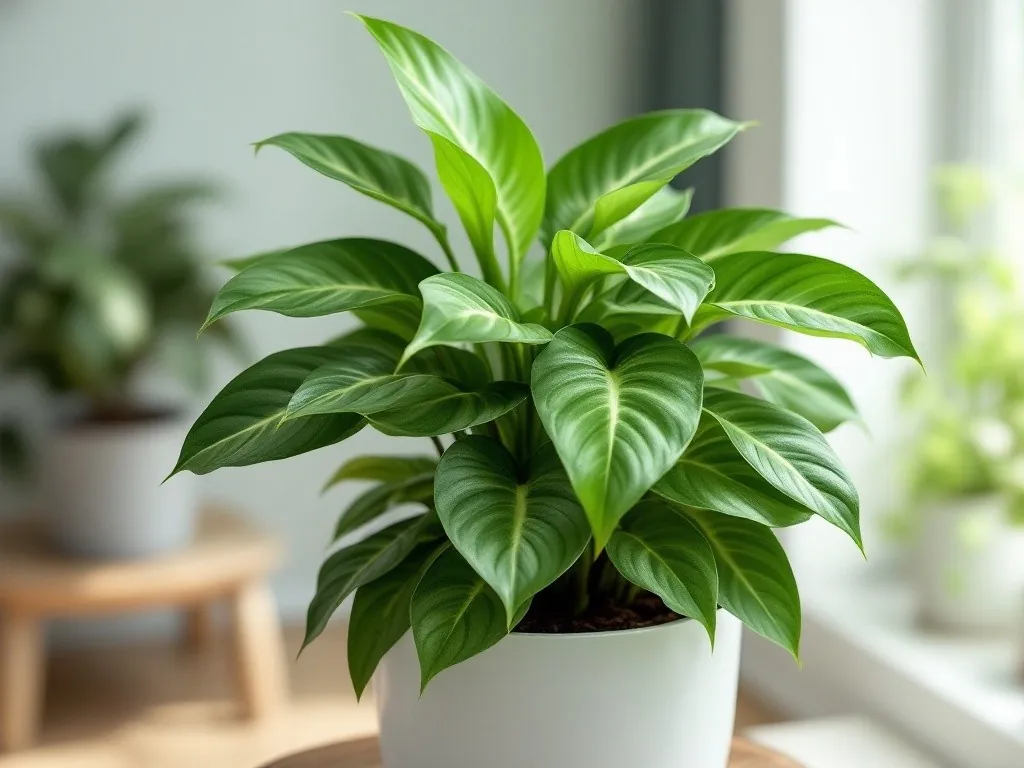
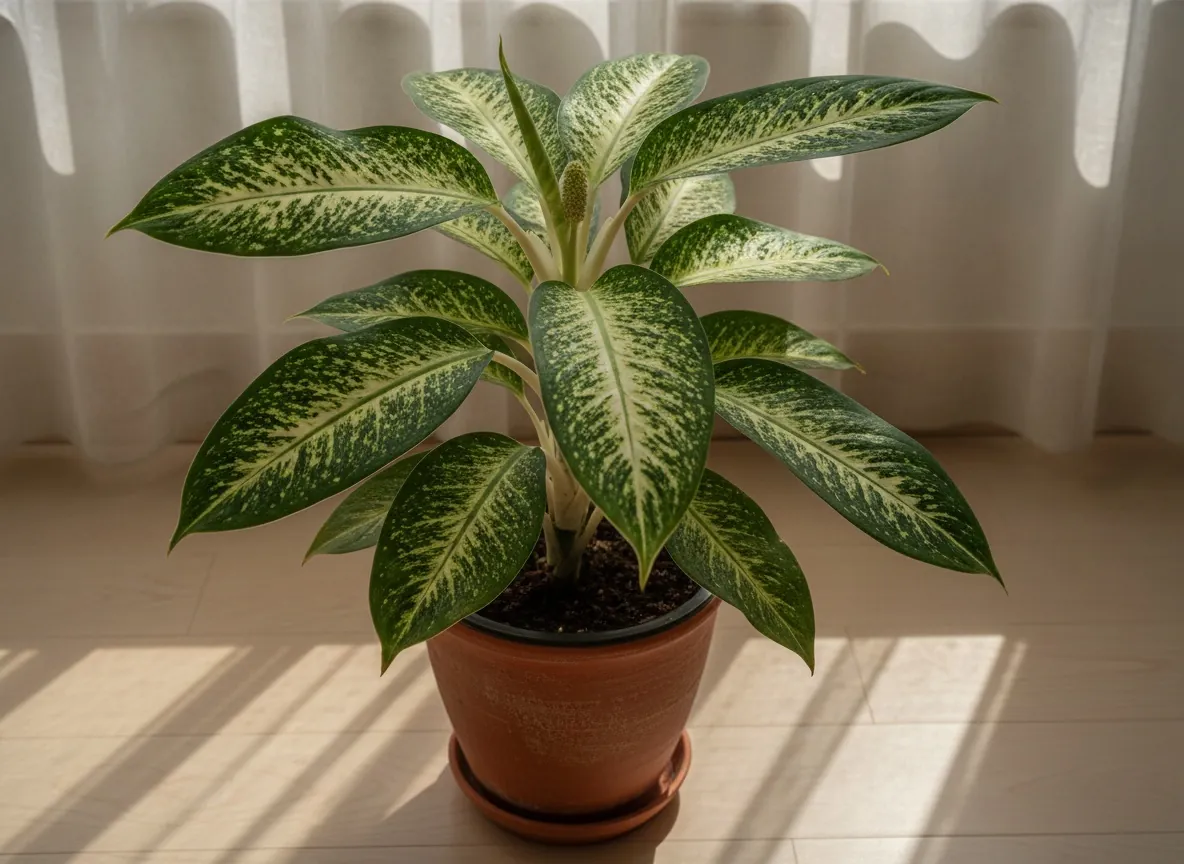
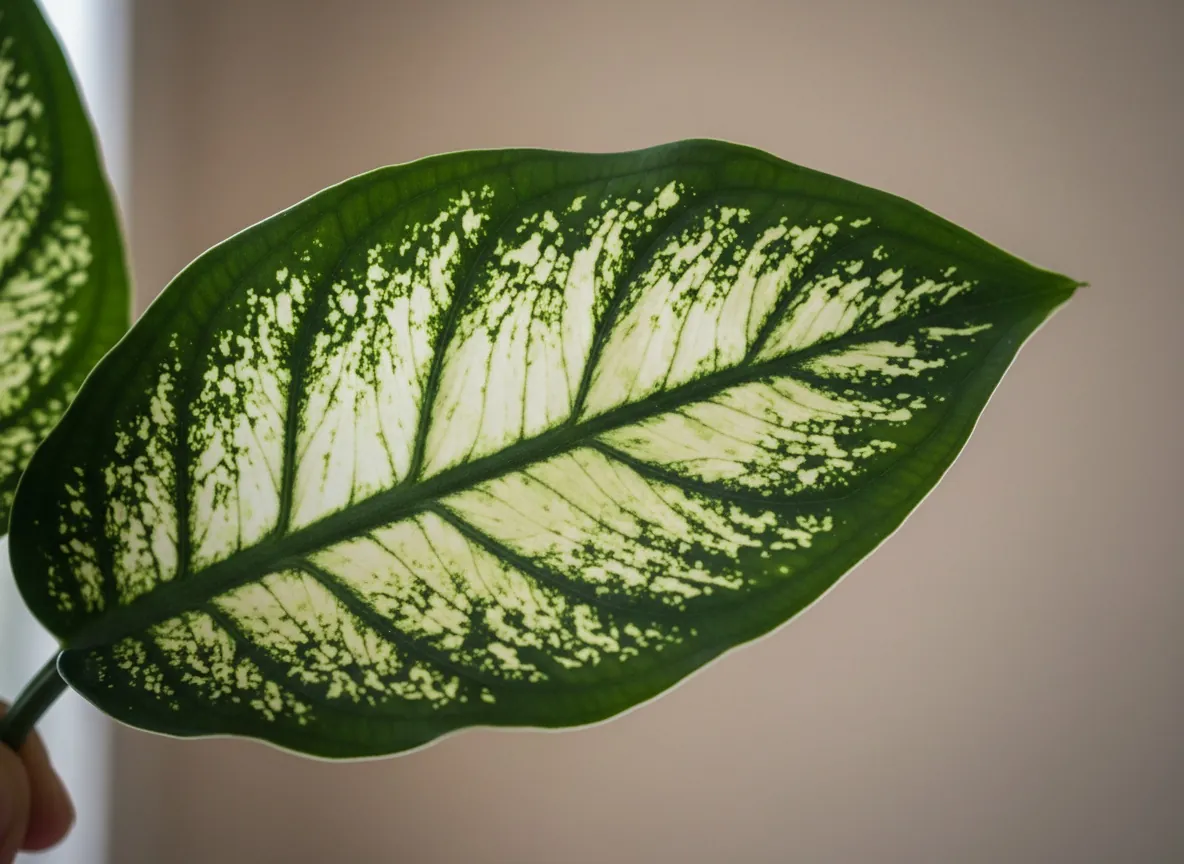
A plant with a succulent, upright stem which with age becomes woody at the base and loses its lower leaves. The leaves are large, oblong-ovate, 20–45 cm long, with a variegated pattern — irregular cream or white blotches and streaks cover the green background, their arrangement depending on the cultivar. The inflorescence is typical of the arum family (a spadix in a greenish spathe), but it appears rarely indoors and has no ornamental value.
Growing and care
Watering
The substrate should be constantly slightly moist, but never sodden — water when the top 2 cm has dried out. It appreciates humid air; in a dry home the leaf margins turn brown.
Fertilizing
The standard dose for foliage plants. Stop fertilising in winter — with short days the plant does not grow anyway.
Planting
A light, humus-rich peat substrate with added perlite; a pot with drainage. When repotting it is worth putting on gloves because of the irritating sap.
Pruning
Cut through the stem that is bare at the bottom and root the top in water or substrate; the old stem left in the pot usually puts out new shoots from dormant buds.
Companion plants
Good companions
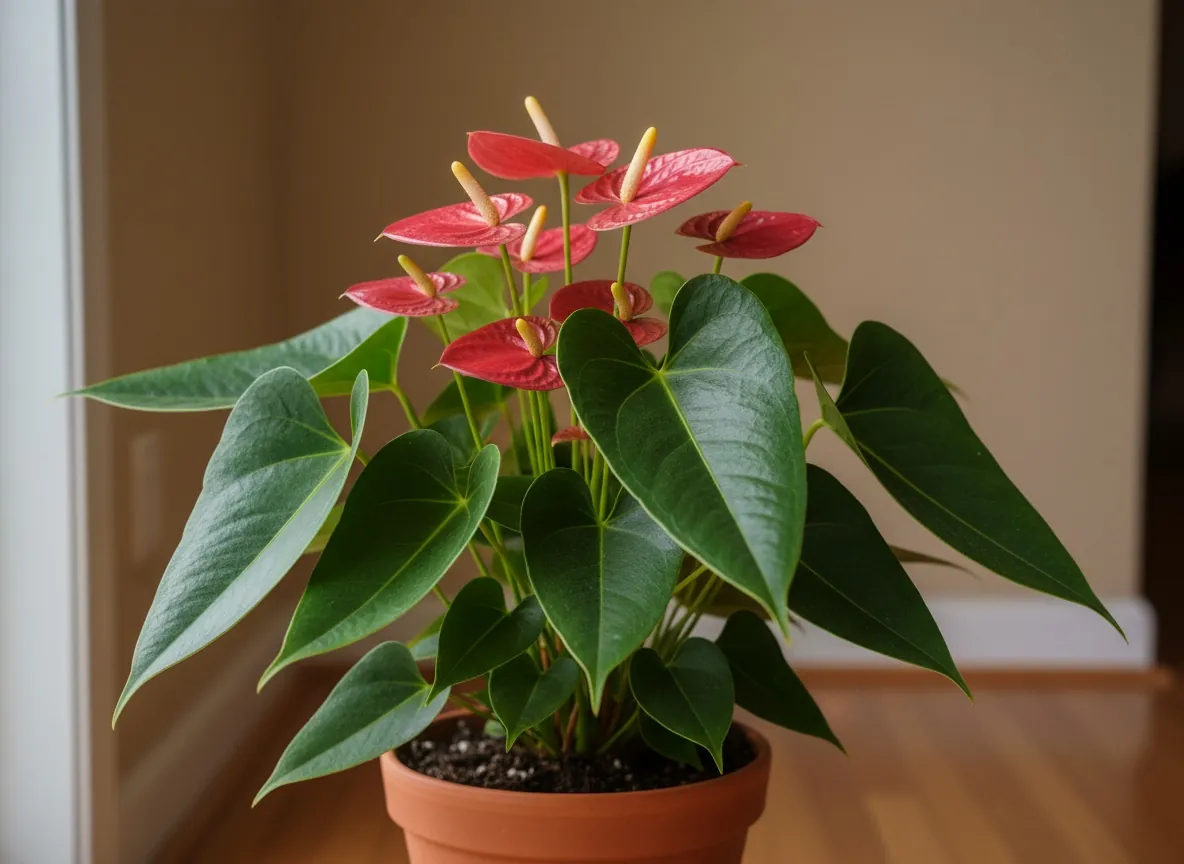
A relative from the arum family with the same needs: partial shade, constant substrate moisture and humid air.
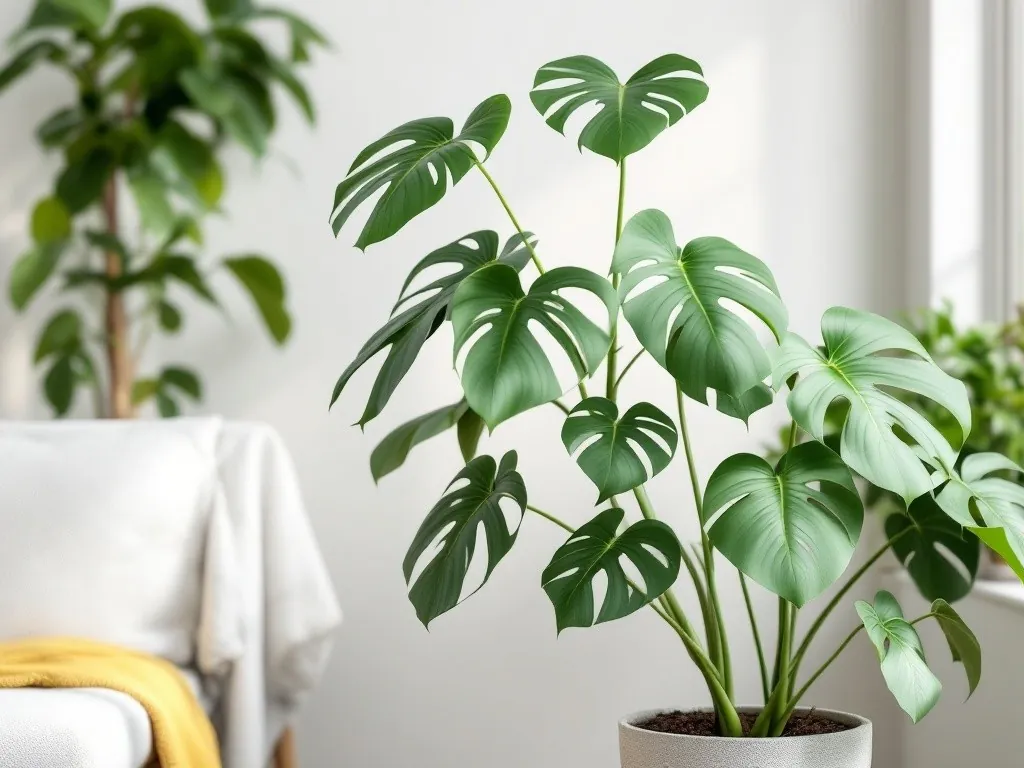
The same care regime and similar light requirements; the contrast between the variegated leaves of the dumb cane and the dark monstera looks good in a group.
A combination of arum-family plants with similar requirements — the philodendron covers the bare lower part of the dumb cane with its shoots.
Bad companions
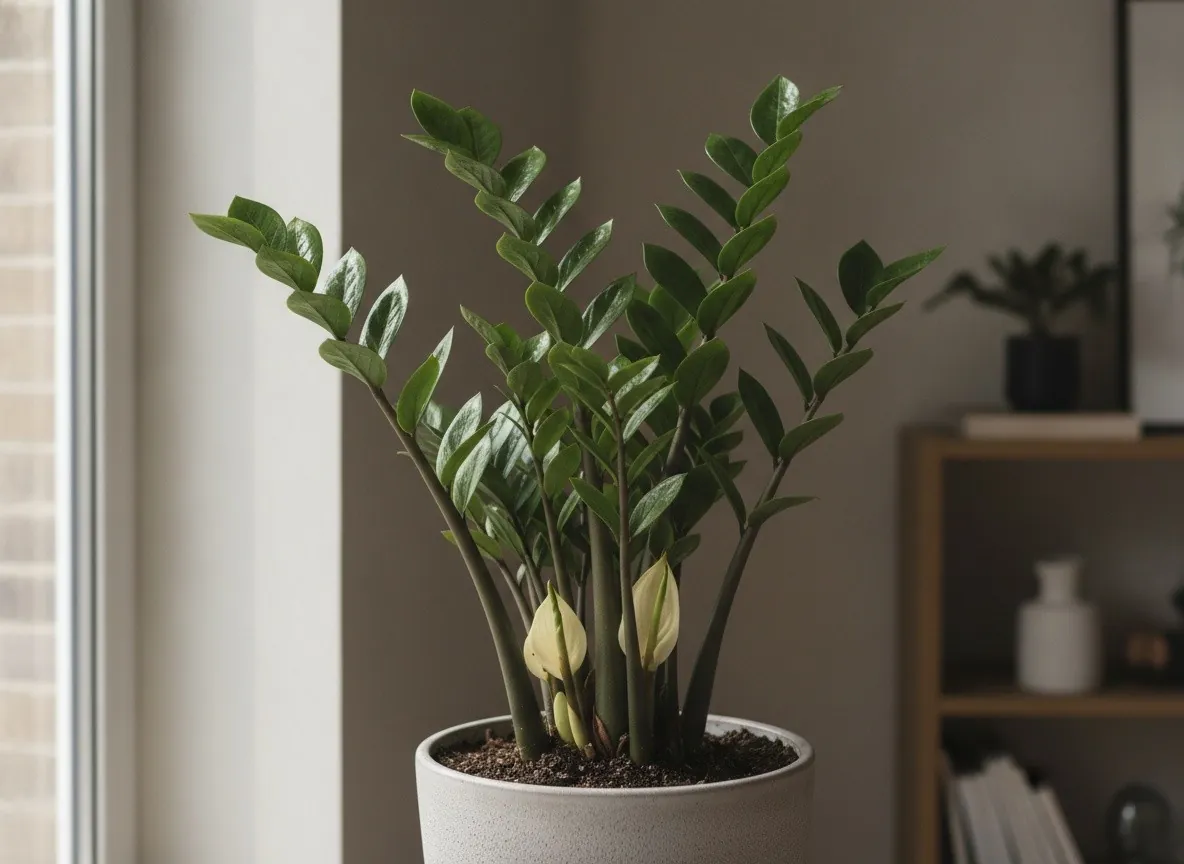
They require full sun and a dry substrate; in such conditions the dumb cane scorches its leaves and wilts quickly.
The yucca needs strong light and long breaks between waterings — exactly the opposite of the dumb cane.
The evidence level indicates whether the relationship is backed by research, observation, or gardening tradition.
Toxicity
| For whom | Level | Notes |
|---|---|---|
| Humans | High | The sap contains needle-like calcium oxalate crystals (raphides) together with proteolytic enzymes. Biting a leaf causes immediate, severe pain, burning and swelling of the lips, tongue and throat, drooling and temporary loss of speech — hence the English name dumb cane. In extreme cases the swelling of the throat may impede breathing. Sap in the eye causes painful inflammation of the cornea. Do not keep within reach of small children. |
| Dogs | Moderate | Chewing the leaves causes violent pain in the mouth, drooling, vomiting and difficulty swallowing. The symptoms usually subside, but considerable swelling of the throat requires urgent veterinary help. |
| Cats | Moderate | The mechanism and symptoms are as in dogs — strong irritation of the mucous membranes of the mouth and oesophagus. Cats rarely eat much, because the pain appears with the first bite. |
History and origin
The genus was named after Joseph Dieffenbach, the 19th-century gardener of the imperial gardens of Schönbrunn near Vienna. The species reached European glasshouses from the Caribbean and quickly spread across the world as a house plant — the variegated cultivars were selected mainly in the 20th century.
Uses
For living rooms and offices with diffused light, away from south-facing windows. Because of its irritating sap it works best in places inaccessible to children and animals — on tall furniture or in formal rooms.
Trivia
- The English name dumb cane comes from the swelling of the tongue and throat after biting into a leaf, which takes away the ability to speak for many hours.
- The burning pain is caused by a double mechanism: microscopic needles of calcium oxalate pierce the mucous membrane, and the enzymes entering the wound intensify the inflammatory reaction.
Frequently asked questions
Is dumb cane dangerous for children and animals?
Yes, it is one of the most irritating house plants. The sap contains needle-like calcium oxalate crystals and enzymes which, after a leaf is bitten, cause severe pain and swelling of the lips, tongue and throat. In a home with a small child or an animal it is better to choose a safe plant, for example a spider plant or a calathea.
Why is the dumb cane yellowing and losing its lower leaves?
The slow drying of the lowest leaves is natural and leads to the formation of a bare stem. Rapid yellowing of a larger number of leaves usually indicates overwatering, cold or a draught. It is worth checking whether water is standing in the saucer and whether the substrate dries out between waterings.
How do you rejuvenate a leggy dumb cane with a bare stem?
In spring, cut off the top with a few leaves and root it in water or moist substrate. The old stem left in the pot usually puts out new shoots from dormant buds, so one plant becomes two. Work in gloves — irritating sap flows out when cutting.
Sources
- Plants of the World Online (POWO)Database (GBIF, POWO…)
- Missouri Botanical Garden — Dieffenbachia seguineInstitution / botanical garden
My note
A private note for this plant — saved in your browser.