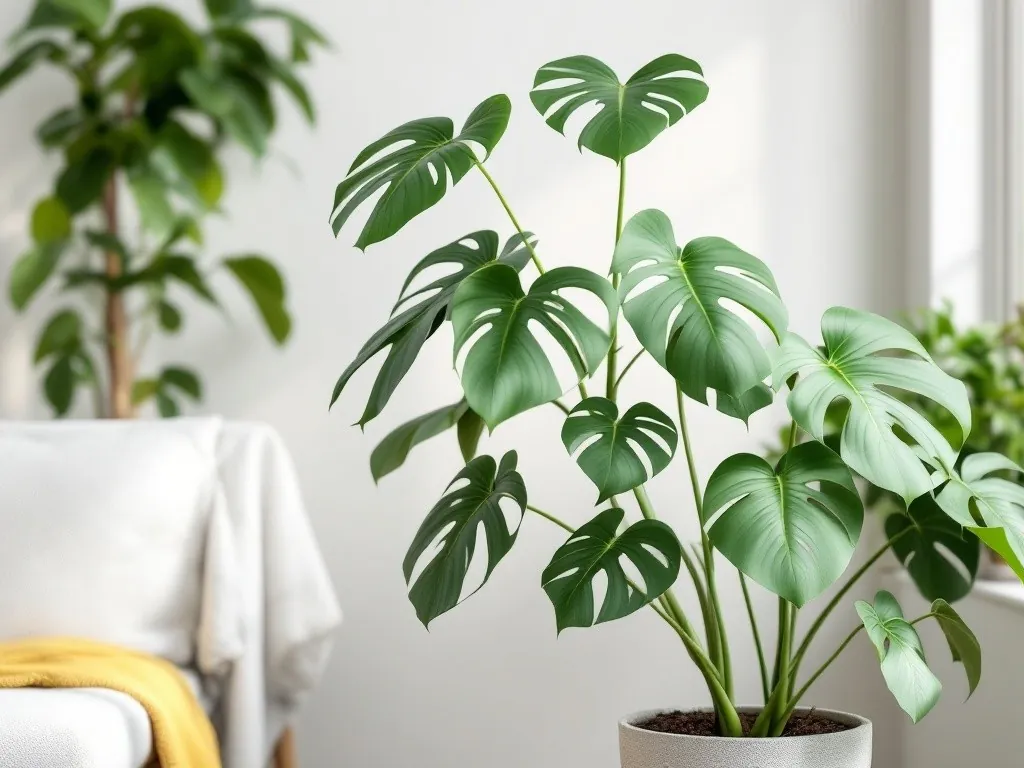
In short
- Needs a bright spot without direct sun.
- Leaf holes (fenestrations) appear only in mature specimens.
- Needs a support (moss pole) to climb upward as it does in nature.
- The whole plant is toxic to people and pets.
- Tolerates drying out better than overwatering.
Botanical data
- Family
- Araceae (Araceae)
- Height
- 1.5–3 m
- Width
- 1–2 m
- Habit
- Spreading
- Growth rate
- Moderate
- Position
- Partial shade, Shade
- Soil
- Humus-rich
- pH reaction
- pH 5.5–6.5
- Moisture
- Moderate
- Bloom
- —
- Hardiness
- USDA 10a–11b
- Propagation
- From cuttings
Characteristics
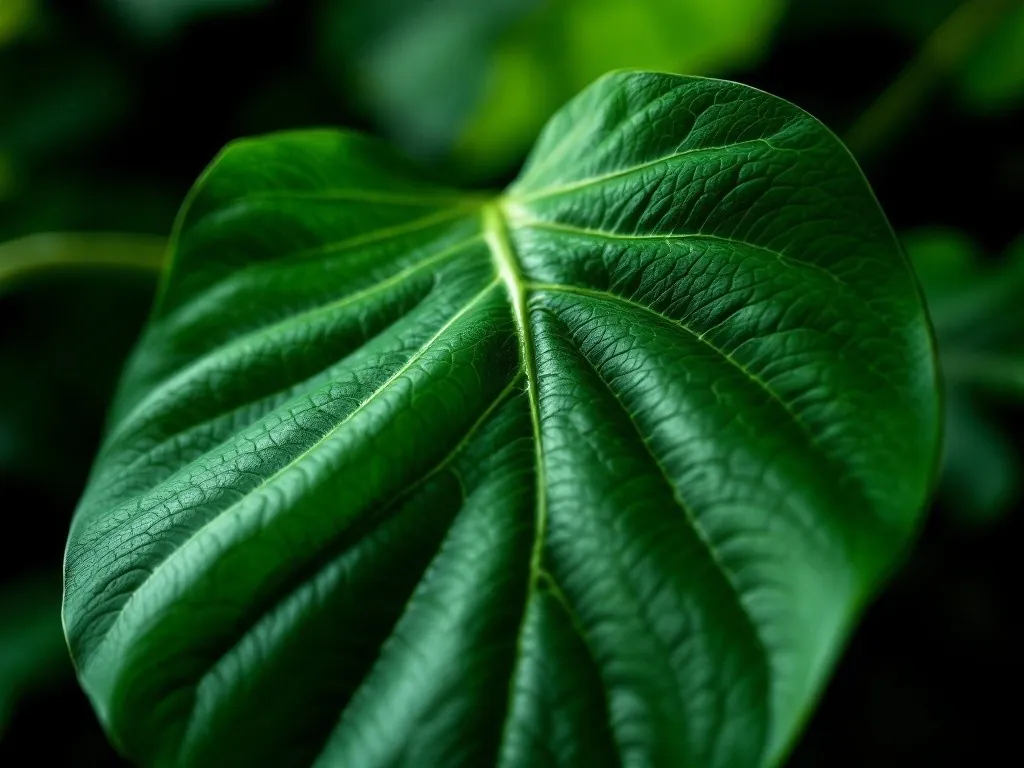
A climbing herbaceous plant with a thick stem and large, leathery, heart-shaped leaves that develop characteristic holes and deep splits in mature specimens. Produces aerial roots that aid climbing and moisture uptake.
Growing and care
Watering
Water when the top layer of the potting mix has dried out to a depth of 2-3 cm. Appreciates high humidity – misting the leaves is worthwhile.
Fertilizing
Stop fertilizing in winter, when growth naturally slows.
Planting
Universal potting mix for foliage plants with added bark or perlite for drainage; needs a support (coir pole) to climb.
Pruning
Remove yellowing and damaged leaves at the base of the petiole.
Companion plants
Good companions
Similar requirements for light, humidity, and watering – easy to keep together in the same room.
Bad companions
Extremely different water needs – Monstera needs moisture, while succulents need dry potting mix between waterings.
The evidence level indicates whether the relationship is backed by research, observation, or gardening tradition.
Diseases and pests
Small (1–3 mm) soft-bodied insects, green, black or pink, feeding in clusters on young shoots and the underside of leaves. They excrete sticky honeydew.
Spider mitesTiny (0.3–0.5 mm) arachnids, hard to spot with the naked eye, feeding on the underside of leaves. Symptoms: fine, pale speckling (feeding punctures); over time the leaves turn grey, yellow and dry out. Under heavy infestation a fine webbing becomes visible. Warm, dry air favours their development — a common problem for houseplants in winter near radiators.
MealybugsInsects covered in a white, cottony, waxy coating, gathering in leaf axils, at the base of shoots and on the underside of leaf blades. They look like tufts of cotton wool. They suck sap, weaken the plant and excrete sticky honeydew, on which black sooty mould develops. A common pest of houseplants and succulents.
Fungus gnatsSmall, dark gnats (2–4 mm) flying around pots and scurrying across the surface of the substrate. The adults are a nuisance, but the real damage is done by their larvae in the soil, feeding on the roots and the base of the stems of young plants. A constantly moist, humus-rich substrate favours their development — the classic result of overwatering houseplants.
Toxicity
| For whom | Level | Notes |
|---|---|---|
| Humans | Moderate | Contains calcium oxalates – contact with the sap irritates skin and mucous membranes, and ingestion causes swelling of the mouth. |
| Dogs | Moderate | — |
| Cats | Moderate | — |
History and origin
Monstera comes from the tropical forests of Mexico and Central America, where it climbs tree trunks toward the light. It reached Europe in the 19th century as a greenhouse plant and has enjoyed a resurgence in popularity over the last decade as an icon of urban-jungle interior style.
Uses
For bright living rooms and offices as a striking specimen plant. Requires plenty of space given its eventual size.
Trivia
- The species name "deliciosa" refers to the edible, ripe fruit, which tastes like a mix of pineapple and banana – the plant rarely fruits indoors.
- The natural holes in the leaves (fenestrations) help the plant withstand strong wind and optimize the capture of light filtering through the forest canopy.
Frequently asked questions
Why doesn't my Monstera have holes in its leaves?
Fenestrations (holes) appear only in mature plants, usually after 2-3 years, and require good access to light. Young plants have solid, unsplit leaves.
Is Monstera safe for cats?
No – the whole plant contains calcium oxalates that are toxic to cats and dogs, causing irritation of the mouth and digestive tract if chewed.
How big can a Monstera grow indoors?
Under good conditions and with a suitable support, it can reach 2-3 meters in height, and a single leaf on a mature specimen can exceed 60 cm.
Sources
- Plants of the World Online (POWO)Database (GBIF, POWO…)
- RHS — Monstera deliciosaInstitution / botanical garden
My note
A private note for this plant — saved in your browser.