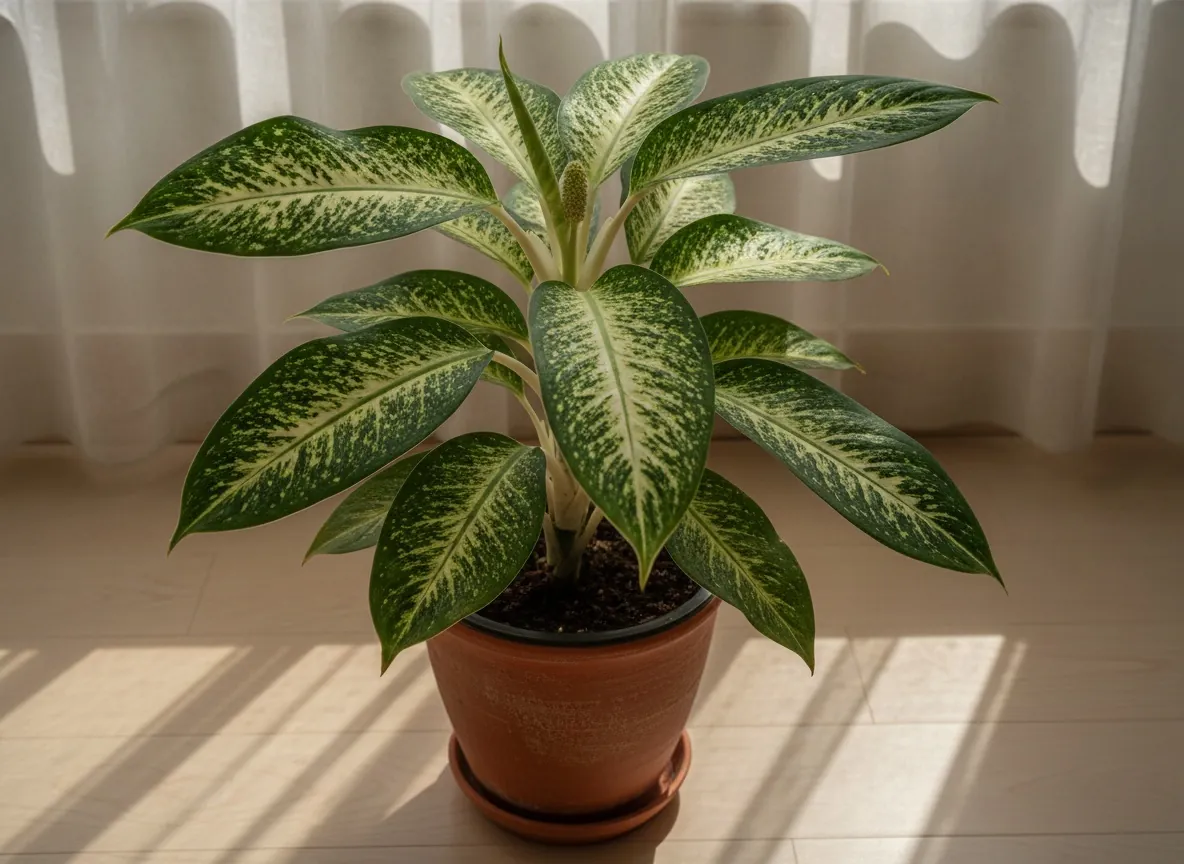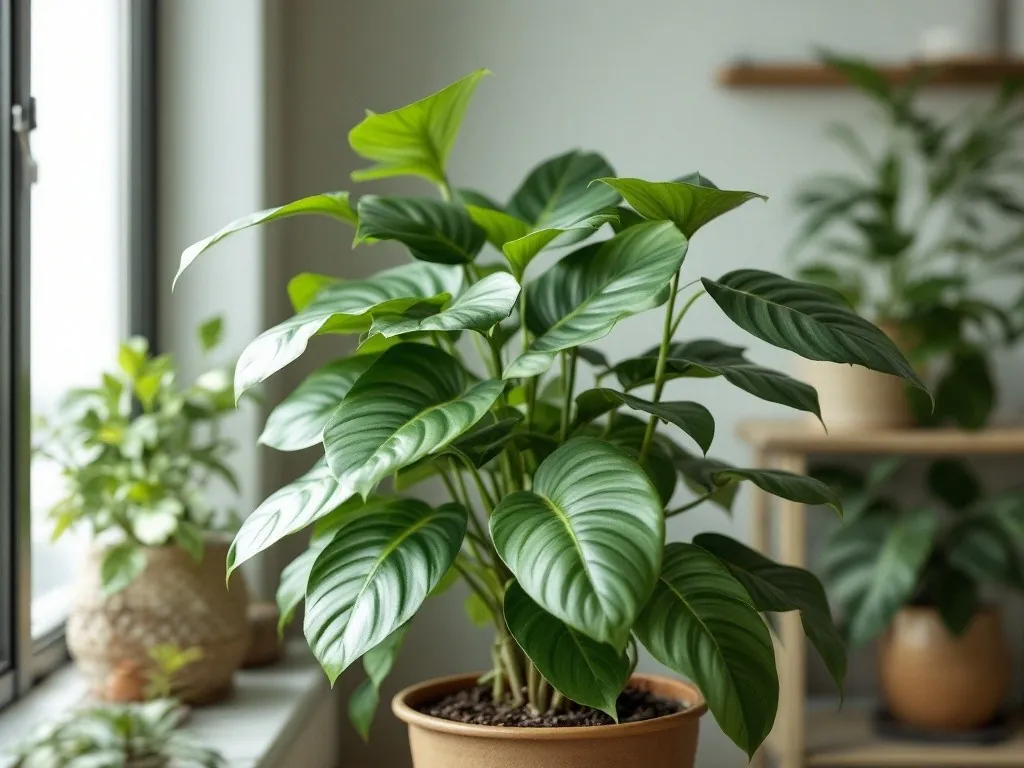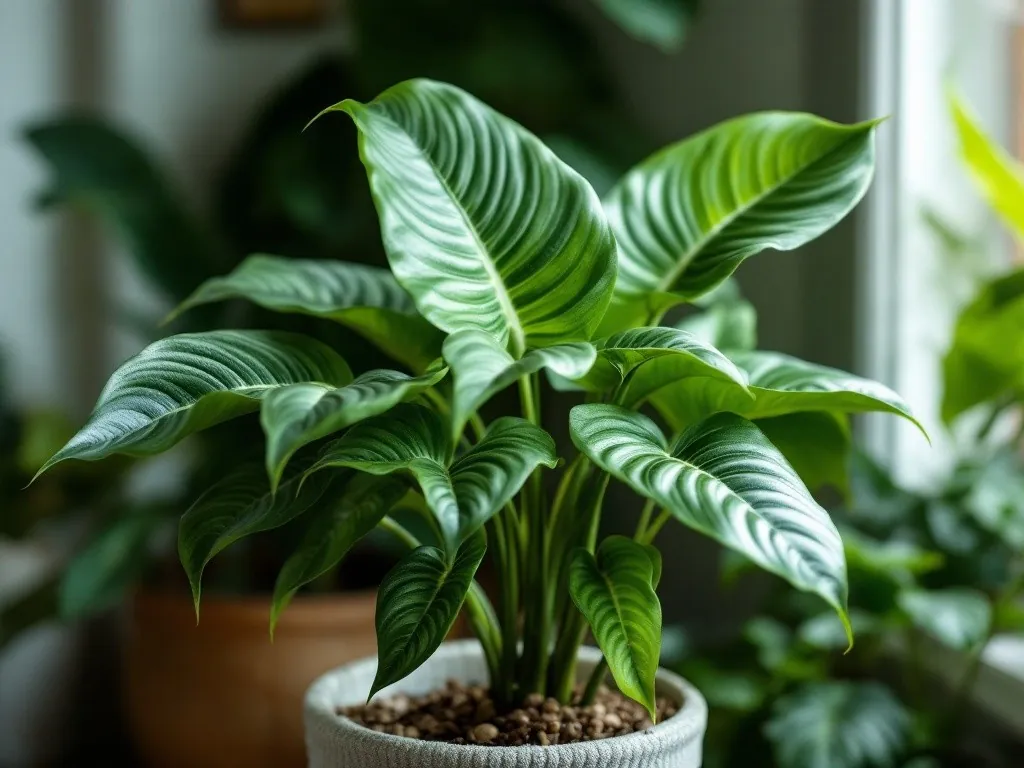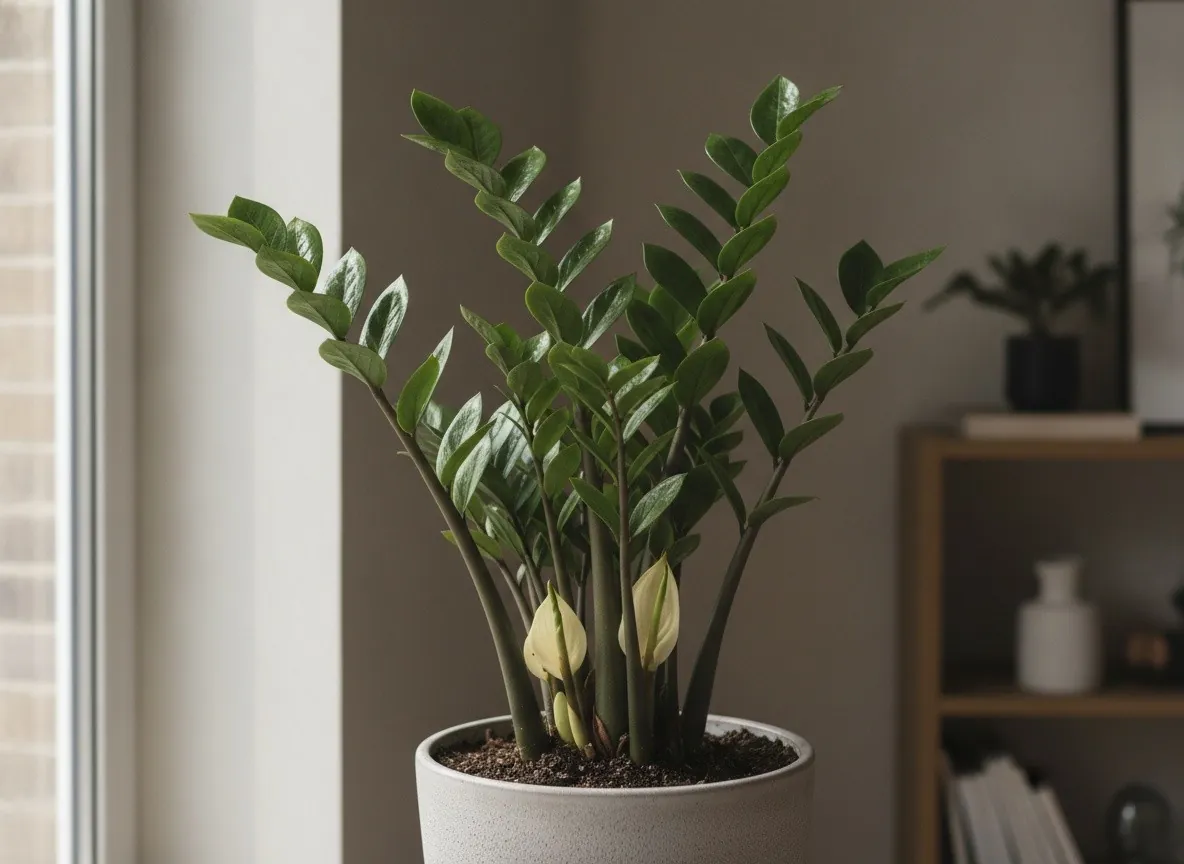
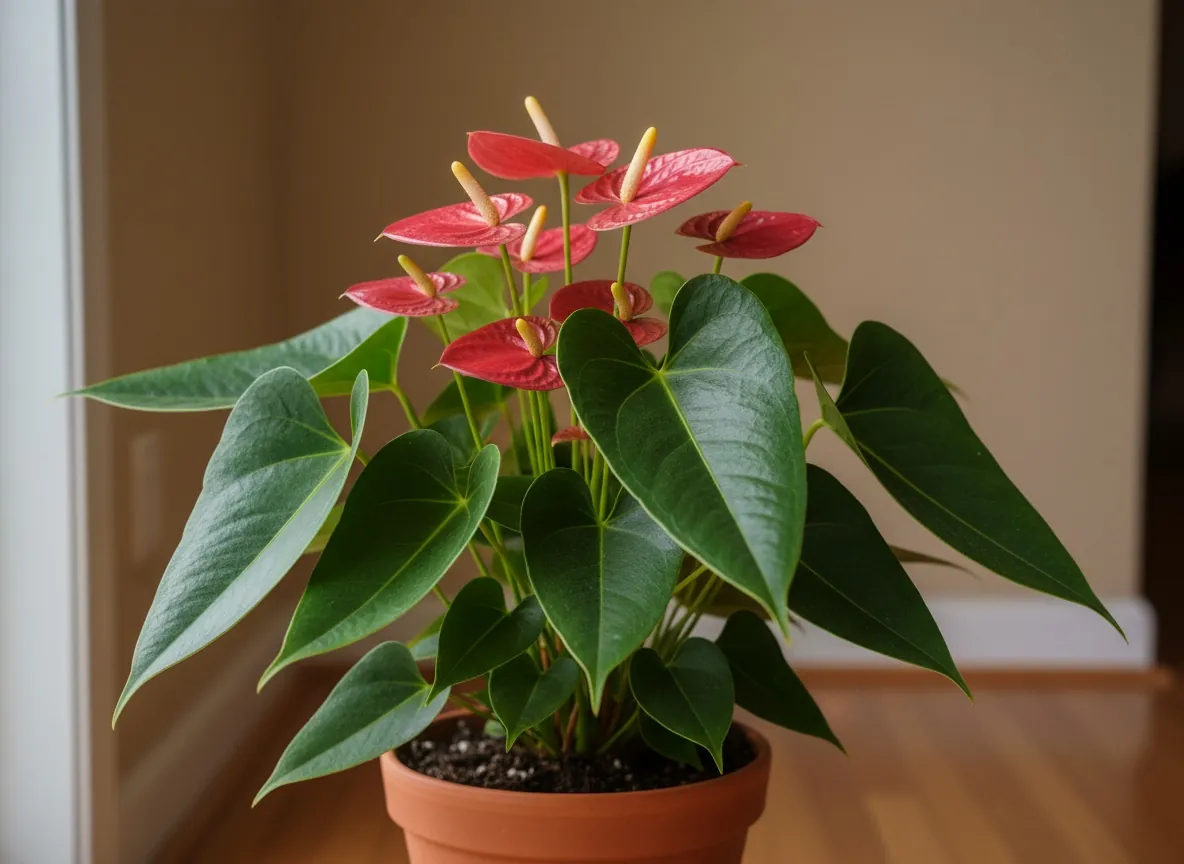
In short
- Position: bright, but without direct sun — an east-facing window is best.
- A loose, aerated substrate similar to an orchid mix; constantly slightly moist.
- It requires high air humidity — in a dry home the leaf margins turn brown.
- In good conditions it flowers all year round, and a single inflorescence lasts 6–8 weeks.
- It contains calcium oxalates — toxic to people, dogs and cats.
Botanical data
- Family
- Araceae (Araceae)
- Height
- 0.3–0.6 m
- Width
- 0.3–0.5 m
- Habit
- Clump-forming
- Growth rate
- Moderate
- Position
- Partial shade
- Soil
- Humus-rich, Peaty
- pH reaction
- pH 5.5–6.5
- Moisture
- Moist
- Bloom
- January–December
- Hardiness
- —
- Propagation
- By division, From cuttings
Characteristics
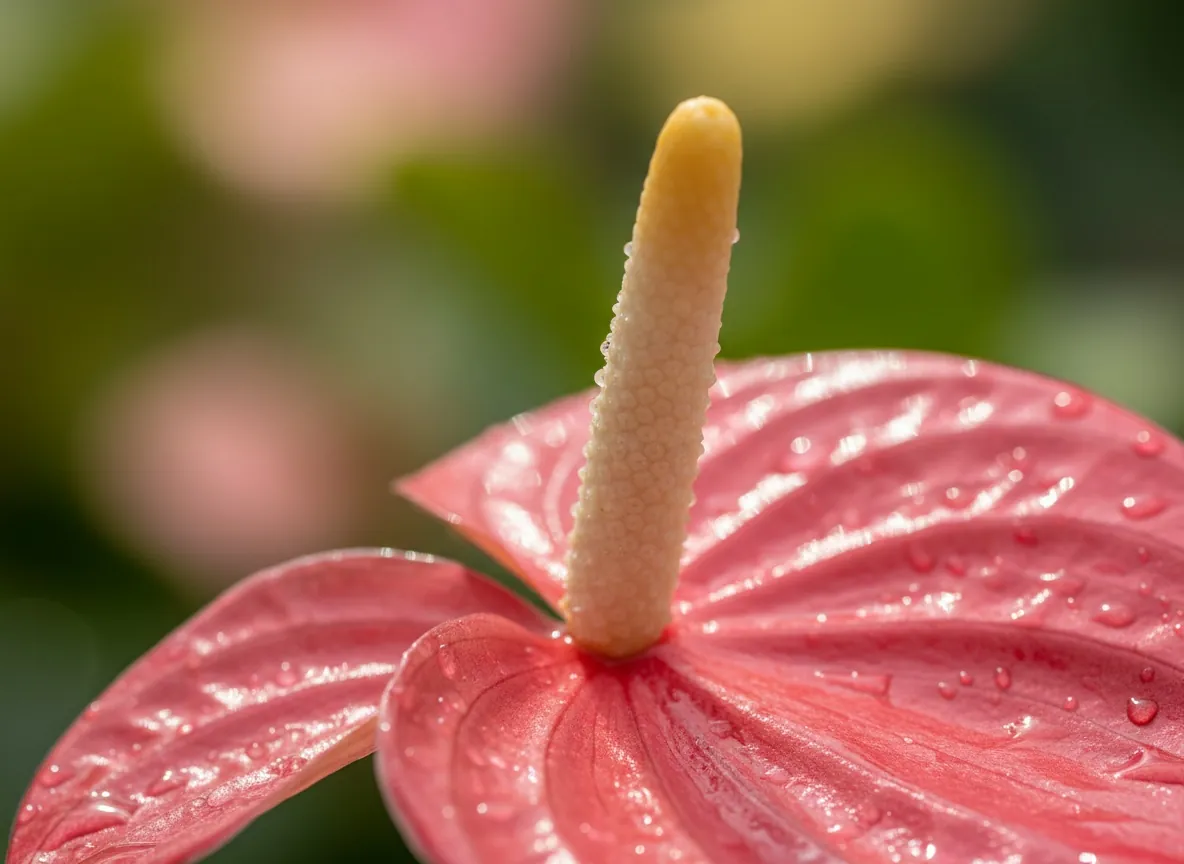
A perennial with a short, thickened stem from which long-stalked, leathery leaves with a heart-shaped base grow. What passes for the flower is in fact the spathe (a bract) — a modified, strongly coloured leaf with a characteristic lacquered sheen. The true flowers are tiny structures densely covering the yellow or cream spadix protruding from the spathe. The plant also produces thick aerial roots at the base.
Growing and care
Watering
The substrate is to be constantly slightly moist — neither dried out nor sodden. Stood or rain water; hard tap water produces brown spots on the leaves. High air humidity (60–70%) is crucial.
Fertilizing
Half the manufacturer's dose — the anthurium has a delicate root system and is easily salinated. A fertiliser with a raised phosphorus content supports the setting of inflorescences.
Planting
A very loose, aerated substrate: pine bark, peat, perlite and moss — close to an orchid mix. The pot rather tight, necessarily with drainage; the aerial roots do not have to be buried.
Pruning
Cut out spent inflorescences and yellowing leaves right at the base of the stalk, with a clean tool.
Companion plants
Good companions
The closest relative in indoor cultivation — the same light and water requirements and the same need for humid air.
Both species need partial shade and high humidity; placed together they create a humid microclimate from which both benefit.
The fern raises the air humidity around the anthurium and has identical position requirements.
Bad companions
Full sun and a dry root ball mean scorched leaves and no flowering for the anthurium.
The sansevieria requires long breaks between waterings, and the anthurium constant moisture — under shared care one of them will always suffer.
The evidence level indicates whether the relationship is backed by research, observation, or gardening tradition.
Toxicity
| For whom | Level | Notes |
|---|---|---|
| Humans | Moderate | All parts contain needle-like calcium oxalate crystals. Eating or biting a leaf causes burning and swelling of the lips, tongue and throat as well as drooling; sap in the eye gives painful irritation. The symptoms are milder than after dumb cane, but still require caution around children. |
| Dogs | Moderate | Oxalates cause pain in the mouth, drooling, vomiting and difficulty swallowing. |
| Cats | Moderate | Symptoms as in dogs — irritation of the mucous membranes after chewing leaves or the inflorescence. |
History and origin
The species was discovered in Colombia in the second half of the 19th century and named after Édouard André — the French botanist and garden designer who documented the plants of the Andes. Its coloured, long-lasting spathe quickly made it one of the most important species in the cut-flower trade; today's pot cultivars are the result of decades of breeding, mainly Dutch.
Uses
For bright living rooms and offices with diffused light, especially where a long-lasting flowering effect is expected. It does well in a bathroom with a window, where air humidity is naturally higher. The inflorescences are also suitable as cut flowers.
Trivia
- The lacquered sheen of the spathe is not the effect of waxing — it is a natural structure of the cell surface, one of the most glossy in the plant world.
- The anthurium is among the longest-lasting cut flowers: in a vase it can hold for as long as six weeks, longer than most decorative species.
Frequently asked questions
Why is the anthurium not flowering?
Most often it lacks light — although it does not tolerate direct sun, it needs a genuinely bright, diffusely lit position to set inflorescences. The second cause is a fertiliser high in nitrogen, which stimulates leaves at the expense of flowers; it is worth switching to a fertiliser for flowering plants or orchids.
Why have the anthurium's red flowers turned green?
The greening of older spathes is a natural stage of their ageing and is no cause for concern. If, however, new inflorescences emerge green and small from the outset, the cause is usually too little light or an excess of nitrogen in the fertiliser.
Why does the anthurium have brown leaf margins?
This is most often the effect of air that is too dry indoors or of watering with hard tap water. Misting helps, as does standing the pot on a tray of moist expanded clay and watering with stood or rain water. It is also worth checking that the plant is not within reach of the stream of heat from a radiator.
Sources
- Plants of the World Online (POWO)Database (GBIF, POWO…)
- RHS — Anthurium andraeanumInstitution / botanical garden
My note
A private note for this plant — saved in your browser.