In short
- The easiest orchid for beginners.
- Blooms for a long time — a single flowering can last 2-3 months.
- Needs bark-based potting mix, not soil — it's an epiphyte.
- Water by soaking, letting the roots dry out in between.
- Non-toxic — safe for people and animals.
Botanical data
- Family
- Orchidaceae (Orchidaceae)
- Height
- 0.3–0.7 m
- Width
- 0.2–0.4 m
- Habit
- Clump-forming
- Growth rate
- Slow
- Position
- Partial shade
- Soil
- Humus-rich
- pH reaction
- pH 5.5–6.5
- Moisture
- Moderate
- Bloom
- January–December
- Hardiness
- USDA 11a–11b
- Propagation
- From cuttings
Characteristics
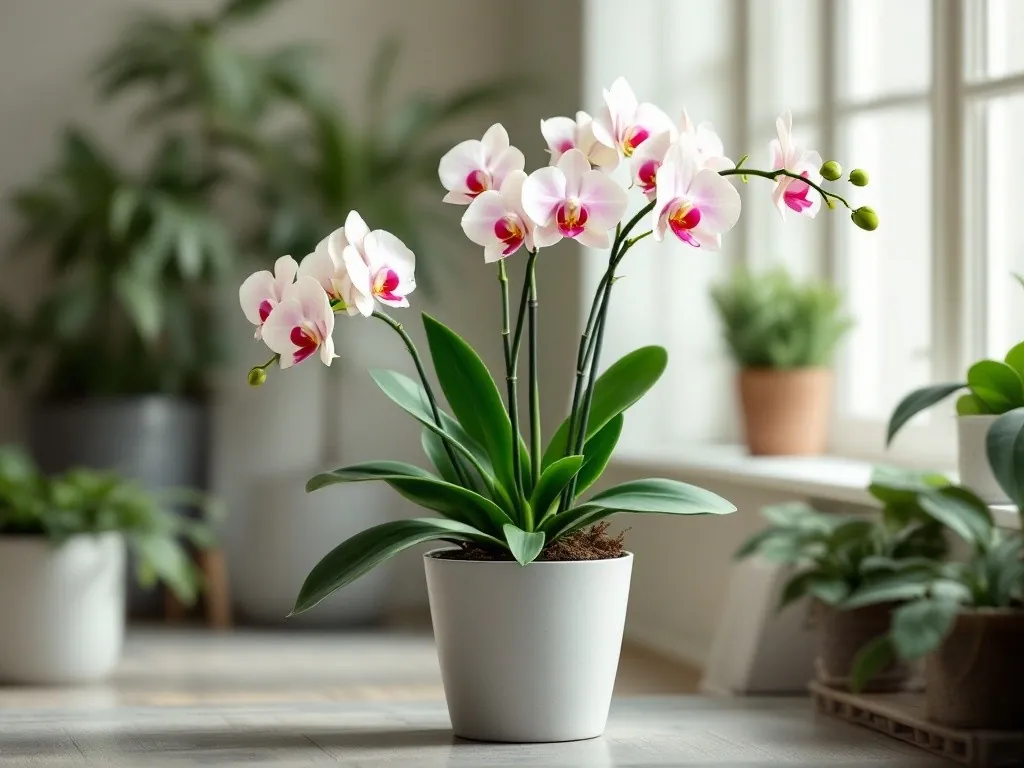
An epiphytic plant with a short stem, a few thick, leathery leaves, and numerous aerial roots. The butterfly-shaped flowers, in various colors, are borne on an arching flower stem.
Growing and care
Watering
Water by soaking, letting excess water drain away freely. Roots must dry out between waterings — constant moisture causes rot.
Fertilizing
Use at a low concentration — orchids are sensitive to salt buildup.
Planting
Special bark-based orchid mix; a clear pot allows the roots to photosynthesize and lets you monitor moisture.
Pruning
The spent flower stem can be cut above the second visible node from the bottom to encourage reflowering, or removed at the base.
Companion plants
Good companions
Grouping plants with the same requirements makes it easier to maintain humidity around them.
Bad companions
Phalaenopsis is an epiphyte — growing it in ordinary garden soil instead of bark mix leads to root rot.
The evidence level indicates whether the relationship is backed by research, observation, or gardening tradition.
Diseases and pests
Insects covered in a white, cottony, waxy coating, gathering in leaf axils, at the base of shoots and on the underside of leaf blades. They look like tufts of cotton wool. They suck sap, weaken the plant and excrete sticky honeydew, on which black sooty mould develops. A common pest of houseplants and succulents.
Armoured and soft scale insectsImmobile, brown or yellowish shields (1–4 mm) attached to stems and the underside of leaves, especially along the veins. Easily mistaken for growths on the plant. They suck sap, causing yellowing and weakening, and excrete sticky honeydew. Common on figs, orchids and plants with tough leaves.
Spider mitesTiny (0.3–0.5 mm) arachnids, hard to spot with the naked eye, feeding on the underside of leaves. Symptoms: fine, pale speckling (feeding punctures); over time the leaves turn grey, yellow and dry out. Under heavy infestation a fine webbing becomes visible. Warm, dry air favours their development — a common problem for houseplants in winter near radiators.
Toxicity
| For whom | Level | Notes |
|---|---|---|
| Humans | None | — |
| Dogs | None | — |
| Cats | None | — |
History and origin
Phalaenopsis orchids gained mass popularity at the turn of the 20th and 21st centuries once mass in-vitro propagation techniques were mastered, lowering their price and making them one of the most commonly purchased potted flowers.
Uses
For bright interiors without direct sun — east- and north-facing windowsills. A popular gift flower and element of home decor.
Trivia
- The name Phalaenopsis means "moth-like," from the shape of the flowers.
- Phalaenopsis's aerial roots carry out photosynthesis, which is why the plant is grown in clear pots.
Frequently asked questions
What should I do with an orchid after it finishes flowering?
You can cut the spent flower stem above the second visible node from the bottom — this often prompts the plant to form a side shoot and flower again. If the stem dries out, cut it off at the base.
Why are the orchid's roots growing outside the pot?
This is normal — Phalaenopsis is an epiphyte and produces aerial roots. They should not be cut off or forced back into the pot.
How do you water a moth orchid correctly?
The best method is soaking: once a week, set the pot in water for 10-15 minutes, then let the excess drain away completely. The roots need to dry out between waterings.
Sources
- Plants of the World Online (POWO)Database (GBIF, POWO…)
- RHS — PhalaenopsisInstitution / botanical garden
My note
A private note for this plant — saved in your browser.