In short
- A “living fossil” — the only surviving species of an old, prehistoric group of plants.
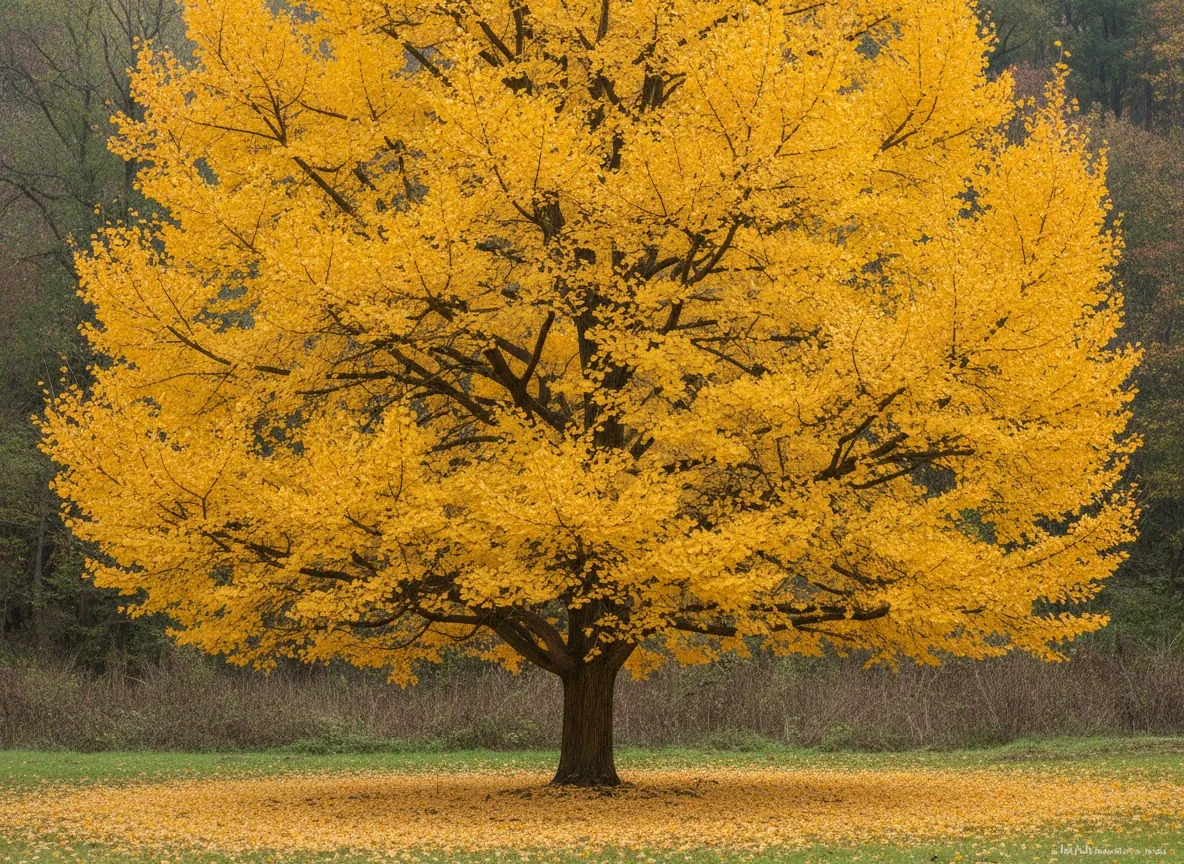
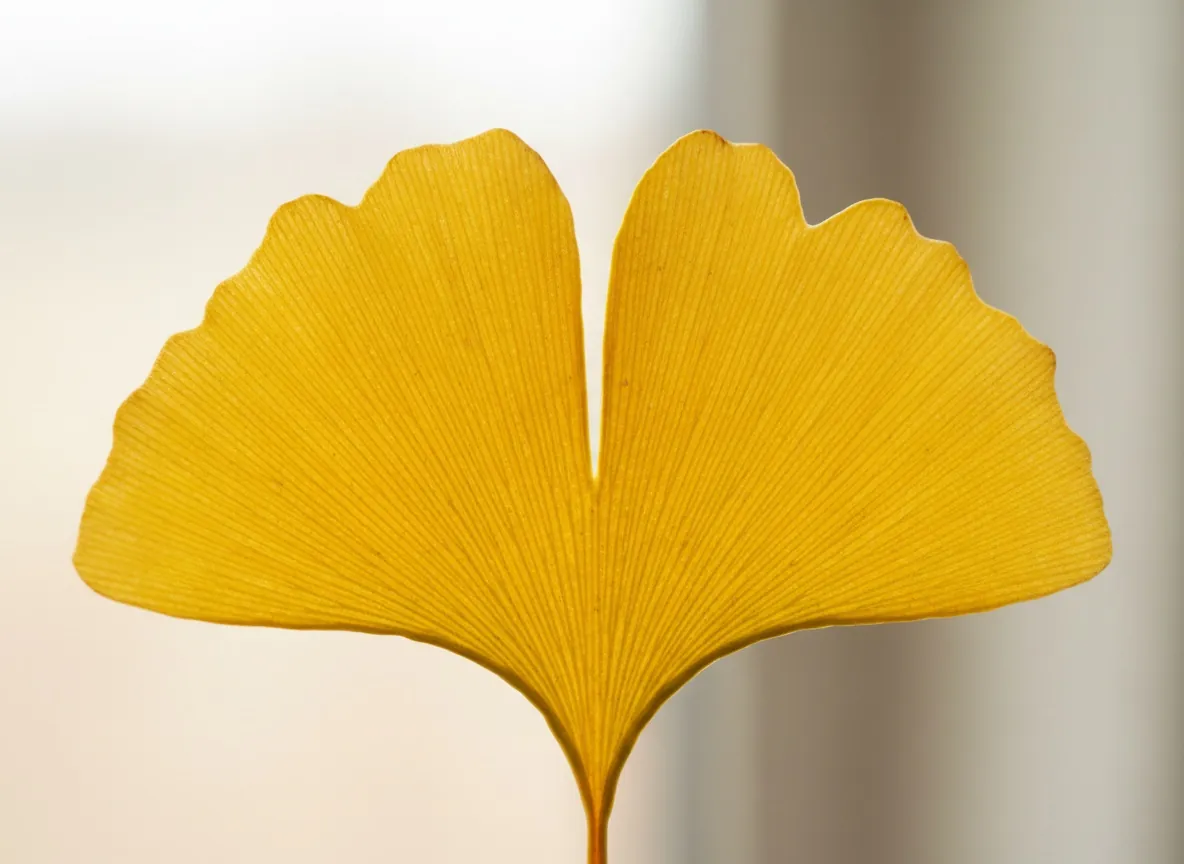
- The characteristic, fan-shaped leaves turn an intense golden yellow in autumn.
- Exceptionally resistant to pollution, diseases and pests — ideal for cities.
- In urban plantings male specimens are planted, because the fruits of female specimens stink.
- The leaf extract is used in herbal medicine; the raw seeds, however, are toxic.
Botanical data
- Family
- Ginkgoaceae (Ginkgoaceae)
- Height
- 10–30 m
- Width
- 6–10 m
- Habit
- Conical
- Growth rate
- Slow
- Position
- Full sun, Partial shade
- Soil
- Loamy, Sandy, Humus-rich
- pH reaction
- pH 5–8
- Moisture
- Moderate
- Bloom
- —
- Hardiness
- USDA 4a–8b
- Propagation
- From seed, From cuttings
Characteristics
A large, long-lived tree, conical at first and broadly spreading with age. The leaves are unique among trees — fan-shaped, leathery, with forked veining, often with a shallow notch dividing them into two lobes (hence the name biloba, “two-lobed”). The ginkgo is a dioecious and gymnospermous plant — it has no true flowers; female specimens set seeds enclosed in a fleshy, strongly and unpleasantly smelling coat.
Growing and care
Watering
Very hardy once established and resistant to drought and urban conditions. Only young, slow-growing specimens need regular watering.
Fertilizing
Moderately — the ginkgo grows slowly and does not require intensive feeding.
Planting
Tolerates a wide range of soils, including compacted urban substrates and polluted air. It grows best in sun, on deep, well-drained soil. For cities male specimens are recommended.
Pruning
Usually unnecessary — the ginkgo forms a regular habit by itself. If needed, remove damaged, diseased or crossing shoots. It tolerates pruning and shaping well.
Companion plants
Good companions
Shade-loving hostas grow well in the dappled shade of the ginkgo's spreading crown, forming an attractive understorey.
The early-spring bulbs flower beneath the still-leafless tree, making use of the full light before the leaves unfurl.
Bad companions
Lavender needs full sun and dry soil, and in the shade cast by the spreading ginkgo crown it weakens and loses its scent and compact habit.
The evidence level indicates whether the relationship is backed by research, observation, or gardening tradition.
Toxicity
| For whom | Level | Notes |
|---|---|---|
| Humans | Moderate | Raw seeds contain ginkgotoxin (MPN) and, eaten in larger amounts, can cause poisoning with convulsions. The fleshy coat of the seeds of female specimens contains ginkgolic acids that strongly irritate the skin. Standardised leaf extracts are used in phytotherapy, but the raw material should not be consumed on one's own. |
| Dogs | Moderate | — |
| Cats | Mild | — |
History and origin
The genus Ginkgo has existed in almost unchanged form for over 200 million years — ginkgos were already growing in the age of the dinosaurs, in the Jurassic. In the wild the species almost died out and survived mainly thanks to cultivation at Chinese and Japanese temples; it was brought to Europe in the 18th century. The tree's legendary resilience was confirmed by specimens that survived the explosion of the atomic bomb in Hiroshima in 1945 and put out new shoots the very next spring.
Uses
Valued as a striking park, street and specimen tree, especially for its golden autumn colour and exceptional resistance to difficult urban conditions. Planted in parks, botanical gardens and avenues; it is also suitable for bonsai. In public plantings male specimens are chosen to avoid the foul-smelling seeds.
Trivia
- Ginkgos growing near the epicentre of the explosion in Hiroshima survived and regrew from their roots — in Japan they are called “hibakujumoku”, survivor trees.
- It is the only living species of its group — it has no close relatives among present-day plants, which is why it is sometimes called a “living fossil”.
- The standardised ginkgo leaf extract is among the most frequently studied herbal materials, traditionally used to support circulation.
Frequently asked questions
Why are only male ginkgos planted in cities?
The ginkgo is a dioecious plant. Female specimens set seeds covered with a fleshy coat that, once fallen, gives off an exceptionally unpleasant, rancid smell. That is why vegetatively propagated male specimens, which do not fruit, are planted in street and park plantings.
Is the ginkgo difficult to grow?
On the contrary — it is one of the most durable trees. It tolerates urban pollution, compacted soils, drought and frost, and it hardly ever falls ill or is attacked by pests. However, it grows slowly, especially when young, and ultimately needs quite a lot of space.
Are the seeds and leaves of the ginkgo safe?
Raw seeds contain ginkgotoxin and can cause poisoning if eaten in larger amounts, and the fleshy coat irritates the skin. Standardised leaf extracts are used in phytotherapy, but you should not prepare or consume the raw material on your own without specialist knowledge.
Sources
- Plants of the World Online (POWO)Database (GBIF, POWO…)
- RHS — Ginkgo bilobaInstitution / botanical garden
My note
A private note for this plant — saved in your browser.