In short
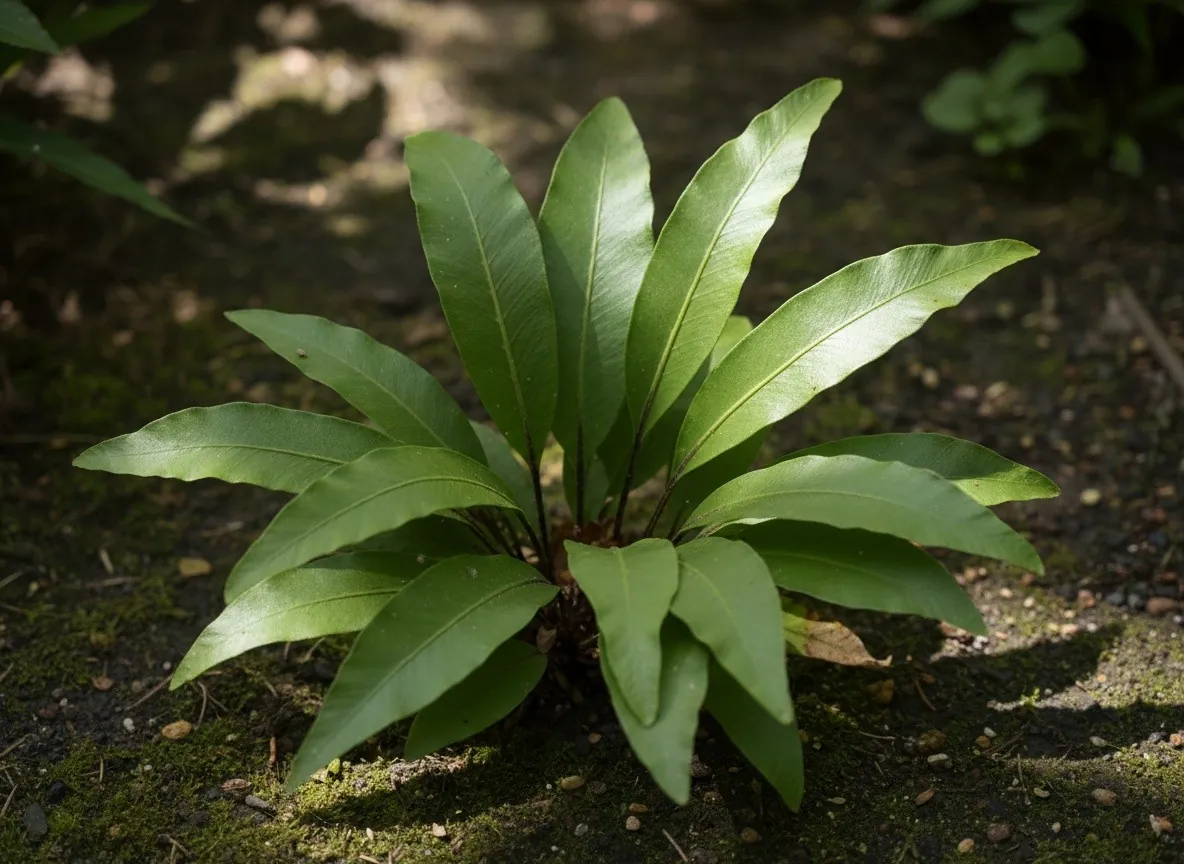
- Entire, strap-shaped, glossy fronds – quite unlike the typical feathery fern leaves.
- Evergreen – it graces the garden even in winter.
- Requires shade, moisture and alkaline, calcareous soil.
- Grows very slowly, forming small, compact clumps (0.2–0.4 m).
- Naturally rare in Poland and protected by law.
- Ideal for rock gardens, wall crevices and shady garden corners.
Botanical data
- Family
- Aspleniaceae (Aspleniaceae)
- Height
- 0.2–0.4 m
- Width
- 0.3–0.4 m
- Habit
- Clump-forming
- Growth rate
- Slow
- Position
- Shade, Partial shade
- Soil
- Chalky, Humus-rich, Loamy
- pH reaction
- pH 7–8
- Moisture
- Moist
- Bloom
- —
- Hardiness
- USDA 5a–9b
- Propagation
- By division, From seed
Characteristics
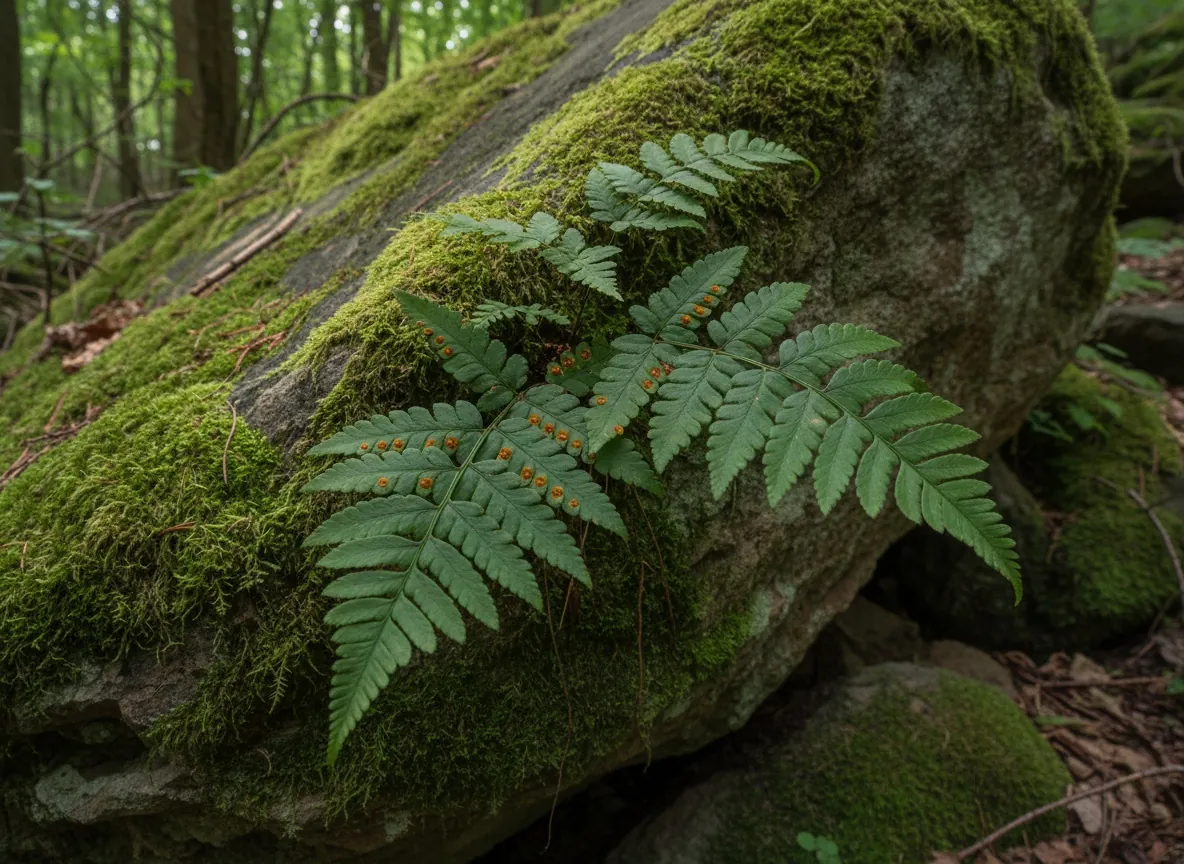
Unlike most ferns, which have pinnately divided fronds, hart's-tongue produces entire, narrow, strap-shaped fronds with wavy margins and a heart-shaped base, resembling a long tongue – hence the name. The fronds are glossy, leathery and evergreen, arranged in a dense, funnel-shaped rosette. The sporangia on the underside of the frond form a characteristic transverse, ladder-like pattern (from which the Latin species name scolopendrium, evoking a centipede, derives).
Growing and care
Watering
The substrate should be evenly moist but never standing in water – good drainage combined with moisture is the key to success, typical of rock plants.
Fertilizing
Very undemanding – excess fertiliser does more harm than a lack of it.
Planting
Calcareous or neutral, well-drained humus soil; does well in wall crevices and limestone rock gardens, and among tree roots.
Pruning
Remove only damaged, browned fronds right at the base.
Companion plants
Good companions
Shared requirements – alkaline, well-drained ground and a shady, cool position typical of limestone rock gardens.
A classic pairing in shady, calcareous garden corners – similar soil and light requirements and complementary decorative foliage.
Bad companions
The alkaline, calcareous ground required by hart's-tongue is directly harmful to acid-loving plants, which become chlorotic on lime.
The evidence level indicates whether the relationship is backed by research, observation, or gardening tradition.
Diseases and pests
Toxicity
| For whom | Level | Notes |
|---|---|---|
| Humans | None | — |
| Dogs | None | — |
| Cats | None | — |
History and origin
The species is naturally associated with the calcareous substrates of Europe and the Mediterranean and has long been prized in British horticulture – during the Victorian era, in the so-called "fern craze" (pteridomania), many garden varieties with crested, frilled or branched fronds were selected. In Poland it occurs rarely, mainly on calcareous substrate in shady forests and rock crevices, and is a protected species.
Uses
For shady rock gardens on calcareous ground, wall crevices, path edgings in a woodland garden, and as a houseplant for cool, shaded rooms. Thanks to its evergreen fronds it provides structure in the garden even during the winter months.
Trivia
- The species name scolopendrium comes from the Greek word for centipede – it refers to the regular, transverse arrangement of the sporangia on the underside of the frond.
- During the Victorian era, dozens of garden varieties of hart's-tongue with fancifully frilled, crested or forked fronds were selected and collected in greenhouses.
- It is one of the few native European ferns with entire, undivided fronds – easily recognisable even by people unfamiliar with fern botany.
Frequently asked questions
How does hart's-tongue differ from typical ferns?
Most ferns have fronds pinnately divided into small leaflets, whereas hart's-tongue produces entire, undivided, strap-shaped fronds with wavy margins, resembling a long tongue – hence its name. It is one of the few European ferns with such a leaf shape.
What soil does hart's-tongue fern need?
Unlike most ferns, which prefer acidic ground, hart's-tongue needs alkaline or neutral, calcium-rich soil – it grows best in crevices of limestone rocks and walls or in soil mixed with lime.
Can hart's-tongue fern be grown in Poland?
Yes, it is frost-hardy (zone 5a) and, given the right conditions – shade, moisture and alkaline soil – it grows well in Polish gardens, although in the wild it is rare and protected here, so plants for the garden should be bought from nurseries and never dug up from natural sites.
Sources
- Plants of the World Online (POWO)Database (GBIF, POWO…)
- RHS — Asplenium scolopendriumInstitution / botanical garden
My note
A private note for this plant — saved in your browser.