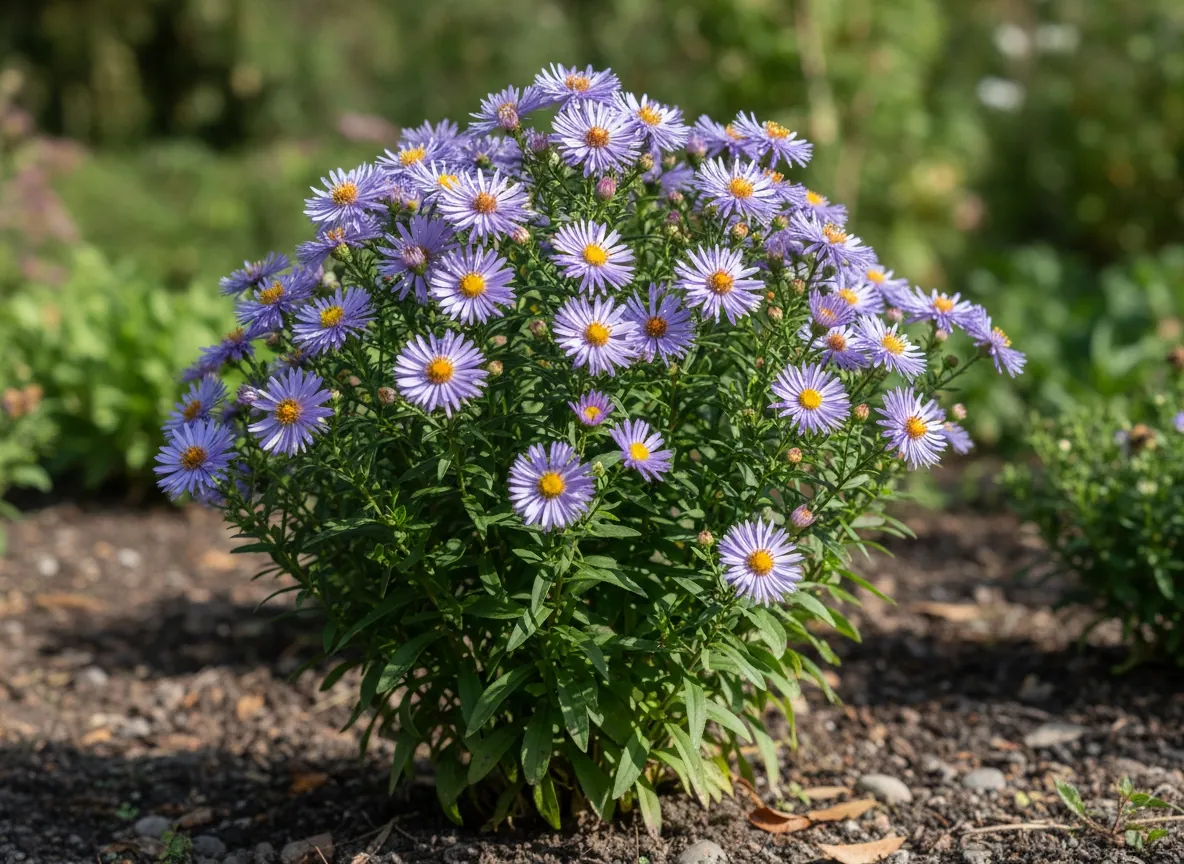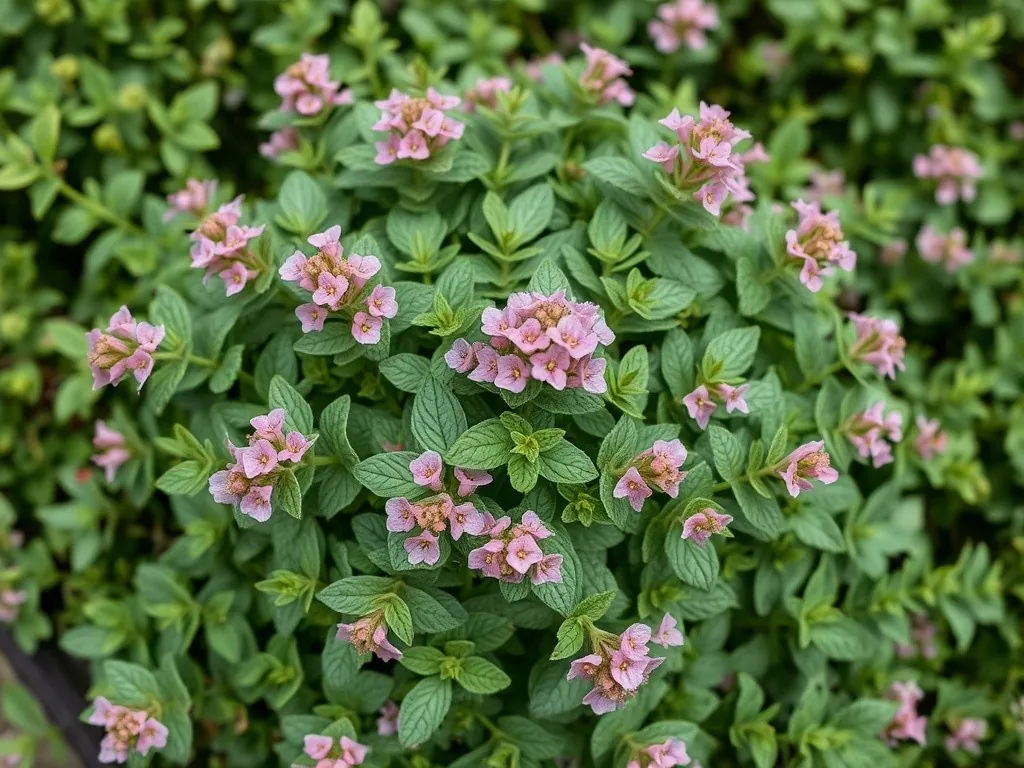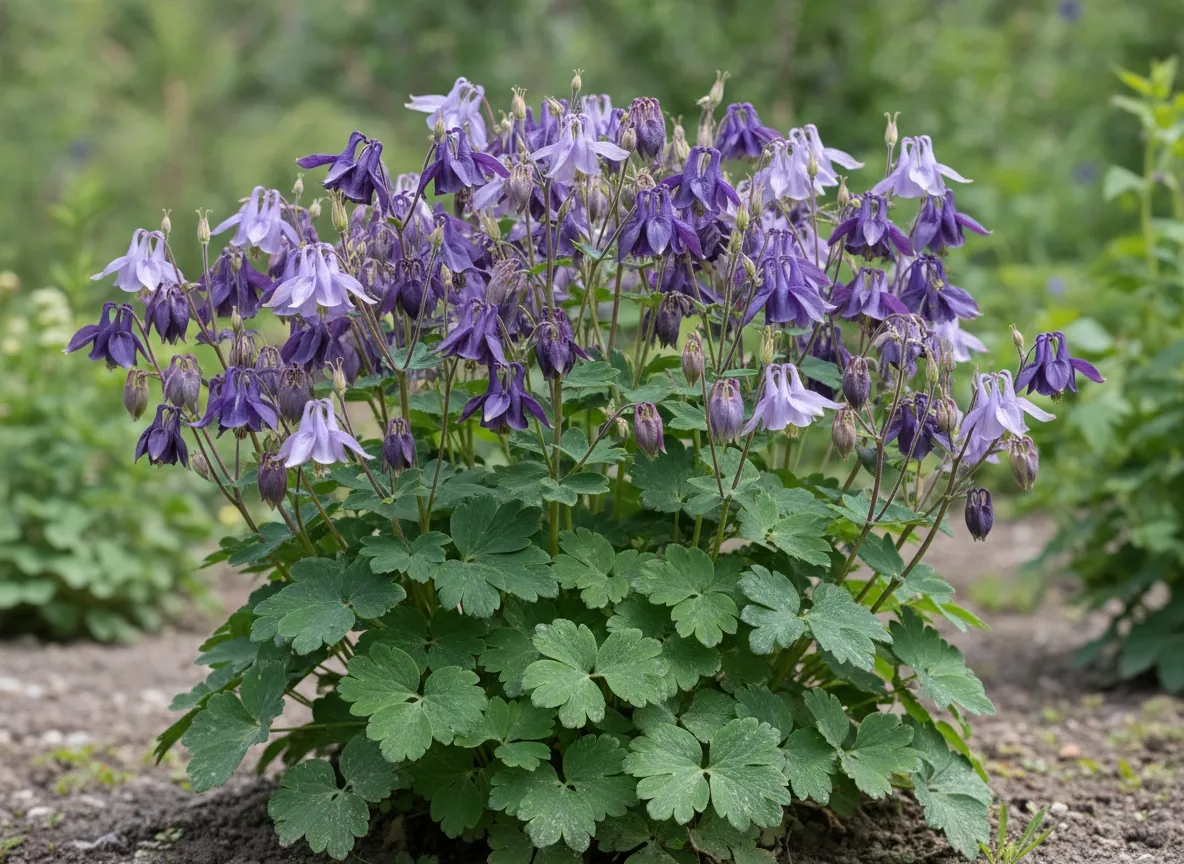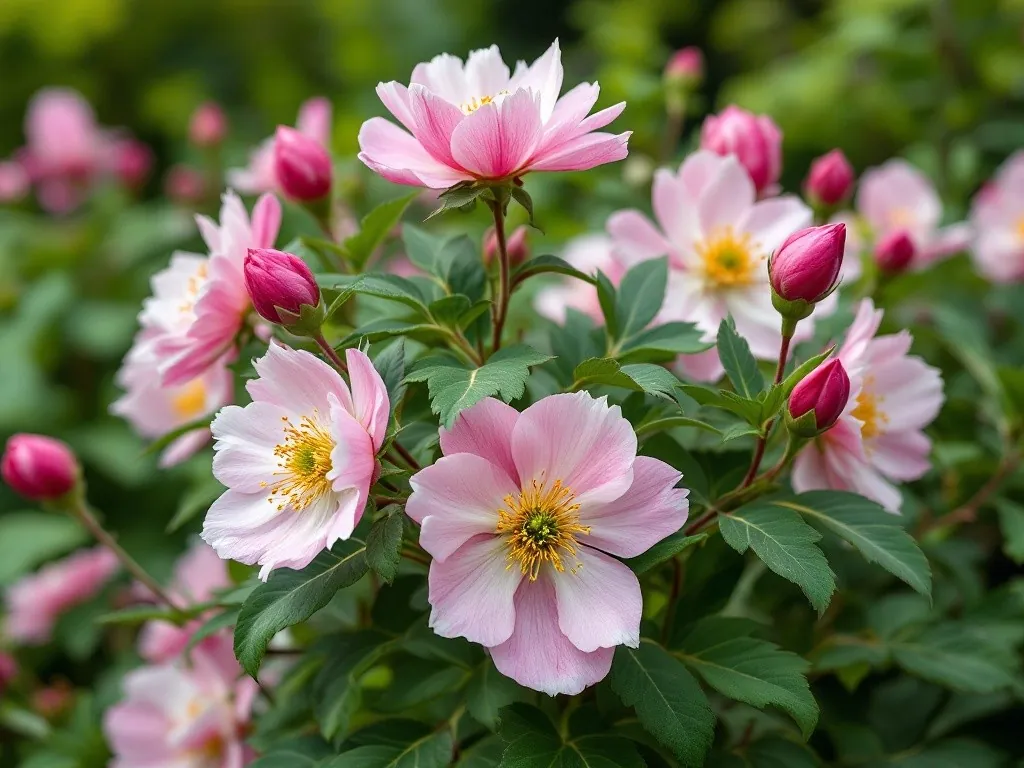
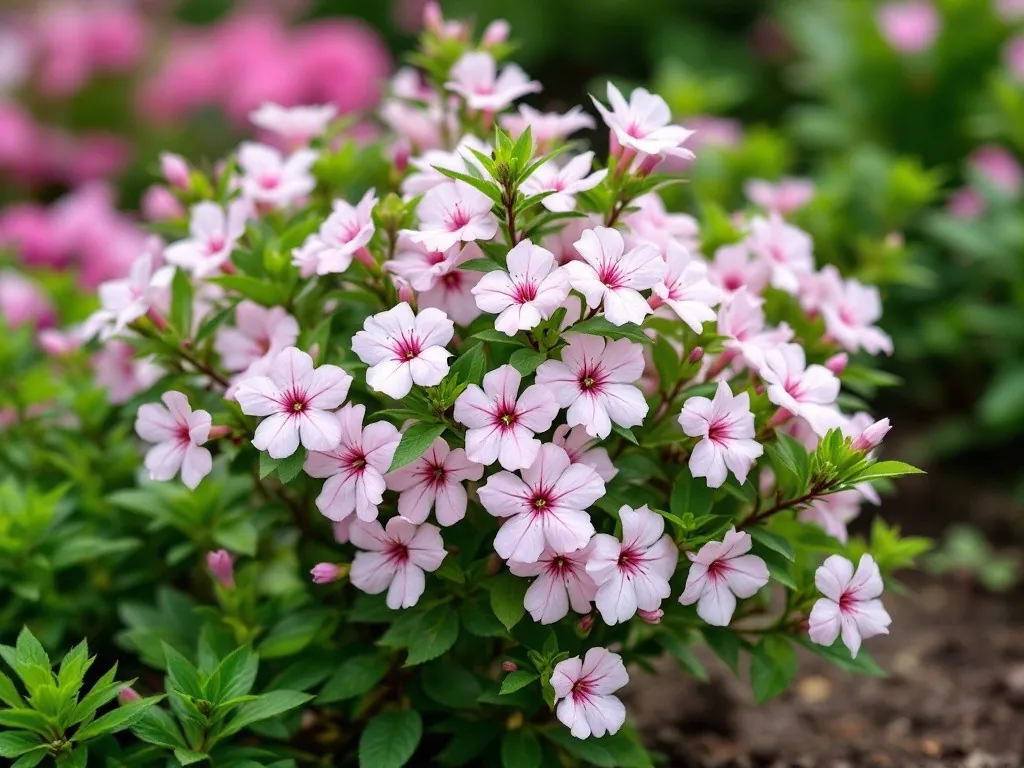
In short
- Blooms abundantly and fragrantly from July to September.
- Needs fertile, moist soil in sun or partial shade.
- Prone to powdery mildew — good airflow and watering at the base are key.
- Strongly attracts butterflies and bees.
- Divide clumps every few years for health and abundant flowering.
Botanical data
- Family
- Polemoniaceae (Polemoniaceae)
- Height
- 0.6–1.2 m
- Width
- 0.4–0.6 m
- Habit
- Upright
- Growth rate
- Moderate
- Position
- Full sun, Partial shade
- Soil
- Humus-rich, Loamy
- pH reaction
- pH 6–7
- Moisture
- Moderate, Moist
- Bloom
- July–September
- Hardiness
- USDA 4a–8a
- Propagation
- By division, From cuttings
Characteristics
An upright perennial forming clumps of stiff stems with lance-shaped leaves, topped with large, dome-shaped panicles of small, fragrant, five-petaled flowers in shades of pink, white, red, and purple.
Growing and care
Watering
Requires consistent moisture — it wilts when dry and becomes more prone to powdery mildew. Water at the base, not on the leaves.
Fertilizing
Regular feeding supports abundant, long-lasting bloom.
Planting
Fertile, humus-rich, moist soil in sun or partial shade; ensure air circulation between plants to prevent powdery mildew.
Pruning
Remove spent flower heads to prolong flowering; cut stems back to the ground in fall. Thin out the weakest stems in the clump in spring for better airflow.
Companion plants
Good companions
Similar requirements — fertile, moist soil and sun; phlox fills out the rose bed and extends summer bloom.
In partial shade, phlox and hosta share a preference for moist, humus-rich soil, complementing each other in form.
Bad companions
Lavender needs dry, well-drained soil — the opposite of phlox's moist site requirements.
The evidence level indicates whether the relationship is backed by research, observation, or gardening tradition.
Diseases and pests
Toxicity
| For whom | Level | Notes |
|---|---|---|
| Humans | None | — |
| Dogs | None | — |
| Cats | None | — |
History and origin
Garden phlox arrived in Europe from eastern North America in the 18th century and became one of the most popular perennials in cottage gardens and perennial borders, now available in hundreds of cultivars.
Uses
For perennial borders, cottage and naturalistic gardens, and plantings for pollinators and butterflies. Also good as a cut flower.
Trivia
- The name Phlox comes from the Greek word for flame, referring to the intense colors of the flowers.
- Phlox is a favorite of butterflies and hawk moths thanks to its sweet scent, which intensifies in the evening.
Frequently asked questions
Why do phlox leaves get covered in white powder?
This is powdery mildew, to which phlox is especially prone. Good airflow (thinning the clump), watering at the base rather than on the leaves, and choosing resistant cultivars all help.
How can I extend phlox's flowering period?
Regularly remove spent flower heads — this encourages the plant to produce more side shoots with flowers and extends the blooming period.
How often should phlox be divided?
Every 3-4 years, in spring or fall. Division rejuvenates the clump, prevents overcrowding (which encourages mildew), and maintains abundant flowering.
Sources
- Plants of the World Online (POWO)Database (GBIF, POWO…)
- RHS — Phlox paniculataInstitution / botanical garden
My note
A private note for this plant — saved in your browser.