In short
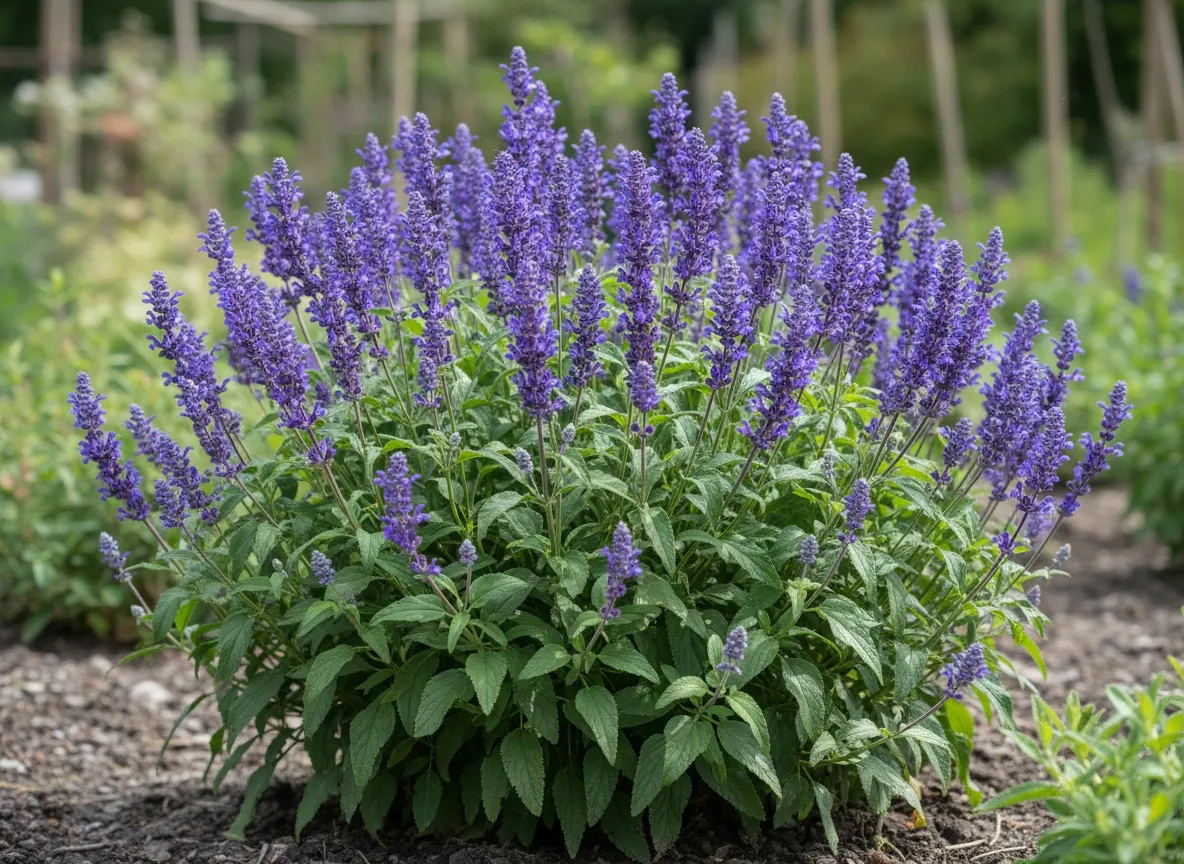
- A drought-loving perennial with vertical, violet-blue spikes.
- Very valuable to bees, bumblebees and butterflies — abundantly nectar-rich.
- Flowers from May; after cutting back it flowers again in late summer.
- Requires full sun and well-drained, rather dry soil.
- A classic, proven companion of roses and border perennials.
Botanical data
- Family
- Lamiaceae (Lamiaceae)
- Height
- 0.4–0.7 m
- Width
- 0.3–0.5 m
- Habit
- Clump-forming
- Growth rate
- Fast
- Position
- Full sun
- Soil
- Sandy, Loamy, Humus-rich, Chalky
- pH reaction
- pH 6–7.5
- Moisture
- Dry, Moderate
- Bloom
- May–August
- Hardiness
- USDA 4a–8b
- Propagation
- By division, From cuttings, From seed
Characteristics
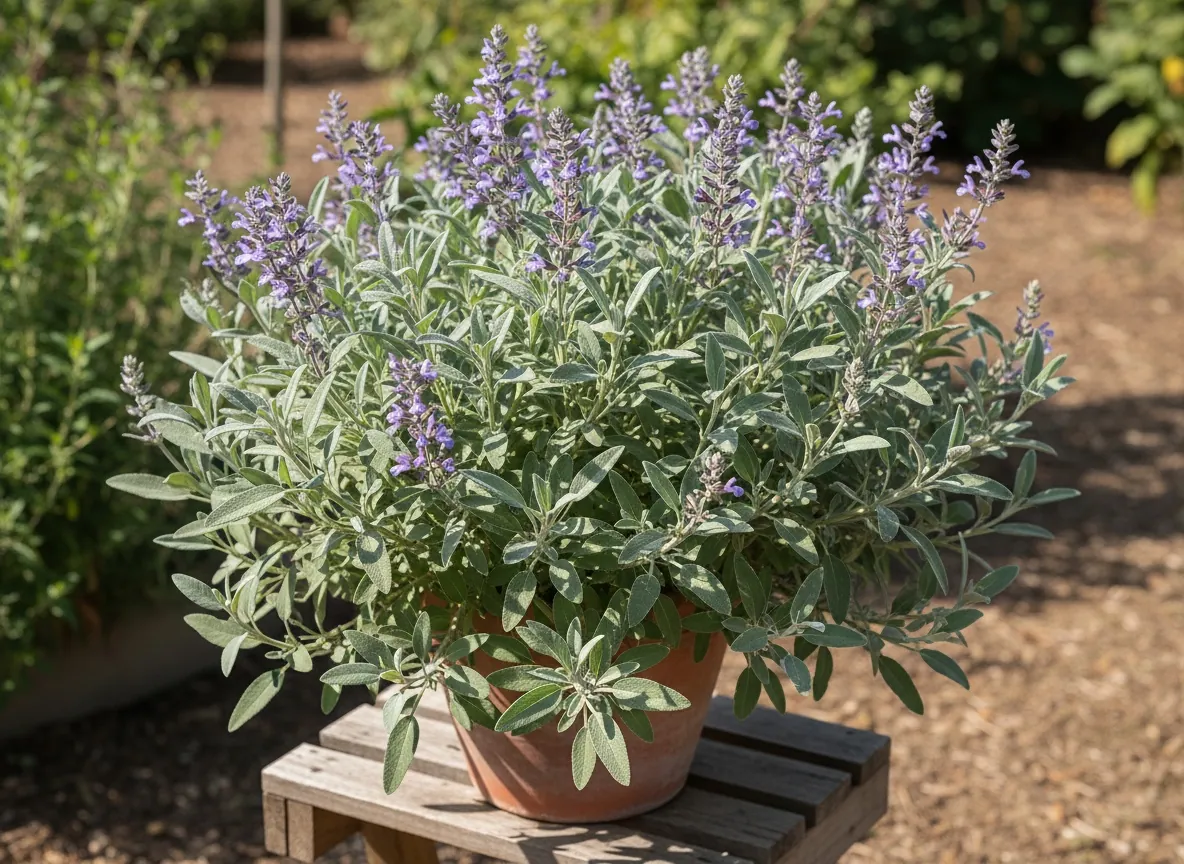
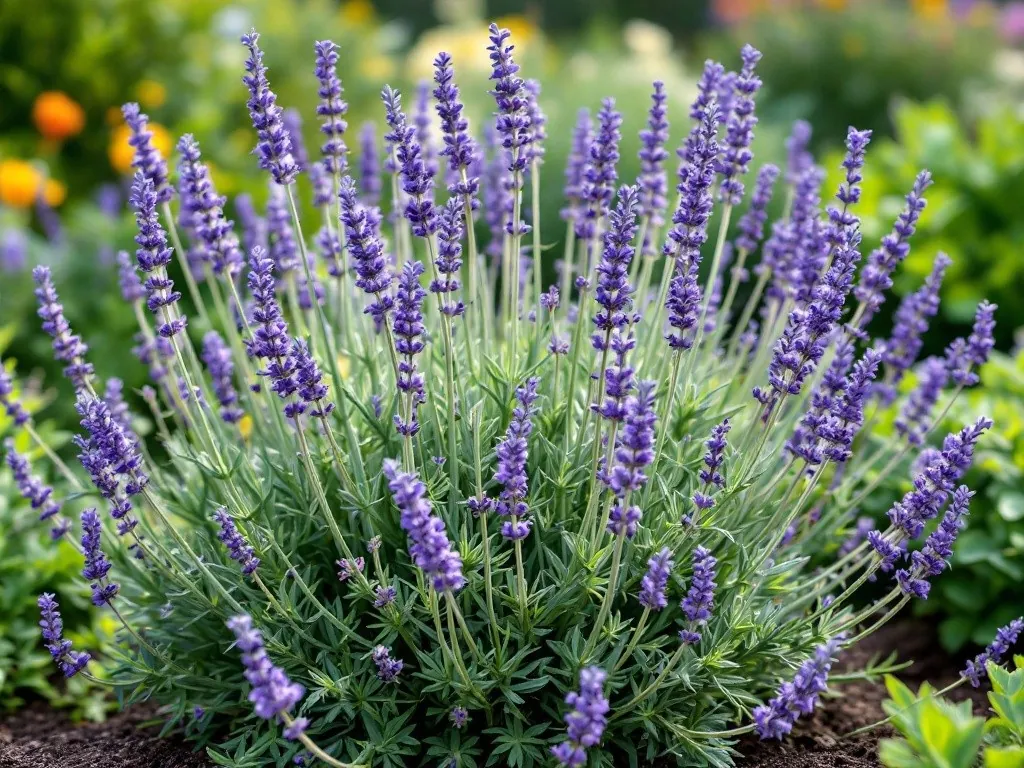
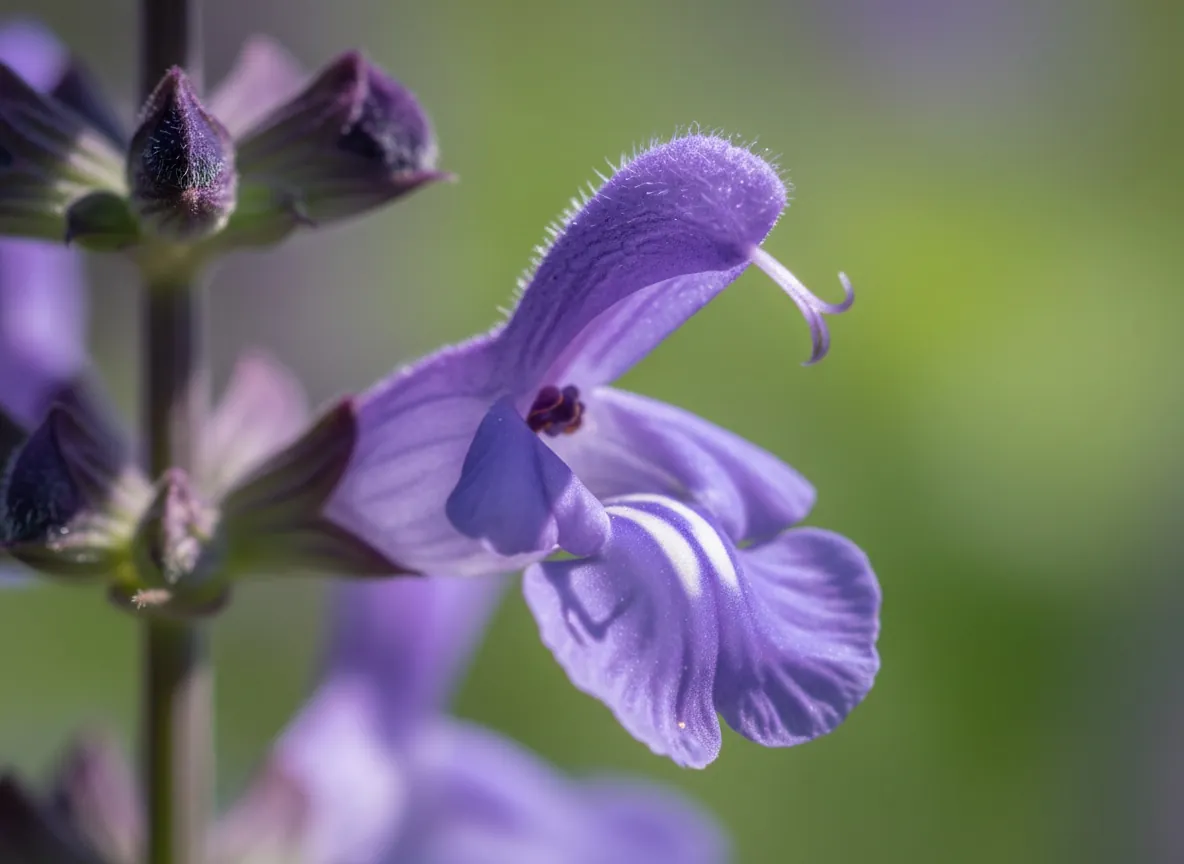
It forms compact, dome-shaped clumps of wrinkled, aromatic, dark green leaves, above which numerous stiff, densely flowered spikes rise. The small, lipped flowers are set in colourful, often purple calyces that remain decorative even after flowering.
Growing and care
Watering
Markedly drought-loving once established. Water sparingly, only after the soil has dried out; it does not tolerate waterlogging, especially in winter.
Fertilizing
Sparingly — at a site that is too fertile it splays out and flowers more weakly.
Planting
Well-drained soil in full sun; on heavier ground add gravel or coarse sand to improve drainage.
Pruning
Cutting off the spent spikes just after the first flowering prompts the plant to flower again in late summer; in autumn or spring cut back the whole clump.
Companion plants
Good companions
A classic border pairing — the dense, violet spikes of the sage mask the bare base of the rose shrubs and contrast beautifully with their flowers.
Identical requirements (full sun, dry, well-drained soil) and a kindred violet-blue palette make a shared, drought-loving composition easy.
The warm, yellow flower heads of the rudbeckia form a strong contrast with the cool spikes of the sage in a sunny prairie border.
Bad companions
They require constantly moist soil and shade, which for the drought-loving, sun-loving sage means root rot.
The evidence level indicates whether the relationship is backed by research, observation, or gardening tradition.
Toxicity
| For whom | Level | Notes |
|---|---|---|
| Humans | None | — |
| Dogs | None | — |
| Cats | None | — |
History and origin
The species comes from dry grasslands and steppes of Central and Eastern Europe. At the turn of the 20th and 21st centuries it became one of the pillar plants of the naturalistic and prairie garden movement, and its reliable cultivars, such as 'Caradonna' or 'Ostfriesland', are today among the most frequently planted border perennials.
Uses
For sunny perennial borders, naturalistic, prairie and gravel gardens, and pollinator plantings. It combines excellently with roses, ornamental grasses and other drought-loving perennials.
Trivia
- Unlike common sage, woodland sage is grown exclusively as an ornamental and nectar plant, not a culinary one.
- It is a flagship species of the so-called prairie style — planted in large groups with ornamental grasses, it creates the effect of a natural, flowery meadow.
Frequently asked questions
How do you make woodland sage flower again?
It is enough to cut off the spent spikes just after the first, spring-summer wave of flowering. Deprived of setting seeds, the plant redirects its energy into new shoots and flowers again in late summer, though usually somewhat more modestly than the first time.
Why does the sage clump splay out and “fall apart” in the middle?
The most common cause is soil that is too fertile and moist, or an excess of nitrogen, which cause rank, soft growth. Woodland sage grows best in a well-drained, poor and sunny site; cutting back after the first flowering, which densifies the clump, also helps.
Is woodland sage good for bees?
Yes, it is one of the best nectar perennials for a sunny border. Its dense, long-flowering spikes are besieged by bees, bumblebees and butterflies, and after cutting back and flowering again it provides forage for a large part of the season.
Sources
- Plants of the World Online (POWO)Database (GBIF, POWO…)
- RHS — Salvia nemorosaInstitution / botanical garden
My note
A private note for this plant — saved in your browser.