In short
- A miniature: a single head is 3-6 cm across, but the cluster spreads by offsets to 10-15 cm.
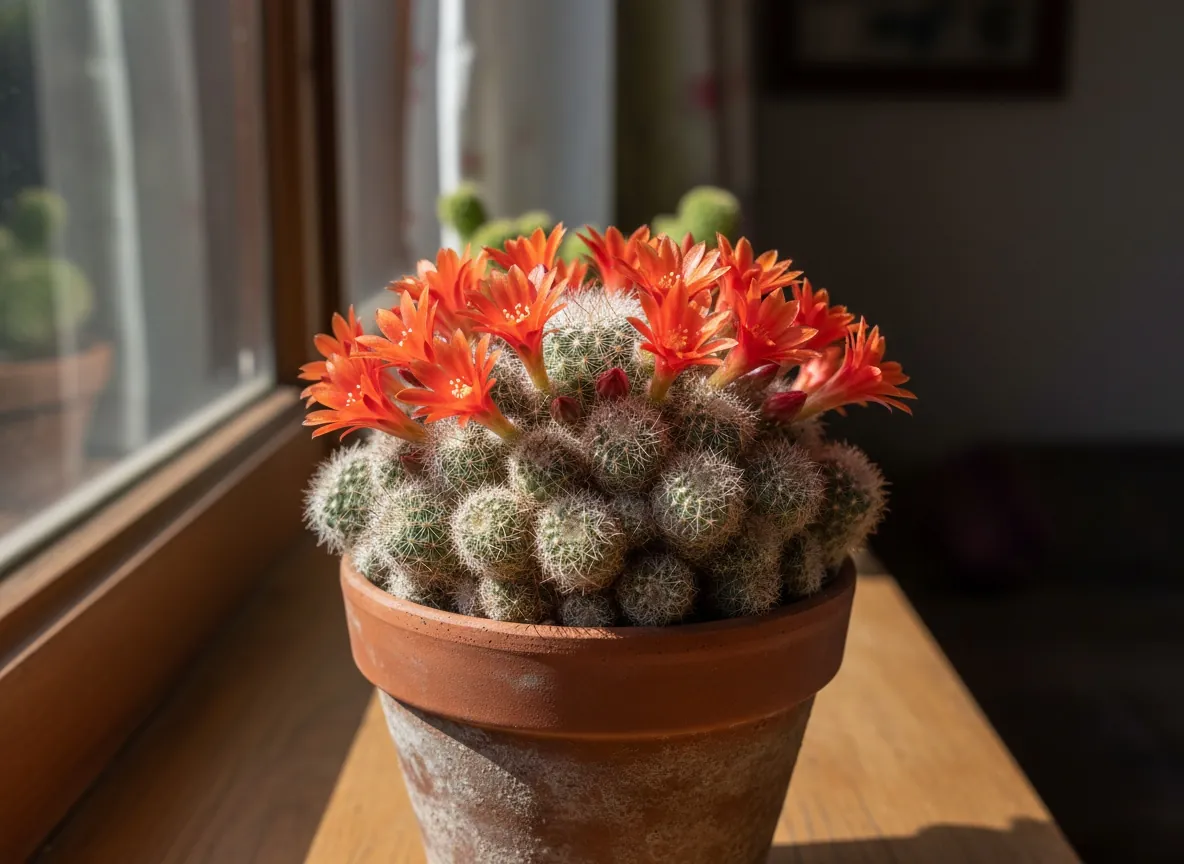
- The flowers grow at the BASE of the body, forming a wreath around the bottom — not at the top.
- It flowers after just 2-3 years from sowing, which is exceptionally early for a cactus.
- A cool (5–10°C) and completely dry winter rest is an absolute condition for flowering.
- It tolerates more water in the growing season than desert cacti — it is a plant of mountain grassland.
- Short and soft spines — one of the safest cacti to handle.
Botanical data
- Family
- Cactaceae (Cactaceae)
- Height
- 0.03–0.06 m
- Width
- 0.05–0.15 m
- Habit
- Clump-forming
- Growth rate
- Moderate
- Position
- Full sun, Partial shade
- Soil
- Sandy, Humus-rich
- pH reaction
- pH 5.5–7
- Moisture
- Dry, Moderate
- Bloom
- April–June
- Hardiness
- —
- Propagation
- From seed, From cuttings, By division
Characteristics
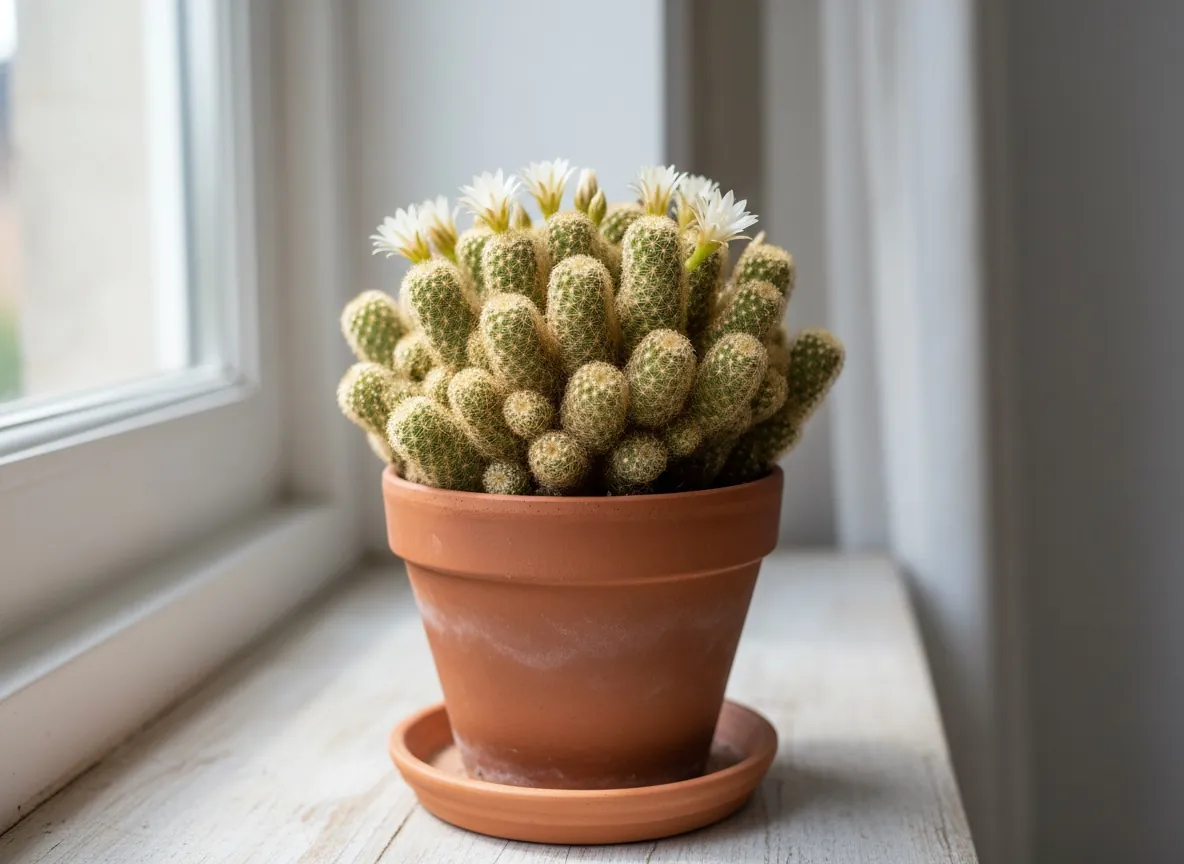
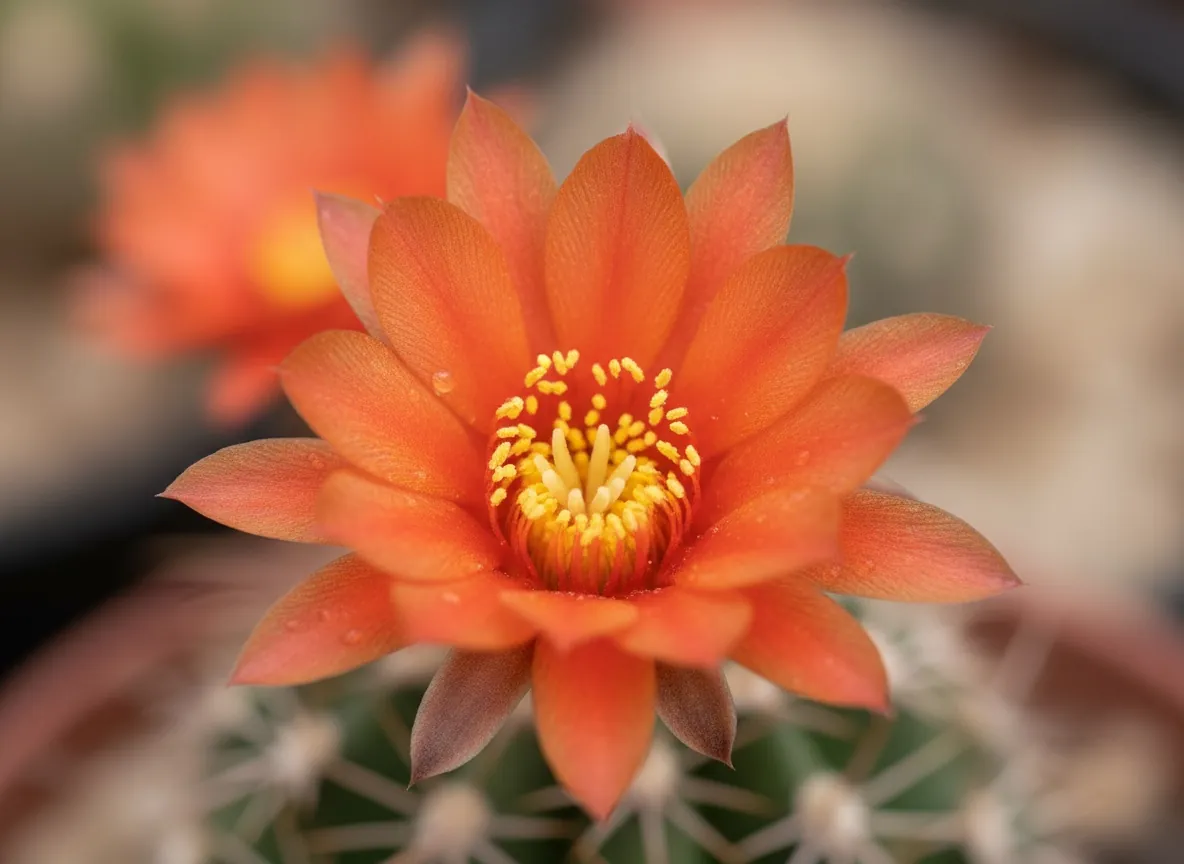
A small cactus with a flattened-globular body 3-6 cm across, usually intensely green, which quickly produces offsets and in time forms a compact, cushion-like cluster of a dozen or so heads. Instead of sharp ribs, the surface is covered with low, spirally arranged tubercles with small areoles, from which grow a dozen or so whitish or straw-coloured, thin and short spines — soft enough that the plant can be touched carefully without injury. The distinguishing feature of the genus is where it flowers: the buds arise from areoles set right at the base of the body, so the funnel-shaped, bright red or orange flowers 3-4 cm across arrange themselves in a wreath around the base of the plant, rather than in a crown at the top, as in most cacti. The flowers open in the sun and half-close at night, last several days, and on a well-overwintered plant can appear so abundantly that they almost completely hide the green head.
Growing and care
Watering
In the growing season water more often than typical desert cacti — rebutia is a plant of mountain grassland, has a small body and shallow roots, so it pays for long droughts with shrivelling and checked growth. Water once the top layer has dried, without letting the whole root ball dry out for weeks. From November to March do NOT water at all and keep it at 5–10°C — this is the only way to set buds. With a warm winter rest the plant grows instead of resting, becomes drawn and does not flower in spring.
Fertilizing
At the recommended concentration, only in the growing season. With excess nitrogen rebutia builds a soft, elongated body at the expense of flowers — and it is precisely the flowers that are the only reason for growing it.
Planting
A free-draining cactus mix with a touch of humus and a good proportion of grit or perlite. The pot shallow and wide — the cluster spreads sideways by offsets, and the roots are shallow. Top-dress with gravel so that the root collar does not touch moist substrate.
Pruning
At most, separating offsets in spring for propagation, or removing a single head blackened by rot with a clean knife right at its base.
Companion plants
Good companions
A cactus with an identical cultivation regime — mineral substrate, a bright position and a dry, cool winter rest as the condition for flowering; both form clusters in shallow bowls.
A South American cactus tolerating the same slightly acidic substrate and somewhat gentler light than the desert species — a safe companion in one bowl.
A mountain succulent with the same needs: free-draining substrate, full sun and a cold, dry rest — it tolerates being put out on the balcony together for the summer.
Bad companions
The fern needs constantly moist substrate and humid air — in such conditions the shallow roots of the rebutia rot.
Rebutia must overwinter at 5–10°C and completely dry in order to set buds — kept in a warm room in winter it becomes drawn and will not flower in spring.
The evidence level indicates whether the relationship is backed by research, observation, or gardening tradition.
Toxicity
| For whom | Level | Notes |
|---|---|---|
| Humans | None | A non-toxic plant — it contains no known harmful substances. The spines are short, thin and soft for a cactus, so rebutia is among the safest species to handle, but they still easily stick into the skin when repotting. |
| Dogs | None | — |
| Cats | None | Non-toxic; the only risk is fine spines stuck into an animal's paw or muzzle. |
History and origin
The genus Rebutia was described at the end of the 19th century, and its name commemorates Pierre Rebut, a French nurseryman and cactus dealer from near Lyon. Rebutia minuscula, which comes from the high mountain grasslands of Salta and Tucumán, reached European collections at the beginning of the 20th century and quickly gained the status of one of the most rewarding cacti in cultivation: it combines small size, tolerance of cold, early flowering and ease of propagation. To this day it is one of the first species recommended to beginner collectors, and in the trade it exists in many colour forms, from blood red to salmon and yellow.
Uses
A classic cactus for a bright windowsill, for shallow bowls and mineral compositions, and at the same time one of the best species to start with: it forgives mistakes, takes up little room, is easy to propagate and — unlike most cacti — rewards its keeper with flowers after only a few years. In summer it is readily put out on a balcony or into a cold frame, where the wide daily temperature range encourages compact growth. Thanks to its soft spines it is sometimes recommended as a first cactus for a child.
Trivia
- The wreath of flowers at the base rather than at the top is a distinguishing feature of the whole genus Rebutia: the buds are set in the areoles of the oldest, lowest part of the body, so the plant flowers “from below” and gives the impression that the flowers grow straight out of the substrate.
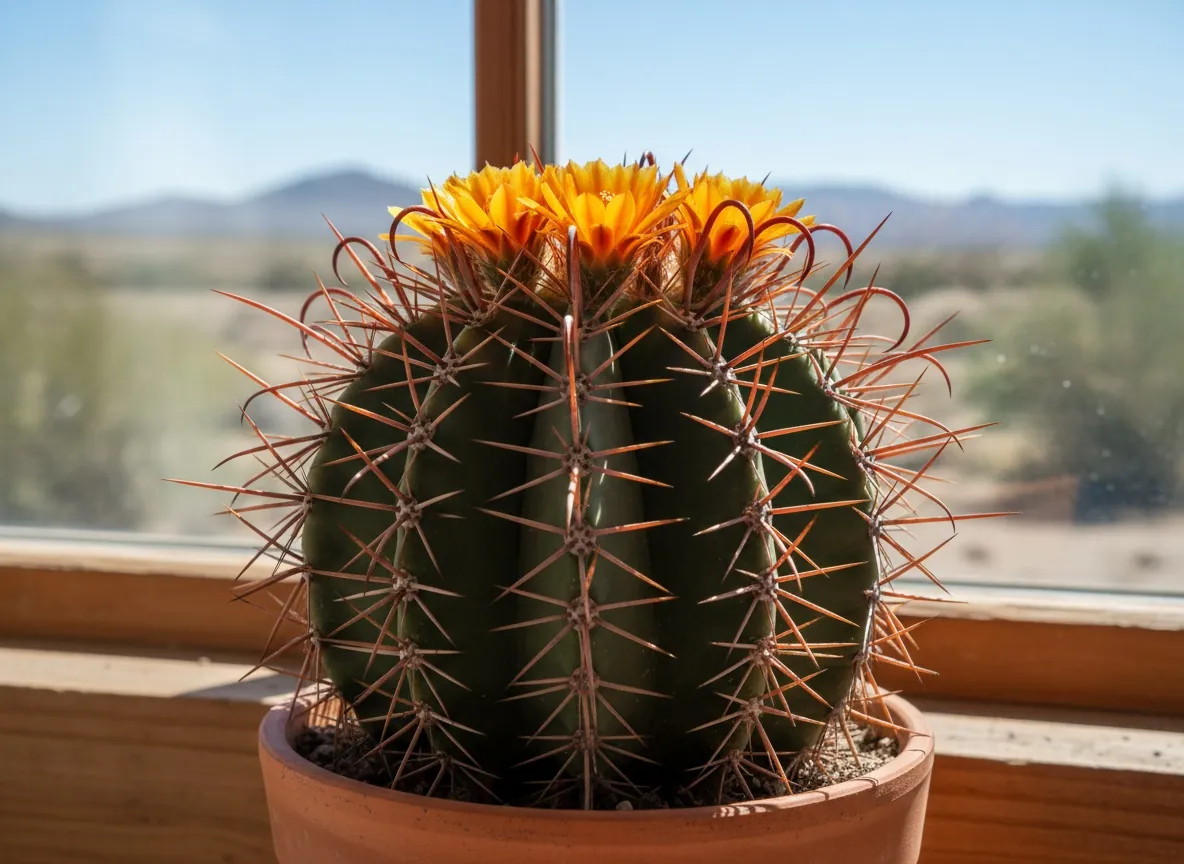
- Rebutia flowers just 2-3 years after sowing — a remarkable thing among cacti, many of which (like the golden barrel cactus or the ferocactus) keep you waiting a dozen years or more for the first flower.
- The species is largely self-fertile, so after flowering it often sets small fruits full of seeds by itself. The scattered seeds can germinate in the same pot without anyone's help — collectors not infrequently discover “free” seedlings in the bowl.
Frequently asked questions
Why is my rebutia not flowering?
In nine cases out of ten the reason is too warm a winter rest. Rebutia comes from the mountains, where winters are cold and dry, and only such a rest triggers bud formation: from November to March the plant should stand in a bright, cool place at 5–10°C and receive not a drop of water. Kept in a warm room in winter and watered, it grows instead of resting — it becomes drawn, pale and simply does not flower in spring. The other common causes are too little light in the growing season and a fertiliser with too high a nitrogen content.
After how many years will rebutia flower for the first time?
Usually after just 2-3 years from sowing, that is when the head is only 2-3 cm across — this is exceptionally early for a cactus and the main reason rebutia is recommended to beginners. By comparison, the golden barrel cactus or the ferocactus keep you waiting a dozen years or more for the first flower. A plant bought in a shop is usually already of flowering age, so if it is not flowering, the cause lies in the conditions and not in its age.
Why do the flowers grow at the bottom of the plant rather than at the top?
That is how this plant looks and it is not any kind of abnormality — it is a distinguishing feature of the whole genus Rebutia. The buds are set in areoles right at the base of the body, so the flowers form a wreath around the base of the head and look as if they grow straight out of the substrate. In most cacti, for example in mammillarias or the golden barrel cactus, the buds form in the apical zone and the flowers arrange themselves in a crown at the top. It is precisely this “lower” wreath that gave the species its German name Feuerkranz, meaning fiery wreath.
Sources
- Plants of the World Online (POWO)Database (GBIF, POWO…)
- RHS — Rebutia minusculaInstitution / botanical garden
My note
A private note for this plant — saved in your browser.