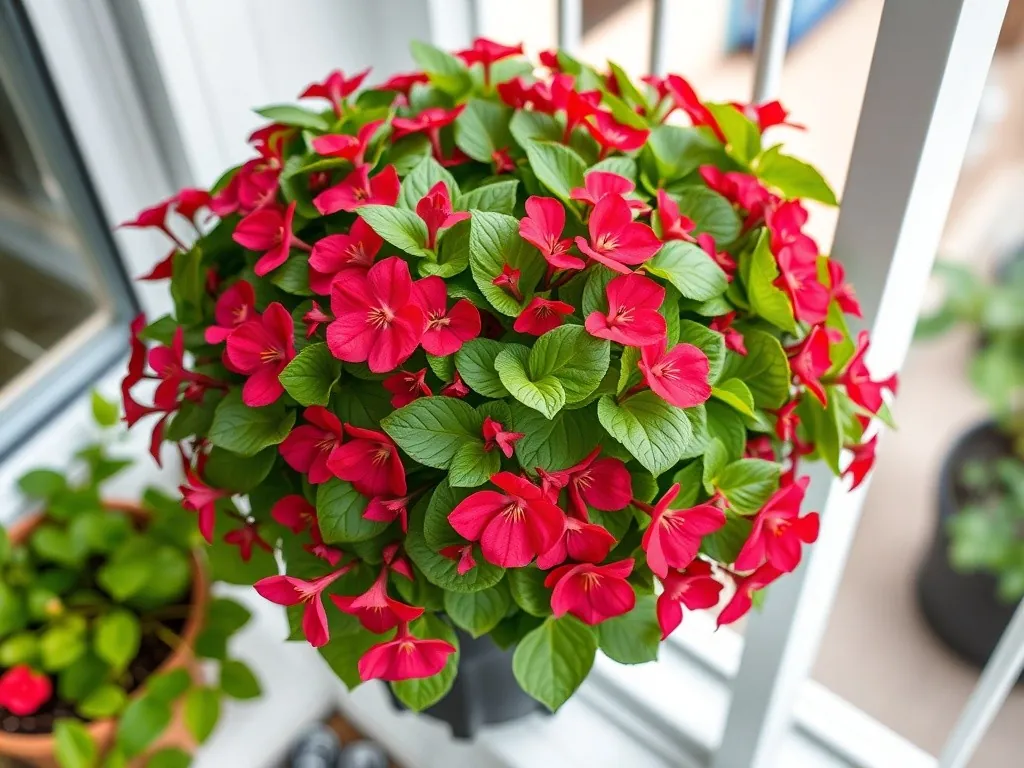
In short
- Position: partial shade or shade — one of the few balcony plants that tolerate deep shade.
- It needs constantly moist soil; it wilts quickly when it dries out.
- Flowers abundantly from May until the first frosts.
- It does not require the removal of spent flowers — they drop on their own.
- Grown as an annual, sensitive to cold and frost.
Botanical data
- Family
- Balsaminaceae (Balsaminaceae)
- Height
- 0.2–0.4 m
- Width
- 0.25–0.4 m
- Habit
- Clump-forming
- Growth rate
- Fast
- Position
- Partial shade, Shade
- Soil
- Humus-rich
- pH reaction
- pH 5.5–6.5
- Moisture
- Moist, Moderate
- Bloom
- May–October
- Hardiness
- —
- Propagation
- From seed, From cuttings
Characteristics
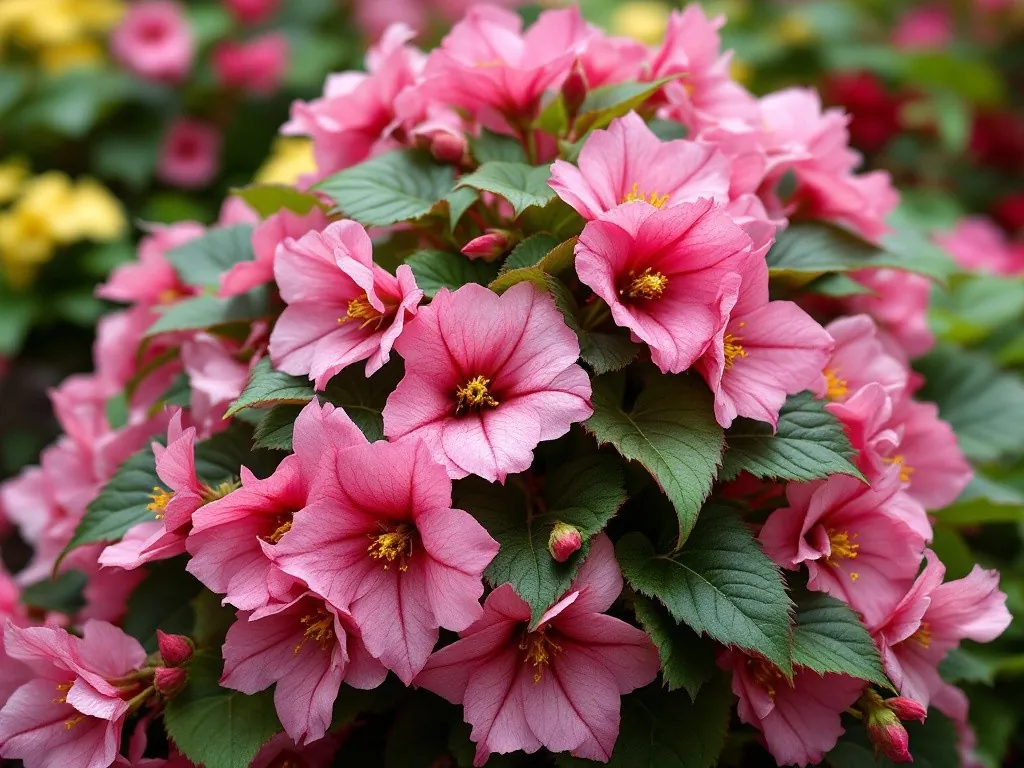
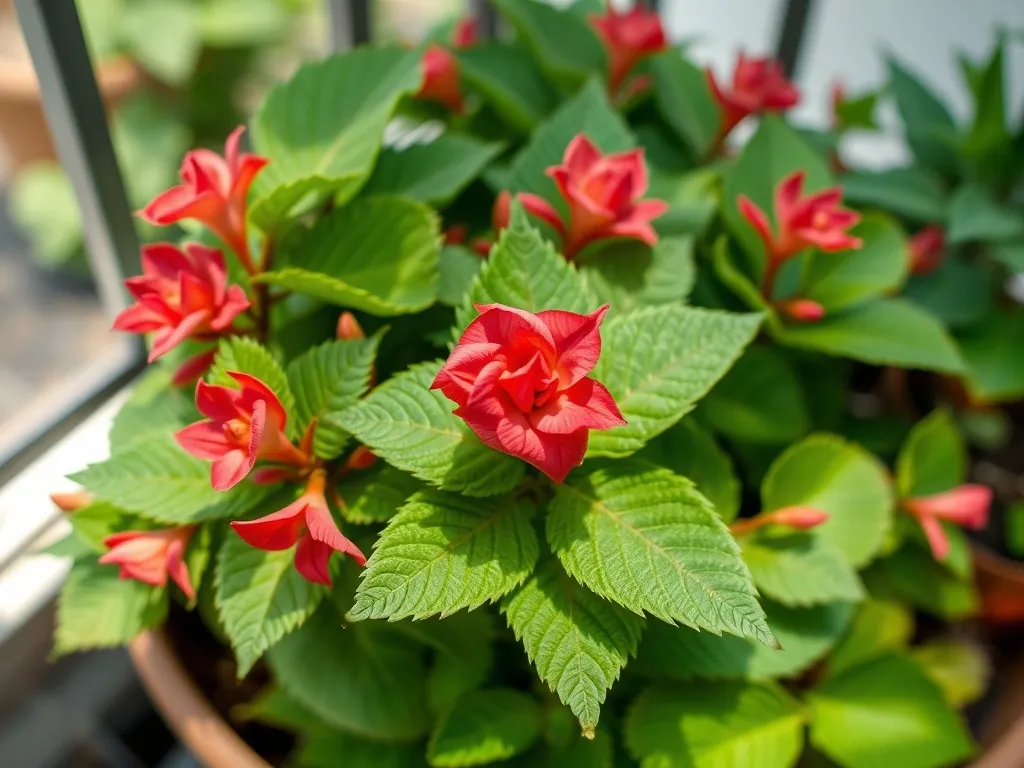
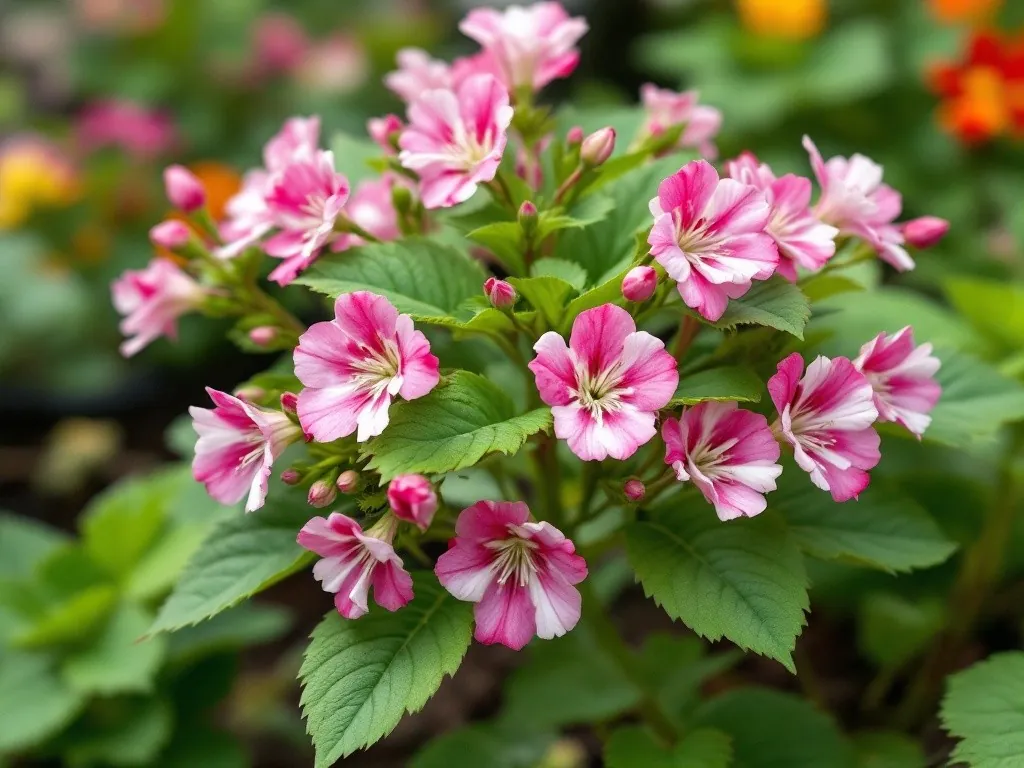
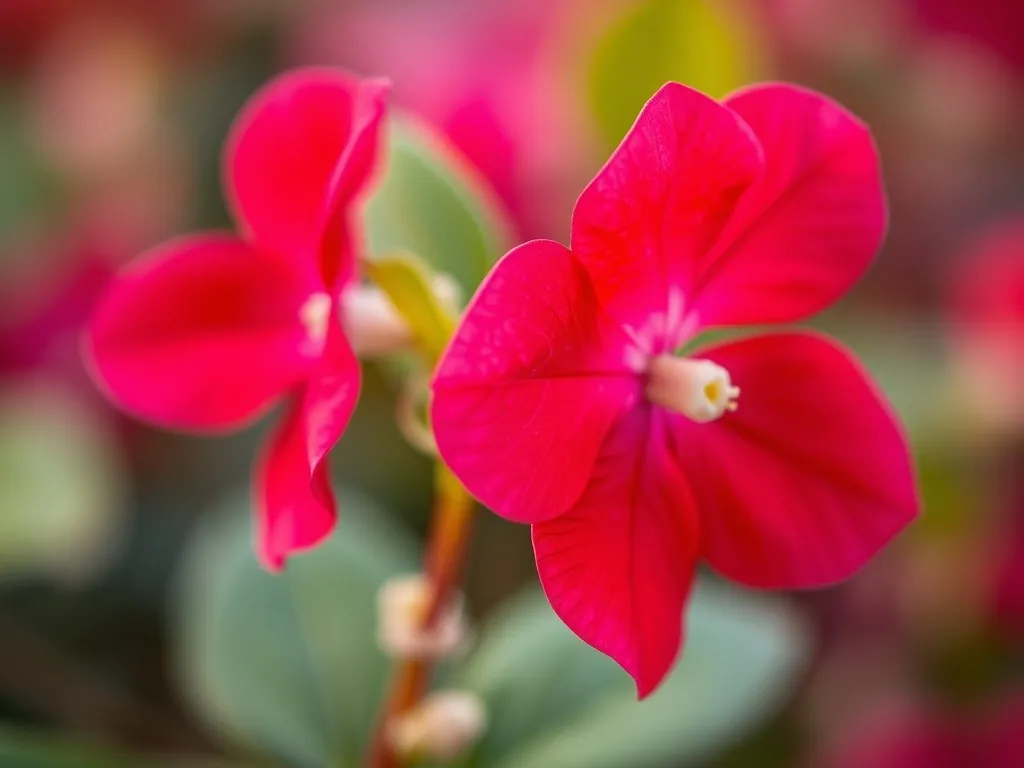
It forms dense, succulent clumps with brittle, translucent stems and glossy, bright green leaves. The flat, five-petalled flowers 3–5 cm in diameter appear en masse in the leaf axils throughout the summer season.
Growing and care
Watering
Requires constantly moist substrate — when it dries out the leaves wilt quickly, though the plant usually recovers after watering. Persistent waterlogging should nonetheless be avoided.
Fertilizing
Diluted according to instructions — excess fertiliser can reduce flowering in favour of leaf growth.
Planting
Fertile, moist, humus-rich soil in a shady or partially shaded spot.
Pruning
Cutting back elongated shoots encourages branching; spent flowers drop on their own and need not be removed.
Companion plants
Good companions
Identical requirements for shade and moisture — a classic, proven combination for shady beds and balconies.
Both species tolerate shade and moist soil well, and the contrasting leaf texture of the hosta nicely sets off the Busy Lizzie's flowers.
Bad companions
Conflicting light and water requirements — Busy Lizzie needs shade and moisture, whereas these plants require sun and dry soil.
The evidence level indicates whether the relationship is backed by research, observation, or gardening tradition.
Toxicity
| For whom | Level | Notes |
|---|---|---|
| Humans | None | — |
| Dogs | None | — |
| Cats | None | — |
History and origin
Discovered in the mountain forests of East Africa in the 19th century by the British traveller John Kirk during an expedition with David Livingstone, hence the species epithet 'walleriana' in honour of another explorer of those regions. It quickly became a popular pot and balcony plant in Europe.
Uses
For shady and partially shaded beds, balcony boxes, hanging baskets and containers beneath tree canopies, where most flowering plants cannot cope with the lack of sun.
Trivia
- The genus name Impatiens ('impatient') comes from the springy seed capsules that burst at a touch and fling the seeds violently.
- The English name 'Busy Lizzie' alludes to the exceptionally abundant and uninterrupted flowering throughout the season.
Frequently asked questions
Why does my Busy Lizzie wilt despite watering?
Most often it is simple drying out of the substrate between waterings — even in shade the plant needs regular, frequent moisture. It is worth checking that the container has working drainage and that watering is frequent enough in summer.
Is Busy Lizzie suitable for a sunny balcony?
Not really — Impatiens walleriana prefers shade or partial shade. In full sun the leaves scorch and flowering weakens; for sunny positions it is better to choose a petunia or a pelargonium.
Do spent flowers of Busy Lizzie need to be removed?
It is not necessary — spent flowers drop on their own, unlike many other balcony plants that require regular deadheading.
Sources
- Plants of the World Online (POWO) — Impatiens wallerianaDatabase (GBIF, POWO…)
- Missouri Botanical Garden Plant Finder — Impatiens wallerianaInstitution / botanical garden
My note
A private note for this plant — saved in your browser.