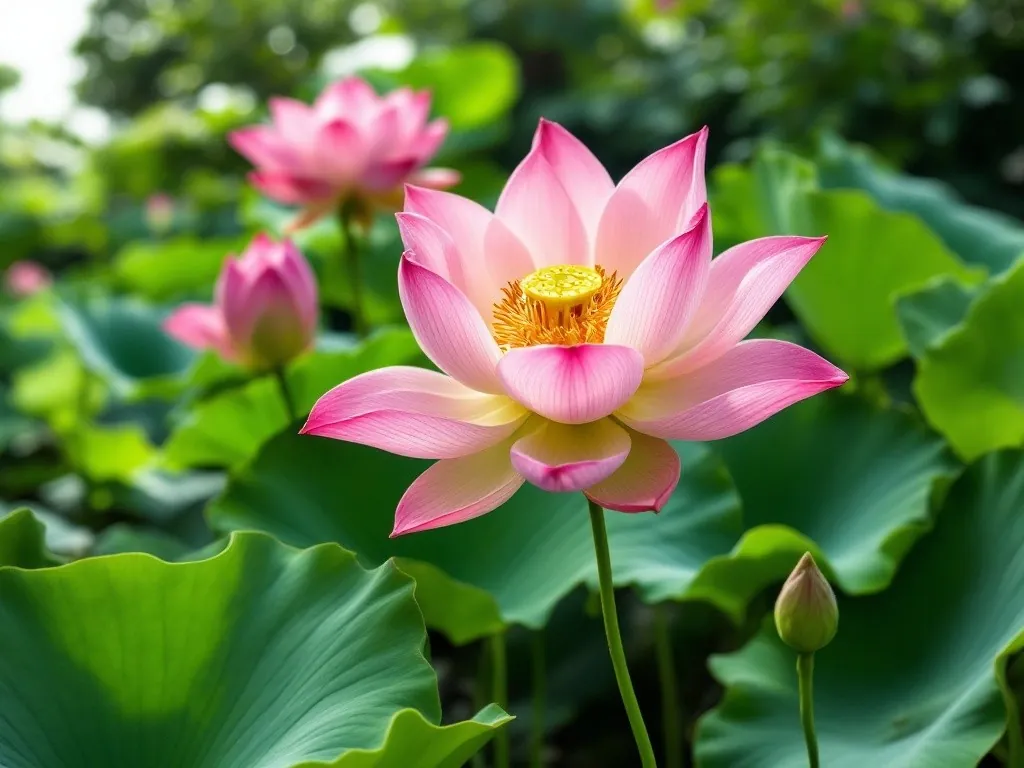
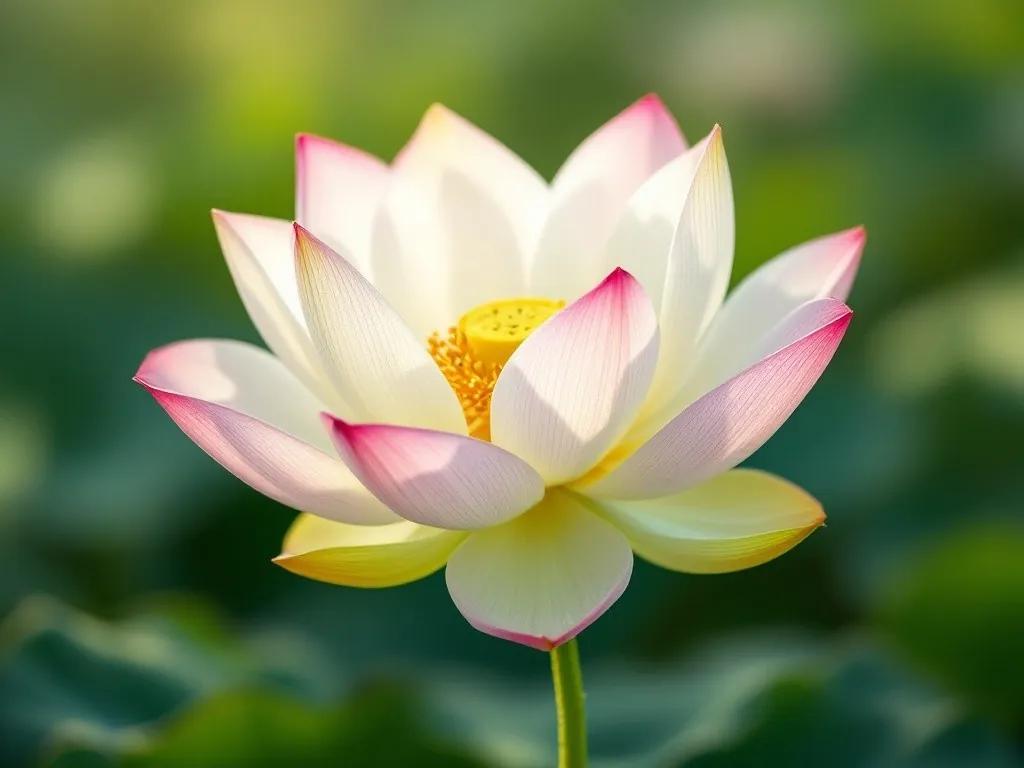
In short
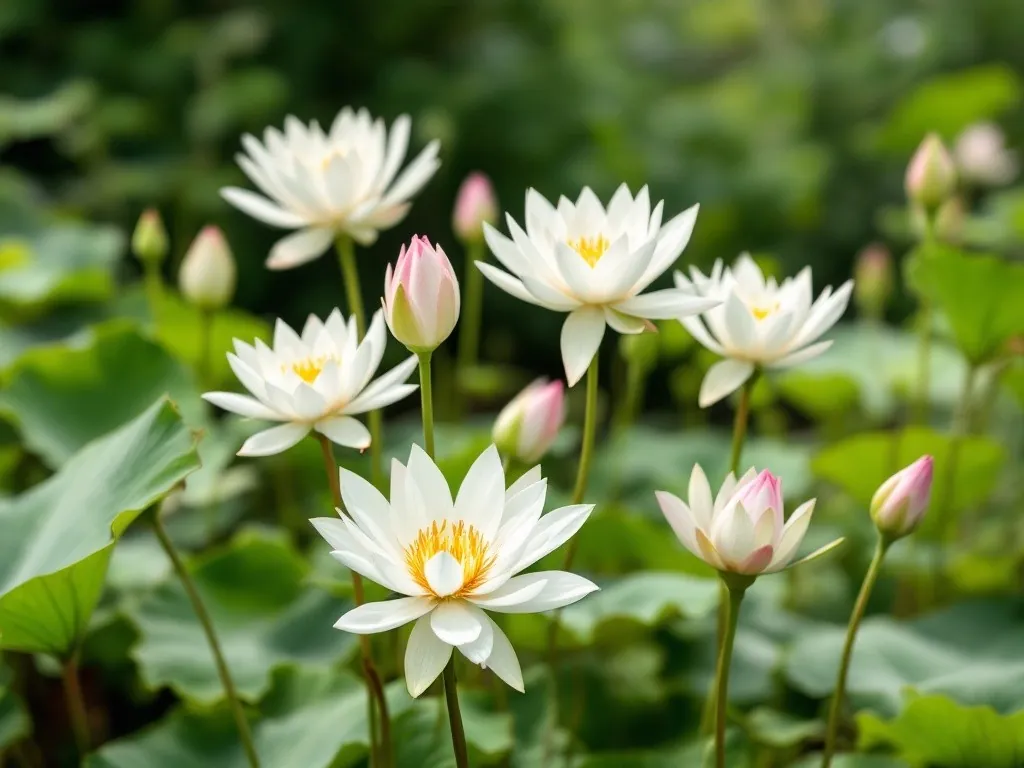
- Leaves and flowers rise on stiff stalks 0.5-1.5 m above the water surface — unlike water lilies, whose leaves lie flat on the water.
- Large, fragrant flowers (pink or white) develop in July-August.
- Needs full sun and warm water to start growing in spring.
- Less frost-hardy than native water lilies — in cooler climates the rhizomes need winter protection.
- Rhizomes and seeds are edible and have been used in Asian cuisine for thousands of years.
- Holds deep religious significance in Buddhism and Hinduism as a symbol of purity.
Botanical data
- Family
- Nelumbonaceae (Nelumbonaceae)
- Height
- 0.5–1.5 m
- Width
- 1–2 m
- Habit
- Upright
- Growth rate
- Fast
- Position
- Full sun
- Soil
- Clay, Humus-rich
- pH reaction
- pH 6–7
- Moisture
- Wet
- Bloom
- July–August
- Hardiness
- USDA 5a–10b
- Propagation
- By division, By runners
Characteristics
An aquatic perennial growing from a thick, branching rhizome rooted in the bottom of the water body. The key difference from water lilies (Nymphaea): the lotus's leaves — round, with a waxy, silvery blue-green, water-repelling surface — are held on stiff stalks high ABOVE the water surface, rather than floating flat on it. Likewise, the large flowers (up to 20-25 cm across), with numerous petals, rise on their own tall stalks above the leaves. After flowering, a characteristic flat, spongy seed head forms, embedded with nut-like seeds.
Growing and care
Fertilizing
The lotus is a heavy feeder — regular feeding during the season markedly improves flowering abundance, unlike the more modest requirements of native water lilies.
Planting
The rhizome is planted shallower than in most water lilies — usually with 15-30 cm of water above the substrate, since the lotus needs the water to warm up quickly in spring to start growing. Because of its very vigorous rhizome growth, cultivation in large, closed containers (without a bottom open to the pond floor) is recommended, to limit spread and make winter protection easier.
Pruning
Remove dying leaves and spent flower heads so the plant does not waste energy on parts that are no longer functional.
Companion plants
Good companions
Submerged oxygenating plants help keep the water clean in the pond where the lotus grows, limiting the growth of algae that compete for light and nutrients.
Bad companions
The lotus's vigorously spreading rhizomes, together with its leaves and flowers held high above the water, restrict space and light access for lower, surface-floating water lilies in small ponds.
The evidence level indicates whether the relationship is backed by research, observation, or gardening tradition.
Diseases and pests
Toxicity
| For whom | Level | Notes |
|---|---|---|
| Humans | None | Rhizomes and seeds are edible and widely used in Asian cuisine. |
| Dogs | None | — |
| Cats | None | — |
History and origin
The lotus has been cultivated in Asia for thousands of years — its rhizomes and seeds were already an important food source in ancient China and India. In Buddhism the lotus symbolises purity and spiritual awakening, because its pristine, beautiful flower grows each year from the murky, muddy bottom of a pond — a metaphor for enlightenment arising from suffering and ignorance. In Hinduism the lotus is an attribute of many deities (including Vishnu and Lakshmi) and a symbol of divine purity and the creation of the world. Lotus seeds show remarkable longevity — successful sowing and germination of seeds over 1,000 years old, found in dried-up lakes in China, has been documented.
Uses
For large, warm garden ponds in warmer climates, or as a seasonal plant in cooler regions, requiring winter protection of the rhizomes. In Asia it is also grown commercially for its edible rhizomes and seeds.
Trivia
- The surface of lotus leaves is naturally superhydrophobic — water droplets and dirt slide off almost completely, giving rise to the so-called 'lotus effect', now imitated in self-cleaning coatings and paints.
- Lotus rhizome (renkon) is a popular vegetable in Chinese, Japanese and Vietnamese cuisine, prized for its distinctive, decorative cross-section with numerous air channels.
- The lotus is the national flower of India and Vietnam.
Frequently asked questions
How does the lotus differ from the water lily?
The key difference is how the leaves and flowers grow: in the lotus they rise on stiff stalks high above the water surface, while in water lilies (Nymphaea) the leaves and flowers lie flat on the water. The lotus is also less frost-hardy and needs warmer water to grow.
Will the lotus survive winter in a temperate climate?
In most temperate regions (hardiness zones below 5a), lotus will not survive winter unprotected in a garden pond. Rhizomes grown in containers should be moved in winter to non-freezing water (e.g. a deep pond that does not freeze to the bottom) or to a cool, humid room.
Why does the lotus hold such deep religious significance in Asia?
Because its pristine, beautiful flower grows each year from the murky, muddy bottom of a pond, the lotus has for millennia symbolised, in Buddhism and Hinduism, purity of spirit, spiritual awakening, and rebirth arising from ignorance and suffering.
Sources
- Plants of the World Online (POWO)Database (GBIF, POWO…)
- RHS — Nelumbo nuciferaInstitution / botanical garden
My note
A private note for this plant — saved in your browser.