In short
- A succulent — the fleshy leaves store water, so water rarely, once the substrate has dried out.
- Flowers in response to short days (photoperiodism), just like the poinsettia — this is the key to getting it to bloom again.
- The flowers last as long as 6–8 weeks, in a rich range of colours.
- Significantly poisonous to cats and dogs — contains cardiac glycosides (bufadienolides).
- Strictly a pot plant; in summer it can go out on the balcony, but it does not tolerate frost.
- The most common mistake: overwatering and water standing in the saucer — it ends in rot.
Botanical data
- Family
- Crassulaceae (Crassulaceae)
- Height
- 0.2–0.45 m
- Width
- 0.2–0.4 m
- Habit
- Clump-forming
- Growth rate
- Moderate
- Position
- Full sun, Partial shade
- Soil
- Sandy, Humus-rich
- pH reaction
- pH 6–7.5
- Moisture
- Dry, Moderate
- Bloom
- January–May
- Hardiness
- —
- Propagation
- From cuttings, From seed
Characteristics
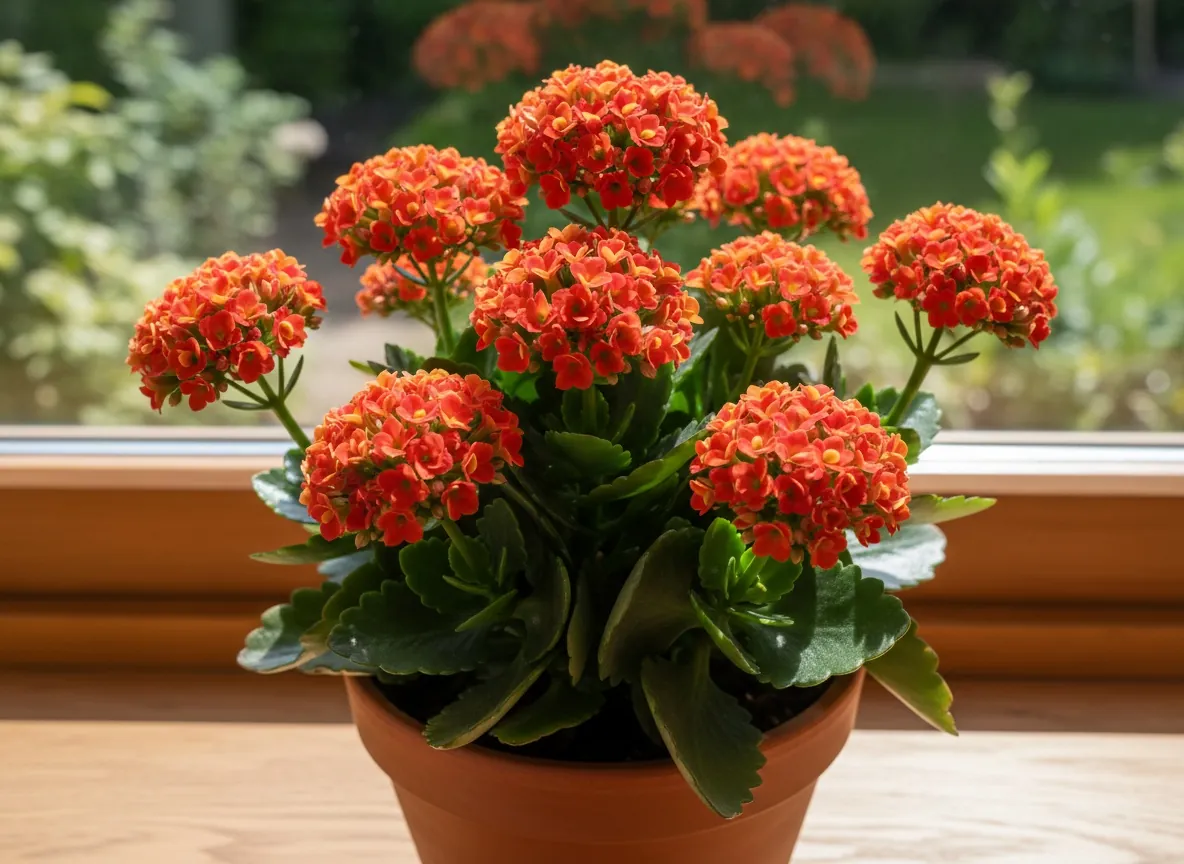
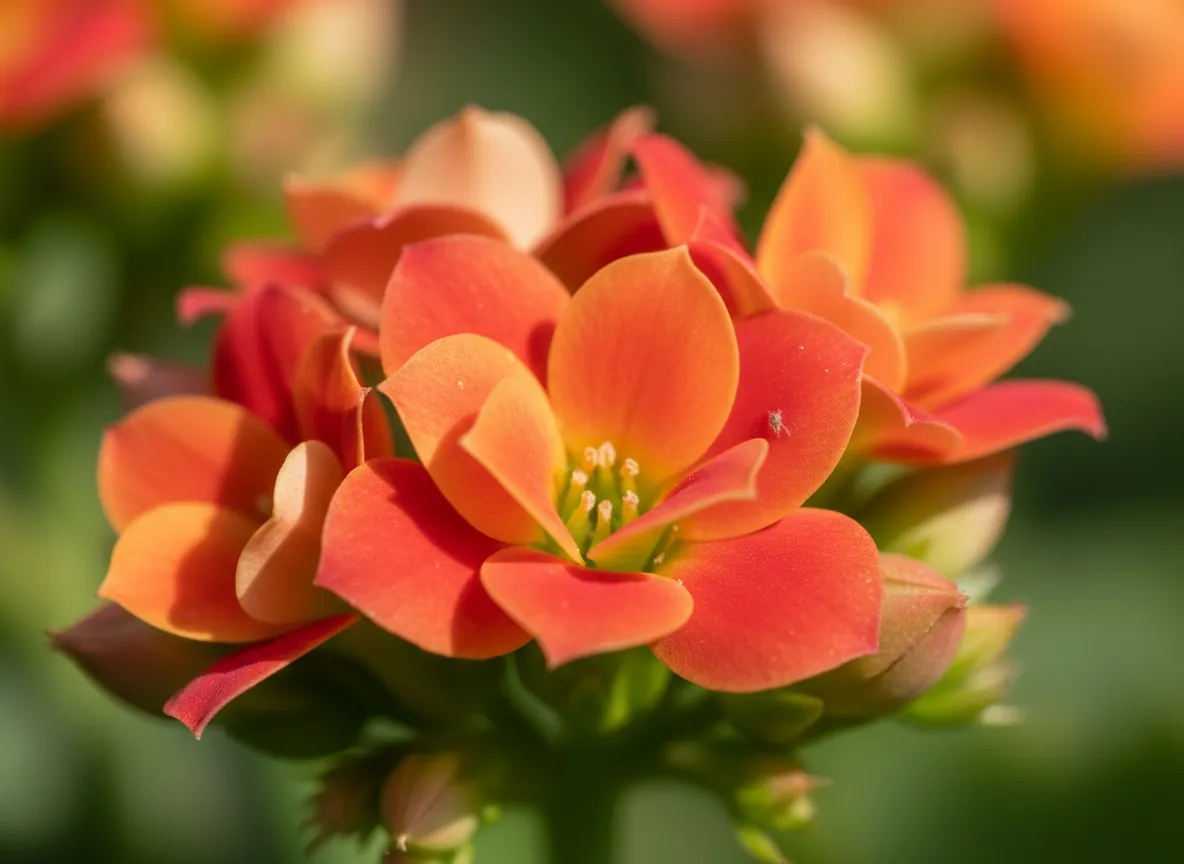
Forms a compact, branched, subshrubby mound 20–45 cm tall. The leaves are fleshy, thick, glossy, ovate, with a distinctly scalloped (toothed) margin and dark green colouring — typical succulent water stores. The flowers are small, four-parted, gathered into dense, erect, umbel-like inflorescences rising above the leaves; in cultivation they occur in red, orange, yellow, pink and white cultivars, including double ones. The flowering is exceptionally long-lasting — a single inflorescence persists for 6–8 weeks.
Growing and care
Watering
Water only once the substrate has dried out to a depth of 2–3 cm, into the saucer or beneath the leaves — not onto the rosette and not onto the flowers. Pour away excess water from the saucer after a quarter of an hour; it is overwatering, not drought, that is the most common cause of rotting of the root collar.
Fertilizing
At half strength. Excess nitrogen gives lush leaves at the expense of flowers.
Planting
A free-draining substrate for cacti and succulents, or universal soil with a generous addition of sand or perlite. A small pot, necessarily with a drainage hole and drainage material at the bottom.
Pruning
Cut out the whole spent inflorescences at the base and shorten the elongated shoots by about a third — the plant will branch out and build a compact form for the next flowering.
Companion plants
Good companions
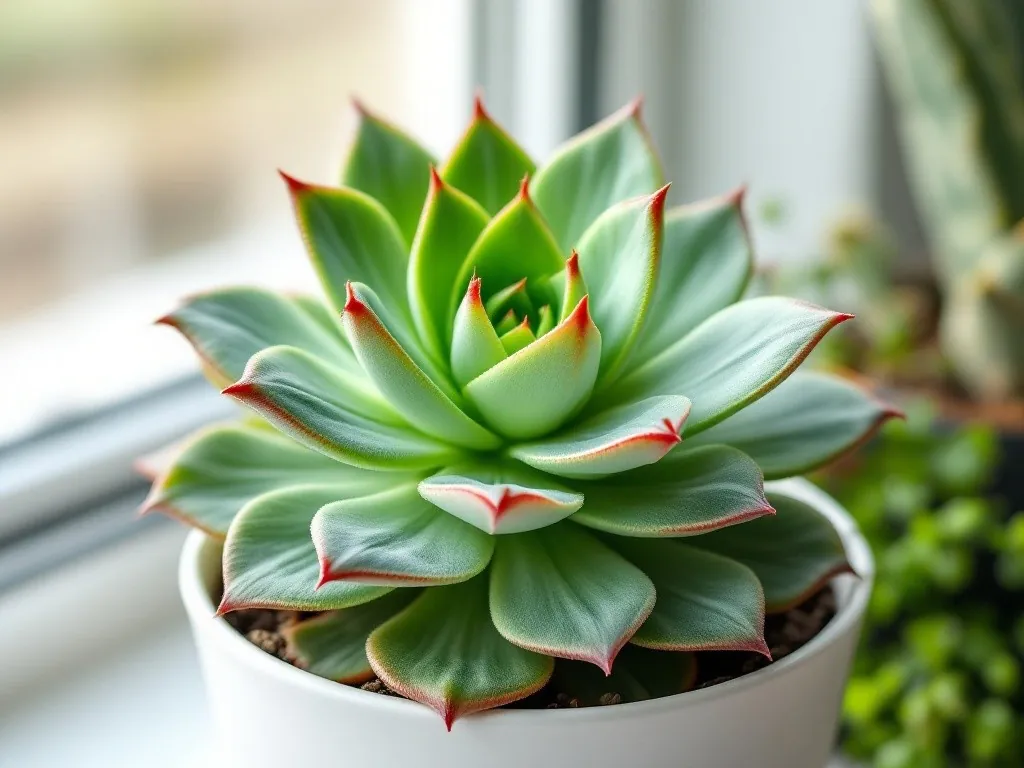
A succulent from the same stonecrop family — an identical cultivation regime: free-draining substrate, sun, and watering only once it has dried out.
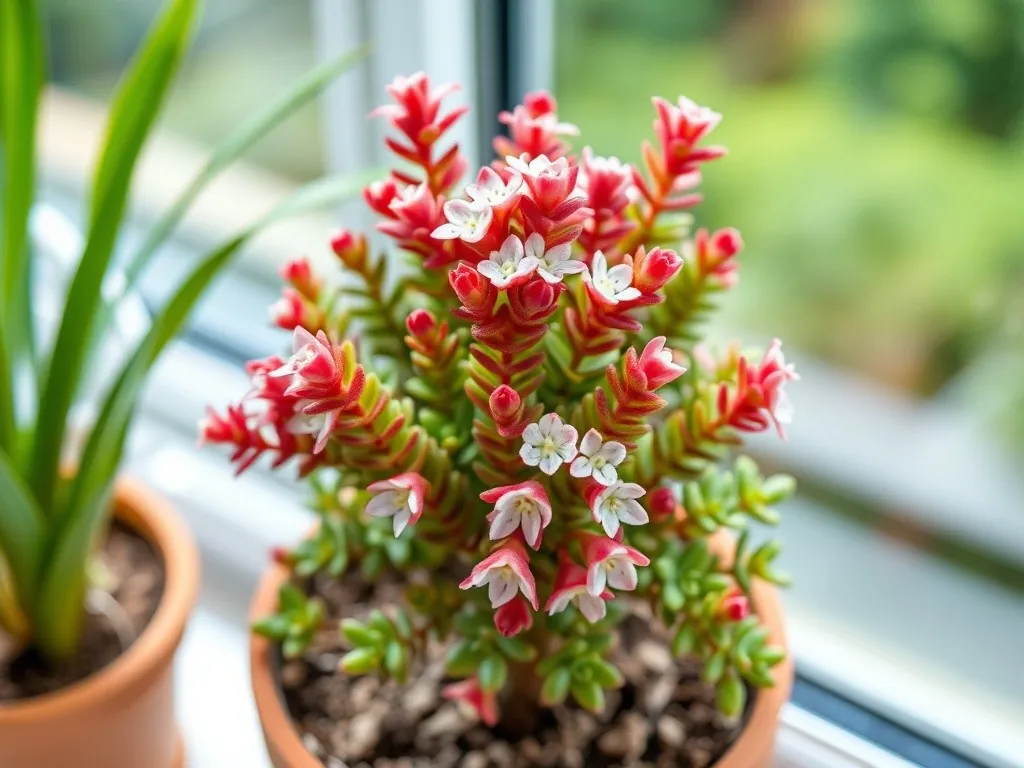
The same light and water requirements; together they make striking, mineral compositions in shallow bowls.
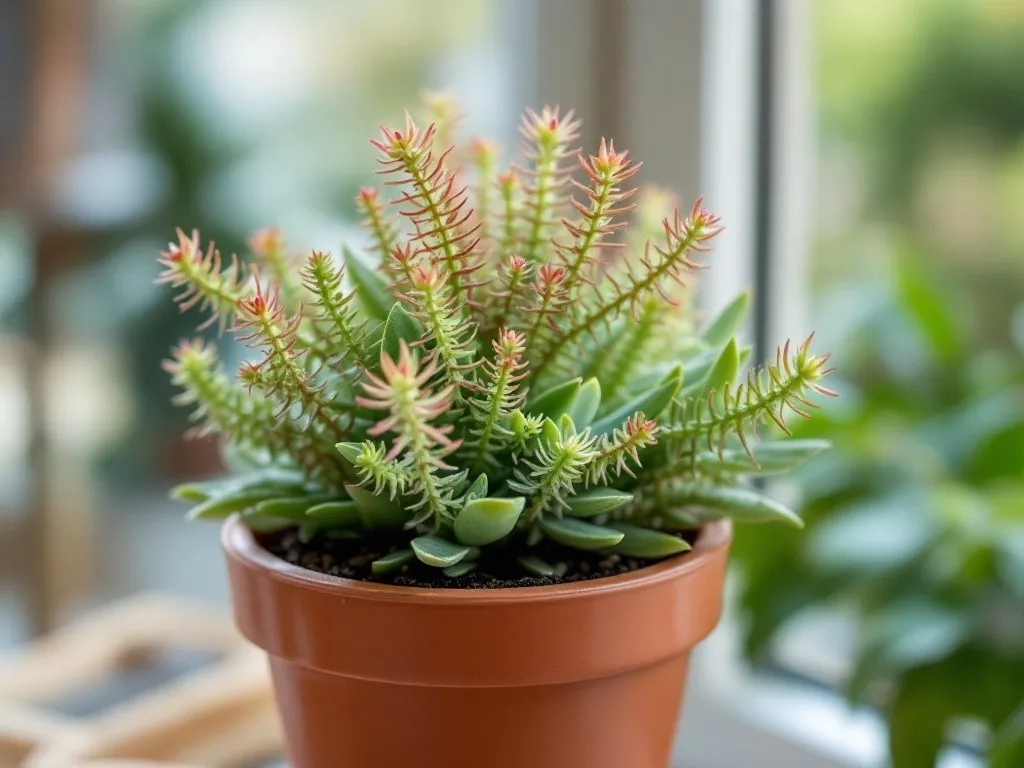
A succulent that tolerates the same infrequent watering and free-draining substrate, but has a different habit — a good contrast in a windowsill grouping.
Bad companions
The fern requires constantly moist substrate and high air humidity — in such conditions the kalanchoe rots at the base.
A shared, permanently wet substrate leads to rotting of the root collar of a succulent adapted to a dry season.
The evidence level indicates whether the relationship is backed by research, observation, or gardening tradition.
Toxicity
| For whom | Level | Notes |
|---|---|---|
| Humans | Mild | Ingestion may irritate the digestive tract; the sap can be irritating to the skin. Serious poisonings in adults are rare, but the plant should be kept out of reach of small children. |
| Cats | High | The whole plant, and especially the flowers, contains cardiac glycosides (bufadienolides) toxic to cats — they can cause vomiting, diarrhoea, weakness and heart rhythm disturbances. If you suspect it has been eaten, contact a vet immediately. In a home with a cat it is better to do without this plant, or to keep it in a completely inaccessible place. |
| Dogs | High | The same cardiac glycosides act toxically on dogs — the symptoms include vomiting, apathy and disturbances of heart function. Requires urgent veterinary consultation. |
| Rabbits | High | — |
History and origin
The species comes from Madagascar and was introduced into cultivation in Europe in the 1930s by the German breeder Robert Blossfeld, whose name the species epithet commemorates. The wild ancestor had only small, red flowers; today's palette of colours and the double forms are the result of intensive breeding work. Because the plant sets buds under short days, growers control the flowering by shading the crop — thanks to which Flaming Katy reaches the shops in bloom all year round, although its natural rhythm is winter and early spring.
Uses
A popular houseplant for bright windowsills, particularly valued for flowering in the winter months, when the home lacks colour. In summer it can be placed on a balcony or terrace, in a sheltered, sunny position. It looks good in mineral compositions with other succulents. Because of its toxicity to animals it should not be placed in homes with cats and dogs that are in the habit of nibbling plants.
Trivia
- Flaming Katy is a short-day plant: it sets flower buds only once it has had at least 12–14 hours of complete darkness a day for about 6 weeks. It is exactly the same mechanism that makes the poinsettia flower — and the same reason why a plant standing next to a lit lamp in the evening never blooms again.
- Despite the beauty of its flowers, it is a plant significantly poisonous to cats and dogs — it contains bufadienolides, cardiac glycosides from the same group of action as the substances in foxglove. The flowers contain the most of them.
- The genus Kalanchoe is famous for its “viviparity”: many species produce ready-made, already rooted plantlets along the leaf margins, which drop off and grow on independently. Hence the Polish common name żyworódka (brood leaf), even though this phenomenon does not in fact occur in K. blossfeldiana.
Frequently asked questions
Why won't my Flaming Katy flower again?
Because it is a short-day plant — it sets buds only when it has 12–14 hours of uninterrupted darkness a day for about 6 weeks. The ordinary light of a lamp in the evening is enough to block this process. To force flowering, after cutting back the spent inflorescences cover the plant at night with a box for a month and a half (for example from 18:00 to 8:00) or move it into an unused, dark room, and put it in a bright position during the day.
Is Flaming Katy poisonous to cats?
Yes, and seriously so. The plant contains cardiac glycosides (bufadienolides), which in cats and dogs can cause vomiting, diarrhoea, weakness and heart rhythm disturbances; the flowers contain the most of these compounds. In a home with animals that nibble plants it is better to do without it, and if you suspect it has been eaten, contact a vet immediately.
How should I water Flaming Katy so that it does not rot?
Rarely, and from below. It is a succulent storing water in its fleshy leaves, so you water it only once the substrate has dried out to a depth of 2–3 cm — in summer roughly every 10 days, in winter as little as every 3 weeks. Pour the water into the saucer or beneath the leaves, never onto the rosette and flowers, and tip away the excess from the saucer after a quarter of an hour. Constantly wet substrate is the shortest route to rotting of the root collar.
Sources
- Plants of the World Online (POWO)Database (GBIF, POWO…)
- RHS — Kalanchoe blossfeldianaInstitution / botanical garden
My note
A private note for this plant — saved in your browser.