In short
- Exceptionally tolerant of drought and poor soils.
- Needs full sun and well-drained soil.
- Tolerates a wide pH range – from acidic to alkaline.
- The berry cones (juniper berries) are used as a spice.
- Do not cut into old wood – it will not regrow.
Botanical data
- Family
- Cupressaceae (Cupressaceae)
- Height
- 0.5–6 m
- Width
- 0.5–3 m
- Habit
- Spreading
- Growth rate
- Slow
- Position
- Full sun
- Soil
- Sandy, Loamy, Chalky
- pH reaction
- pH 5–7.5
- Moisture
- Dry, Moderate
- Bloom
- —
- Hardiness
- USDA 3a–8a
- Propagation
- From cuttings
Characteristics
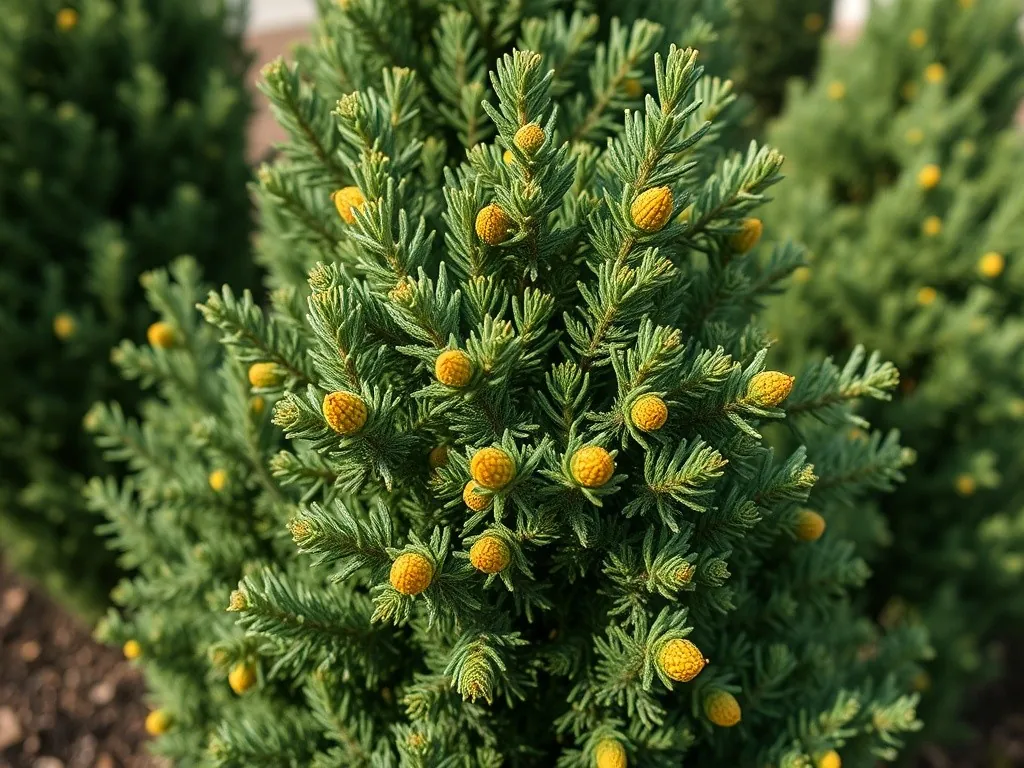
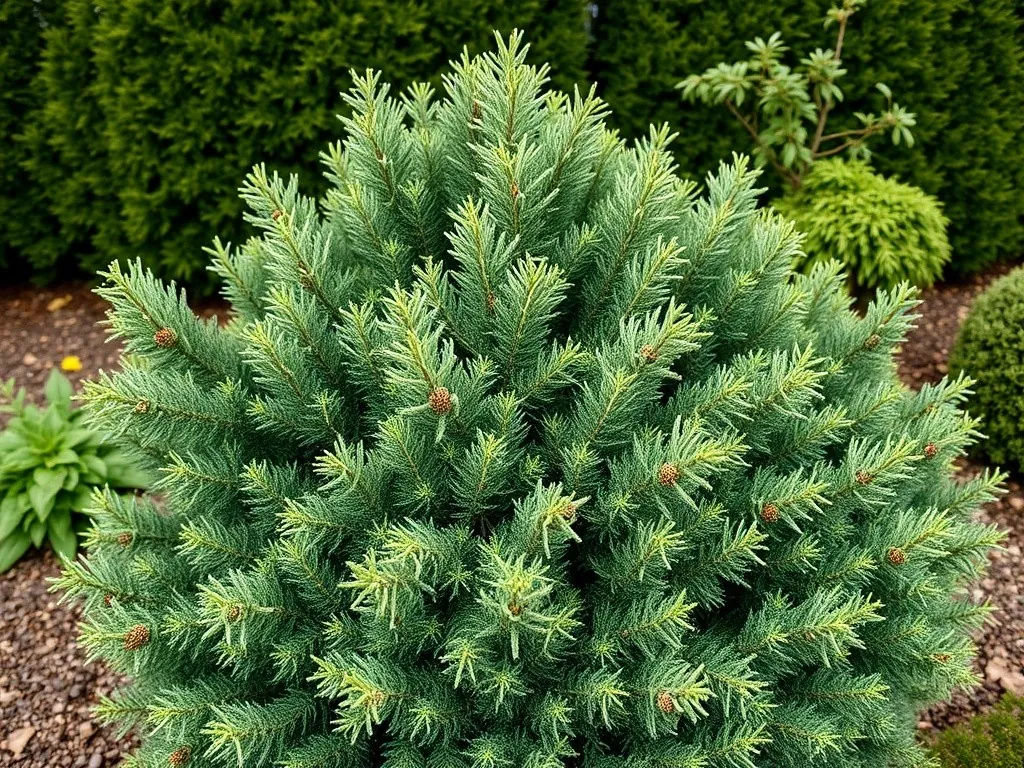
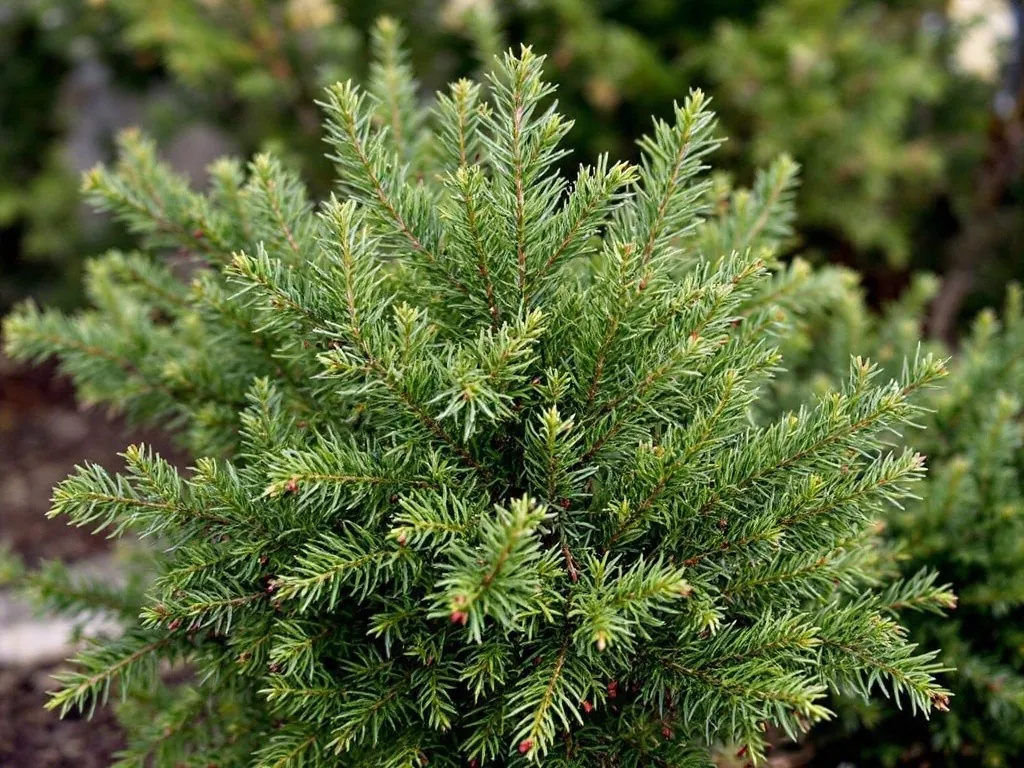
An evergreen conifer with a variable habit – from prostrate to columnar, depending on the cultivar. The needles are short, prickly and often bear a bluish stripe. Female plants produce fleshy, blue-black berry cones.
Growing and care
Watering
Very drought-resistant once established; will not tolerate waterlogged soil. Watering is needed mainly in the first season.
Fertilizing
Undemanding – grows well on poor, dry soils.
Planting
Well-drained soil in full sun; tolerates a wide pH range and poor sites.
Pruning
Lightly shape the young growth; most cultivars have a naturally attractive habit.
Companion plants
Good companions
Similar requirements – sun, dry well-drained soil; both are excellent for gravel and rock gardens.
Drought-loving lavender and juniper form a durable, low-maintenance composition on a sunny, well-drained site.
Bad companions
Some junipers are an intermediate host of pear rust – proximity encourages the spread of this disease.
The evidence level indicates whether the relationship is backed by research, observation, or gardening tradition.
Diseases and pests
Toxicity
| For whom | Level | Notes |
|---|---|---|
| Humans | Mild | The fruit (berry cones) are harmful in large amounts; the essential oil irritates the skin. Using the berries as a spice is safe in small quantities. |
| Dogs | Mild | — |
| Cats | Mild | — |
History and origin
Juniper has accompanied humans for thousands of years – its berries and wood were used for smoking, as a spice and as medicine. It is one of the few conifers native to Poland and an important feature of the landscape of pine forests and heaths.
Uses
For rock gardens, gravel gardens and slopes (prostrate cultivars), as a specimen plant and for hedges (columnar cultivars). Excellent for difficult, dry and sunny sites.
Trivia
- Juniper berries give gin its characteristic flavour and are a spice for game dishes.
- Juniper berry cones take 2–3 years to ripen, which is why a single plant bears fruit at different stages of maturity.
Frequently asked questions
Why is my juniper turning brown from the inside?
Shedding the oldest needles inside the shrub is natural. If the browning intensifies, the cause may be overwatering, poor drainage, or fungal diseases favoured by moisture and poor air circulation.
Are garden juniper berries edible?
The berry cones of common juniper are used as a spice in small amounts, but in large amounts they are harmful. Some other juniper species are poisonous, so when harvesting you must be certain of the species.
Can juniper be planted next to a pear tree?
Better to avoid it – some junipers are an intermediate host of pear rust, a dangerous fungal disease. Proximity encourages its spread between plants.
Sources
- Plants of the World Online (POWO)Database (GBIF, POWO…)
- RHS — Juniperus communisInstitution / botanical garden
My note
A private note for this plant — saved in your browser.