In short
- A columnar giant: up to 10 m in nature, realistically 2–3 m in a pot over many years.
- It grows fast for a cactus — from a dozen to several dozen centimetres per season.
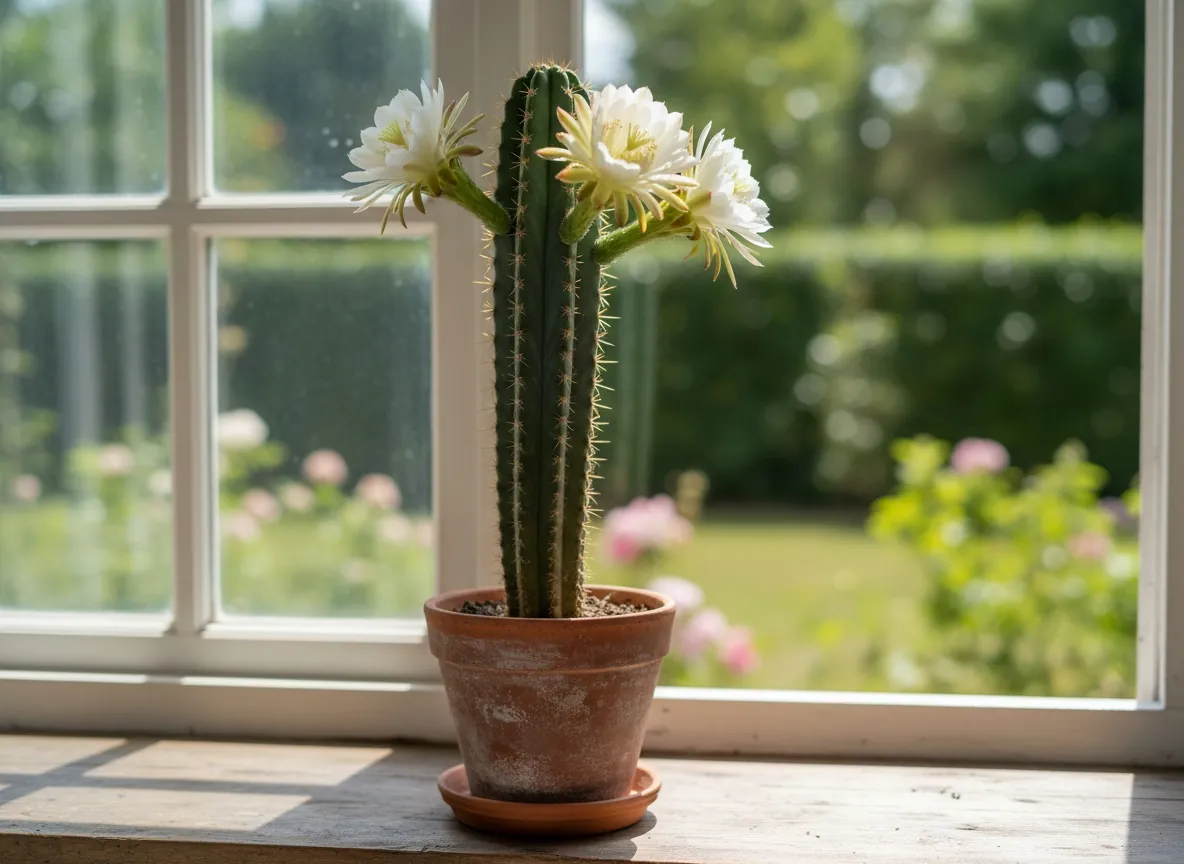
- Large, white, fragrant flowers open at night, for one night only.
- The fruits (Peruvian pitaya) are edible, spineless, with white flesh and fine seeds.
- It requires a cool (8–12°C) and dry winter rest — otherwise it becomes drawn and pale.
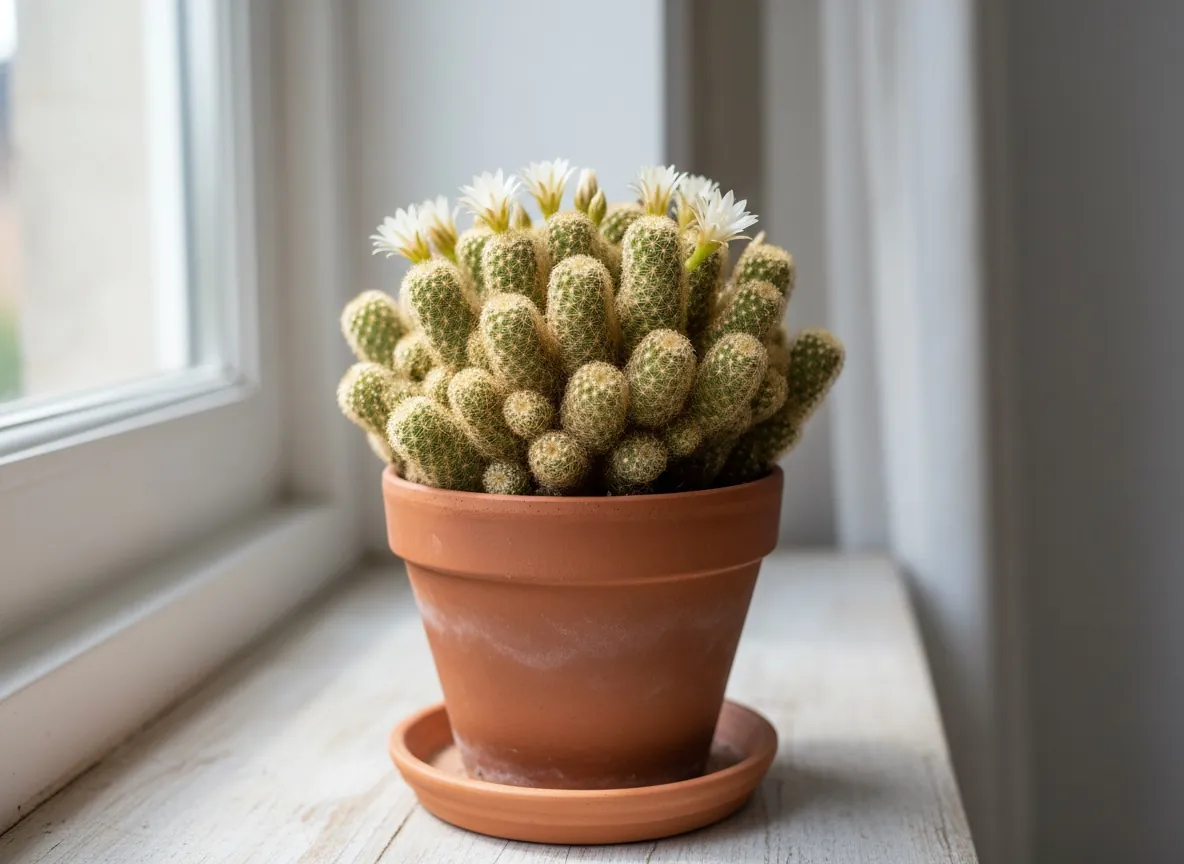
- The popular form 'Monstrosus' (rock cactus) grows irregularly, into rocky masses.
Botanical data
- Family
- Cactaceae (Cactaceae)
- Height
- 2–10 m
- Width
- 0.3–2 m
- Habit
- Columnar
- Growth rate
- Fast
- Position
- Full sun
- Soil
- Sandy
- pH reaction
- pH 6–7.5
- Moisture
- Dry, Moderate
- Bloom
- June–August
- Hardiness
- —
- Propagation
- From cuttings, From seed
Characteristics
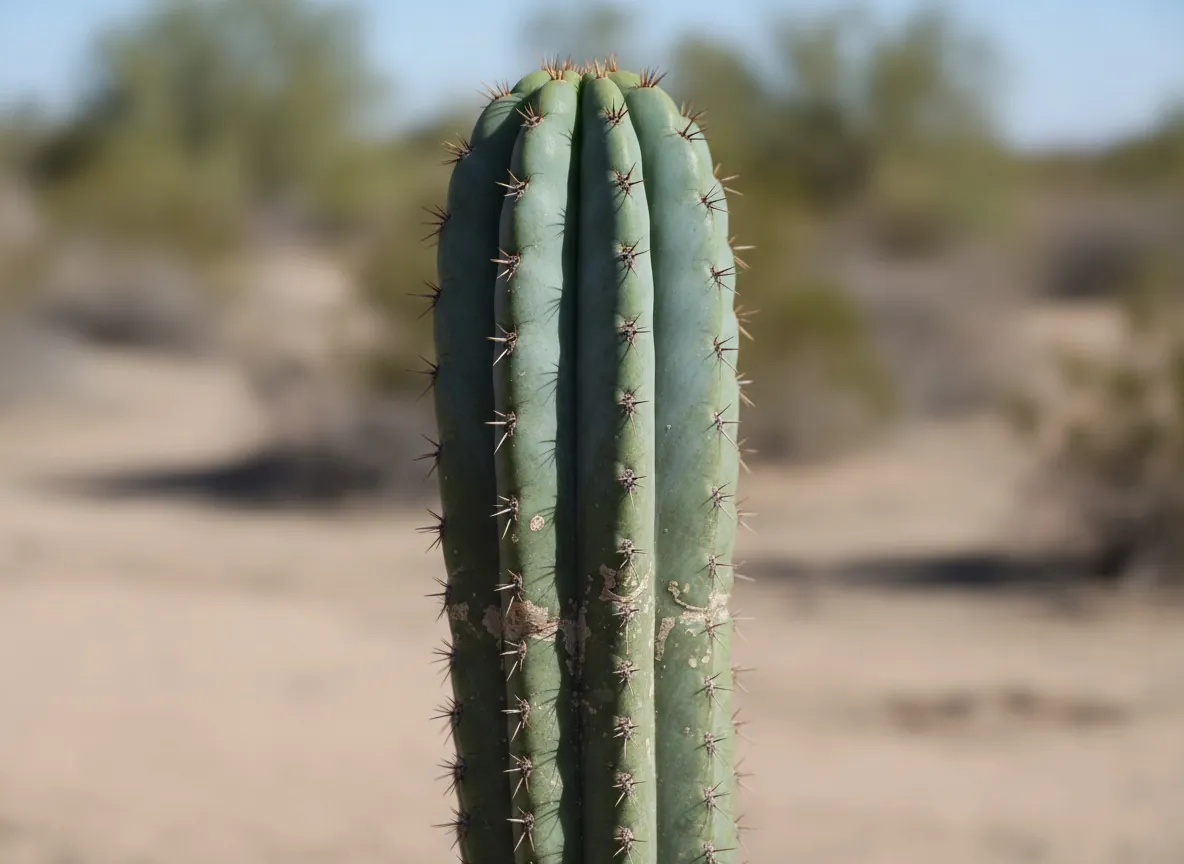
A columnar cactus with upright stems 10–20 cm thick and pronounced, sharp ribs (usually 6–9), in a characteristic blue-green, almost bluish shade that comes from a waxy bloom limiting evaporation. The areoles are set along the edges of the ribs and bear short, stiff spines in colours from amber to almost black. With age the plant branches into a candelabra-like column, and its base becomes corky and brown — a natural process, not a symptom of disease. Mature specimens produce very large (15–20 cm), funnel-shaped, white flowers with a strong scent in summer, which open after dusk and wilt the following morning. After pollination, spherical, spineless fruits set, with red or yellowish skin and white, sweet flesh studded with fine, black seeds.
Growing and care
Watering
From May to September water generously, but only once the whole root ball has dried out — it is one of the few cacti that genuinely grow fast in the season and really use water. From November to March the plant must have a cool (8–12°C), dry rest: at most one sparing watering every 6 weeks, solely so that the roots do not shrivel. A warm and watered winter gives pale, thin, drawn growth that will never thicken again.
Fertilizing
At the recommended concentration, only in the growing season. With its rapid growth the cereus responds to feeding more strongly than globular cacti, but excess nitrogen gives soft stems prone to flopping.
Planting
A mineral cactus substrate with a high proportion of grit and perlite. The pot must be heavy and wide — a mature, two-metre column has a high centre of gravity and in light plastic simply falls over. A deep clay container with a drainage hole is a practical choice here, not an aesthetic one.
Pruning
Cut off the top with a clean, sharp knife perpendicular to the stem; the plant will regrow below the cut, usually with several new arms, and the severed section can be rooted as a new plant after the wound has dried for 1-2 weeks.
Companion plants
Good companions
A cactus with the same cultivation regime — full sun, mineral substrate and a dry, cool winter rest; both tolerate being put out on the terrace for the summer.
A succulent with identical soil and water needs and a contrasting, rosette silhouette — a classic combination in desert compositions.
A cactus from the same type of habitat; its globular form complements the vertical column of the cereus well, with the same care.
Bad companions
The fern requires constantly moist substrate and high air humidity — in such conditions the base of the cereus rots.
A mature cereus casts a narrow but dense shadow and takes up the whole root ball when repotted — low, light-loving plants set at its foot weaken and become drawn.
The evidence level indicates whether the relationship is backed by research, observation, or gardening tradition.
Toxicity
| For whom | Level | Notes |
|---|---|---|
| Humans | None | The plant is not toxic, and its fruits are edible. The only hazard is mechanical: the spines on the ribs are short but hard and sharp, and a mature, heavy column toppling from a windowsill poses a real risk of injury. |
| Dogs | None | — |
| Cats | None | Non-toxic, but cats readily climb columnar cacti and may knock them over or prick their paws — the plant is better placed out of reach. |
History and origin
The species comes from the dry coasts of Venezuela, Colombia and the Netherlands Antilles, and not — as the name Cereus peruvianus established in the trade suggests — from Peru; the naming error, repeated since the 18th century, has proved more durable than successive taxonomic corrections, and to this day the plant is sold in Europe under the wrong name. The genus Cereus (from the Latin cereus — candle, waxen) was one of the first cactus genera to be described and for a long time served as a “catch-all” into which most columnar species of the New World were thrown. In the plant's homeland, columns of cereus have long been planted as living, impenetrable fences, and its fruits are gathered and sold at local markets.
Uses
A striking, statuesque plant for bright, sunny interiors, conservatories and cactus collections — one of the few species that in a home genuinely reach the size of a piece of furniture. In summer it is readily put out on a terrace or balcony in full sun (after gradual hardening off, to avoid scorching the skin). In the trade it also very often serves as a strong, durable rootstock for grafting other cacti. In warm countries it is planted in the ground as a hedge and grown for its fruit.
Trivia
- The specific name has been misleading for over two hundred years: the “Peruvian” cereus does not grow naturally in Peru — it comes from the Caribbean coast of South America, and the error has become entrenched in the horticultural trade despite later taxonomic corrections.
- The flowers open only after dusk and close for good the following morning — they are pollinated by night moths and bats, for which the white colour and strong scent replace the colour signal unavailable at night.
- The form 'Monstrosus', popular in the trade and sold as the “rock cactus”, is a fixed mutation of the growing point: instead of an even column the plant builds irregular, twisted masses resembling a miniature rock. It is the same plant, requiring the same care, and not a separate species.
Frequently asked questions
Will the Peruvian apple cactus flower indoors?
Yes, but only once it has grown — it is usually mature specimens, at least a metre tall and with several seasons of full sun behind them, that flower. Another condition is a cool (8–12°C) and dry winter rest; a plant kept all year in a warm room grows instead of resting and will set no buds. It is worth knowing what you are waiting for: the flower opens after dusk, is fragrant for one night, and by morning has already wilted, so it is easy to miss.
What is the “rock cactus” and is it a different plant?
It is the same plant — the form 'Monstrosus', that is a fixed mutation of the growing cone, through which the cactus forms irregular, twisted masses instead of an even column. It requires exactly the same care as the typical form: full sun, mineral substrate and a dry winter rest. It grows more slowly and stays lower, so it is sometimes more convenient on a windowsill.
My cereus has grown to the ceiling — can I shorten it?
Yes, and it is a standard procedure. In spring or early summer you cut off the top with a clean, sharp knife perpendicular to the stem. The plant will regrow below the cut, usually producing several new arms, which will make it more candelabra-like. The cut-off top does not go in the bin: after 1-2 weeks of the wound drying in a dry, airy place, you set it shallowly in dry substrate, where after a few weeks it roots. Do not cut in autumn or winter — the wound then heals slowly and rot easily sets in.
Sources
- Plants of the World Online (POWO)Database (GBIF, POWO…)
- Missouri Botanical Garden — Cereus repandusInstitution / botanical garden
My note
A private note for this plant — saved in your browser.