In short
- Monocarpic: it flowers once in its life, after ten to several dozen years, and dies after fruiting, leaving rooted offsets around it.
- The inflorescence can be gigantic — up to 8 m tall, like an asparagus-like pole shot up into the air.
- The name “century plant” is a myth — it does not wait 100 years; in a warmer climate it usually flowers after 10–30 years.
- In Poland it is not hardy in the ground: grow it in a container, overwintering in a bright, cool place (5–10 °C).
- Sharp spines on the leaf margins and irritant sap — work in gloves, plant away from paths.
- Extremely drought-resistant; it dies from overwatering, especially in cool, wet winters.
Botanical data
- Family
- Asparagaceae (Asparagaceae)
- Height
- 1–2 m
- Width
- 1.5–3 m
- Habit
- Spreading
- Growth rate
- Slow
- Position
- Full sun
- Soil
- Sandy, Chalky
- pH reaction
- pH 6–8
- Moisture
- Dry
- Bloom
- June–August
- Hardiness
- USDA 8b–11b
- Propagation
- By runners, From seed
Characteristics
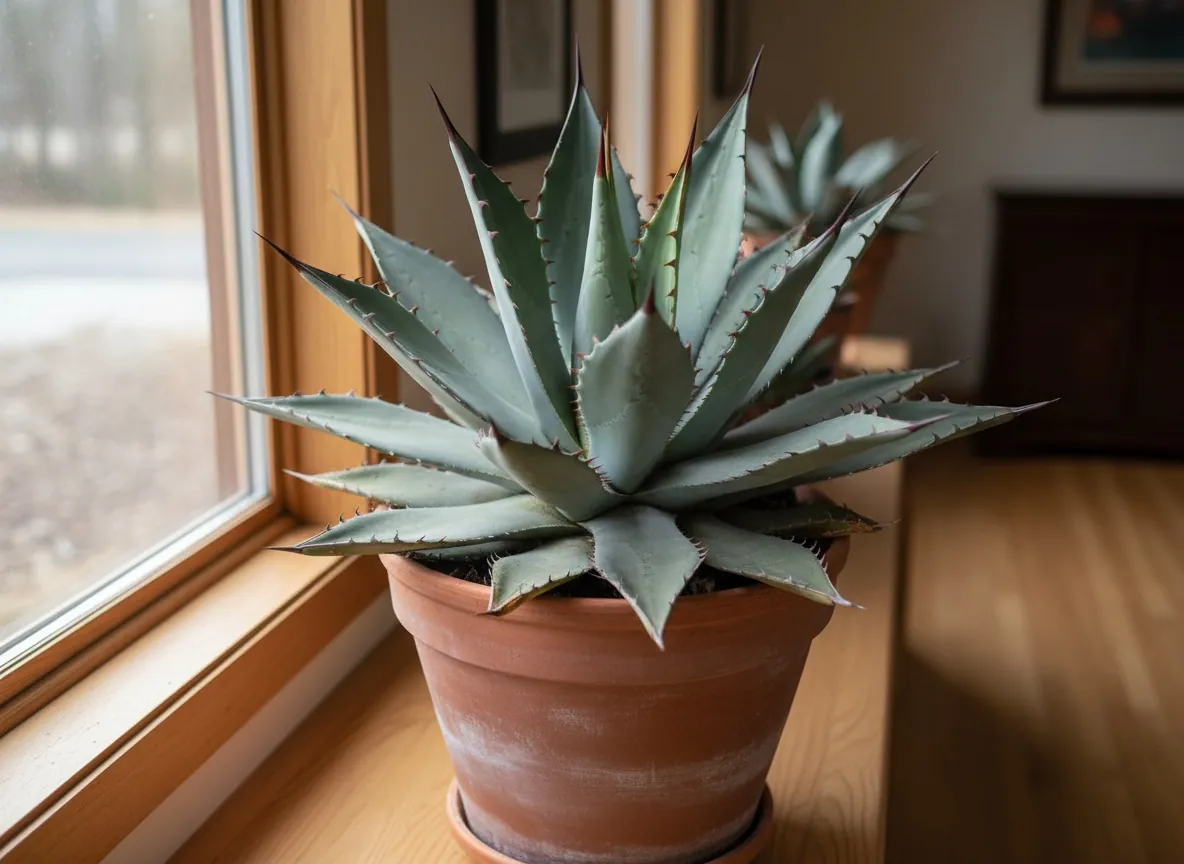
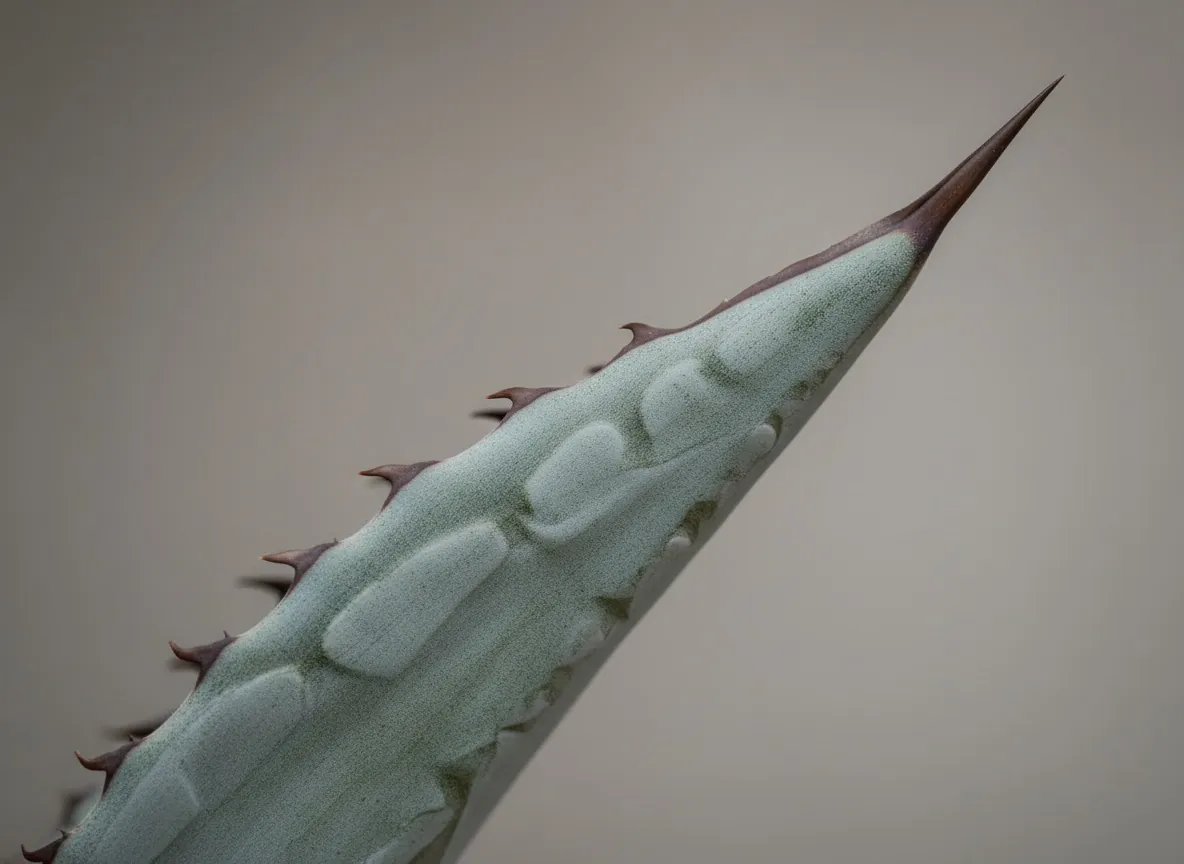
It forms a massive, spreading rosette up to 3 m across and 1–2 m tall. The leaves are thick, fleshy, lance-shaped, blue-green or grey-blue from the waxy bloom, sharply tipped with a hard, dark spine, with a row of hooked prickles along the margins. Variegated cultivars with yellow or cream stripes are popular in cultivation. The crowning point of the plant's life is the inflorescence: from the centre of the rosette shoots a thick stem reaching as much as 8 m in height, branching in its upper part into horizontal side arms with dense clusters of yellow-green flowers. After setting seed the whole rosette dies, leaving rooted offsets around it.
Growing and care
Watering
In summer water generously, but only once the substrate has dried out completely; never leave water in the saucer. During cool overwintering (5–10 °C) water extremely rarely or not at all — the combination of cold and moisture is the surest way to rot an agave.
Fertilizing
Sparingly and only in the growing season. Excess nitrogen produces limp, overgrown leaves and lowers cold tolerance.
Planting
A heavy, stable container (a mature agave is massive and prone to toppling) with a large drainage hole, filled with a free-draining mineral cactus substrate with added gravel. Top-dress with coarse gravel so that the root collar does not touch moist soil. Use thick gloves when working — the marginal prickles and the terminal spine are very sharp.
Pruning
Remove only completely withered lower leaves, cutting them off at the stem with a sharp, clean knife. In gardens with children the terminal spines can be trimmed off the leaf tips.
Companion plants
Good companions
A succulent with the same cultivation regime — full sun, mineral substrate, infrequent watering and cool, dry overwintering; in Mexico they are natural neighbours.
A similar rosette habit and identical requirements — both plants overwinter in the same conditions and form a coherent composition in desert style.
A Mediterranean companion for the summer terrace — the same needs: full sun, dry, free-draining soil and a minimum of watering.
Bad companions
It requires shade and constantly moist soil — conditions in which the agave rots immediately.
This is not a matter of requirements but of safety — the hard spines at the leaf tips are at a child's face height and genuinely injure; place the agave away from walkways.
The evidence level indicates whether the relationship is backed by research, observation, or gardening tradition.
Toxicity
| For whom | Level | Notes |
|---|---|---|
| Humans | Moderate | The sap contains calcium oxalates and saponins — contact with the skin causes burning, reddening and contact dermatitis, and contact with the eye is particularly dangerous. Ingesting the raw sap irritates the digestive tract. An additional, purely mechanical hazard is posed by the very sharp prickles on the leaf margins and the hard spine at the tip — work in gloves and safety glasses. |
| Dogs | Moderate | Eating the leaves causes drooling, vomiting and irritation of the mouth; injury from the spines is also a real risk. |
| Cats | Moderate | — |
| Horses | Moderate | — |
History and origin
The century plant was a pillar of the economy of the ancient cultures of Mesoamerica — called maguey, it supplied fibres for ropes and textiles (pita), spines as needles, and above all the sweet sap (aguamiel) collected from the excised centre of the plant before it flowered, from which pulque was fermented, the traditional alcoholic drink of the Aztecs. It reached Europe in the 16th century and quickly spread throughout the Mediterranean basin, where it naturalised in places and became a problem for the native coastal flora. The English name century plant was born in cool Europe — in northern orangeries agaves flowered so rarely and so late that the legend of a hundred years' waiting grew up.
Uses
A striking container plant for the summer terrace, patio and entrance steps, where it creates a strong, architectural accent in Mediterranean or desert style. In the Polish climate the container is put out after the last frosts and brought before the autumn cold into a bright, cool room (5–10 °C, e.g. an unheated veranda or a bright garage). Because of its sharp spines it should not be placed beside walkways or in gardens used by small children.
Trivia
- The “century plant” is a misunderstanding: Agave americana usually flowers after 10–30 years, and in a warm climate sometimes sooner. The legend arose in European orangeries, where in the cold and poor light the plant put off flowering for decades.
- Flowering means the end of the plant. The agave is monocarpic — it shoots up an inflorescence many metres tall, puts into it the entire reserve accumulated over years, and dies after setting seed. The family, however, does not perish: a ring of rooted offsets remains around the rosette.
- Tequila does not come from this species — it is made from the blue agave (Agave tequilana). Agave americana supplied the Aztecs with pulque and aguamiel sap, as well as fibres from which ropes and textiles were woven.
Frequently asked questions
Does the century plant really flower once every hundred years?
No — this is a popular myth to which the plant owes its English name, century plant. In reality it usually flowers after 10–30 years, and in a warm climate even sooner. The second part of the story, however, is true: the agave is monocarpic, that is, it flowers only once in its life. It then shoots up an inflorescence as much as 8 m tall, and after setting seed the whole rosette dies, leaving rooted offsets around it.
Will an agave overwinter in a Polish garden?
Not in the ground. Agave americana is hardy roughly to zone 8b, while Poland lies in zones 5–7, and in addition the combination of frost with winter wet is lethal to it. In practice it is grown in a container: from May to September on a sunny terrace, and for the winter it is brought into a bright, cool (5–10 °C) and dry room, with watering reduced almost to nil.
Is the agave dangerous to children and animals?
It requires sensible placing. The hazard is twofold: mechanical — the hard spine at the tip of the leaf and the hooked prickles along the margins can injure seriously, often at a child's face height; and chemical — the sap contains calcium oxalates and saponins, which irritate the skin, and contact with the eye is particularly dangerous. Place the plant away from paths and play areas, and when repotting and pruning put on thick gloves and safety glasses.
Sources
- Plants of the World Online (POWO)Database (GBIF, POWO…)
- RHS — Agave americanaInstitution / botanical garden
My note
A private note for this plant — saved in your browser.