In short
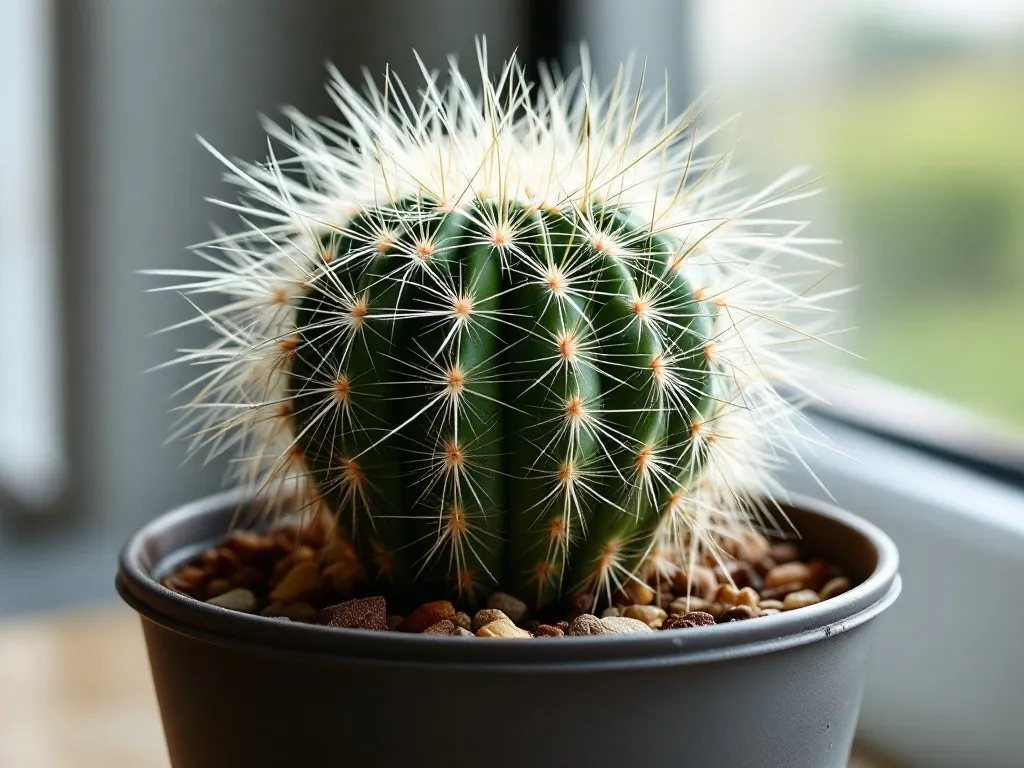
- A spherical cactus covered in dense, radiating, golden-yellow spines.
- Grows very slowly — impressive, meter-tall specimens are the result of decades of cultivation.
- Needs full sun and a very free-draining, mineral substrate.
- Not frost-hardy — in Poland grown only as a potted plant, indoors or in a greenhouse.
- Critically endangered in the wild and protected under CITES.
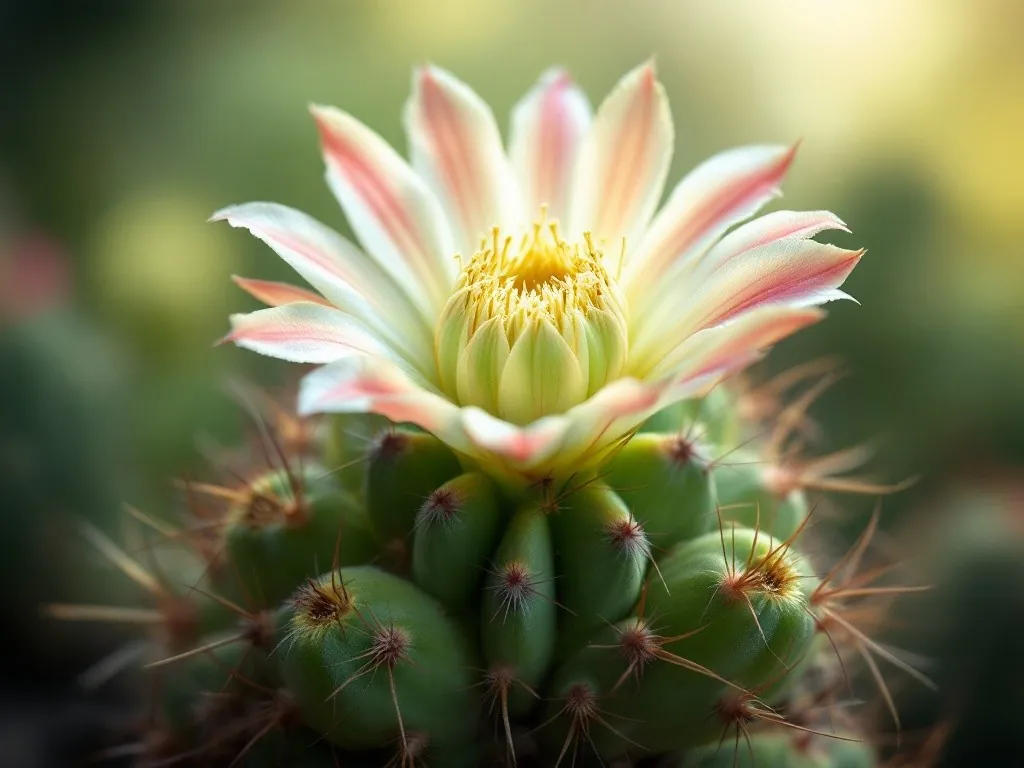
- Yellow flowers appear only on mature, usually many-years-old plants.
Botanical data
- Family
- Cactaceae (Cactaceae)
- Height
- 0.1–0.4 m
- Width
- 0.1–0.4 m
- Habit
- Rounded
- Growth rate
- Slow
- Position
- Full sun
- Soil
- Sandy
- pH reaction
- pH 6.5–8
- Moisture
- Dry
- Bloom
- June–August
- Hardiness
- USDA 9a–11a
- Propagation
- From seed
Characteristics
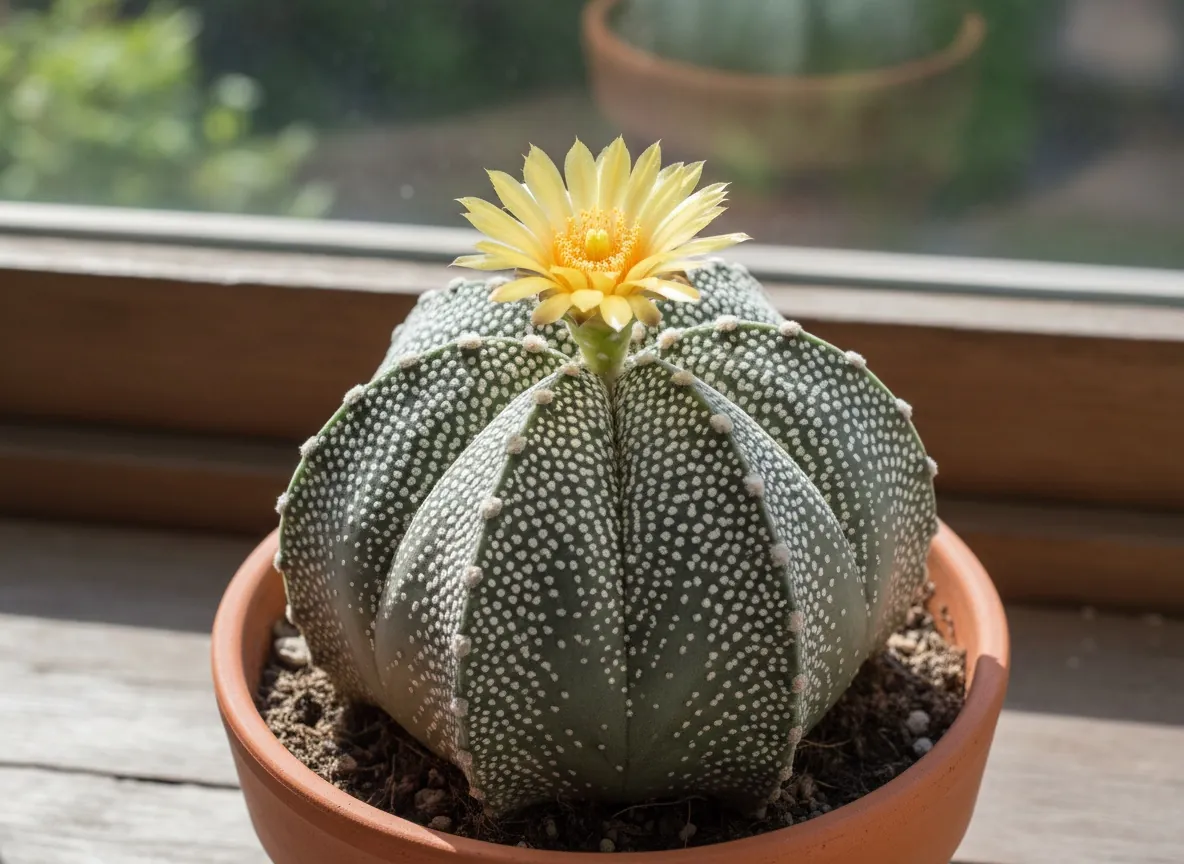
A spherical cactus, becoming slightly columnar with age, with pronounced vertical ribs (usually 20-30), densely covered with areoles bearing radiating, stiff spines in a golden-yellow shade, which gave the plant its Polish, German and English names (golden barrel cactus). The crown of young plants is covered in dense, pale wool. Mature, usually many-years-old plants produce small yellow flowers in a ring at the top during summer.
Growing and care
Watering
Water thoroughly but infrequently, only once the substrate has completely dried out. In winter, in a cooler, darker spot, reduce watering to a minimum or stop it altogether — excess water during this period is the most common cause of rot.
Fertilizing
Very sparing feeding with a low-nitrogen cactus fertilizer — the plant is undemanding and naturally grows very slowly.
Planting
A very free-draining, mineral cactus substrate with a high proportion of grit, perlite or pumice; a pot with a drainage hole, ideally terracotta.
Pruning
Only remove drying, damaged parts at the base, wearing protective gloves because of the stiff, sharp spines.
Diseases and pests
Insects covered in a white, cottony, waxy coating, gathering in leaf axils, at the base of shoots and on the underside of leaf blades. They look like tufts of cotton wool. They suck sap, weaken the plant and excrete sticky honeydew, on which black sooty mould develops. A common pest of houseplants and succulents.
Armoured and soft scale insectsImmobile, brown or yellowish shields (1–4 mm) attached to stems and the underside of leaves, especially along the veins. Easily mistaken for growths on the plant. They suck sap, causing yellowing and weakening, and excrete sticky honeydew. Common on figs, orchids and plants with tough leaves.
Toxicity
| For whom | Level | Notes |
|---|---|---|
| Humans | None | The plant is not poisonous, but the stiff, golden spines are sharp and can cause painful, deep wounds — handle the plant carefully and with gloves. |
| Dogs | None | — |
| Cats | None | — |
History and origin
The species was described at the turn of the 19th and 20th centuries and named after the German cactus collector Hermann Gruson. Natural populations in central Mexico were largely destroyed in the 1990s by the flooding of part of their habitat for the construction of the Zimapán reservoir, as well as by years of illegal digging up of mature plants for the horticultural trade. Although it is today one of the most widely cultivated cacti in the world (mass-propagated from seed in nurseries), only small, protected populations have survived in the wild.
Uses
As a striking potted plant for bright, sunny windows, for cactus and succulent collections, and for desert-style arrangements. In warmer countries (California, the Mediterranean region), also planted in the ground as part of xerophytic gardens.
Trivia
- The golden barrel cactus is listed on the IUCN Red List as Critically Endangered in the wild and is protected under the CITES convention, even though it is common and readily available in cultivation.
- Very mature specimens, several decades old, grown in botanical gardens in warm regions can reach about a meter in height and width — typical potted specimens in our climate remain much smaller for many years due to very slow growth.
- The English name "mother-in-law's cushion" jokingly refers to the plant's densely spined, cushion-like silhouette.
Frequently asked questions
Why is my golden barrel cactus growing so slowly in its pot?
That's normal — the golden barrel cactus is naturally one of the slowest-growing cacti. The impressive, meter-tall specimens seen in botanical gardens are usually several decades old. In a pot, given good light and the right substrate, the plant grows healthily, but growth is measured in millimeters per year.
Is the golden barrel cactus an endangered species?
Yes, in the wild it is critically endangered — its small, natural populations in central Mexico have been largely destroyed by habitat flooding and illegal plant digging. The species is protected under CITES, though it is common in pot cultivation because it is mass-propagated from seed.
Will the golden barrel cactus survive winter outdoors in Poland?
No — it is not frost-hardy (naturally growing in zones 9a-11a) and in Poland's climate it must overwinter indoors or in a greenhouse, in a cool, bright spot with watering reduced to a minimum.
Sources
- Plants of the World Online (POWO)Database (GBIF, POWO…)
- IUCN Red List — Echinocactus grusoniiInstitution / botanical garden
My note
A private note for this plant — saved in your browser.