In short
- Position: sun to partial shade, constantly moist, fertile soil.
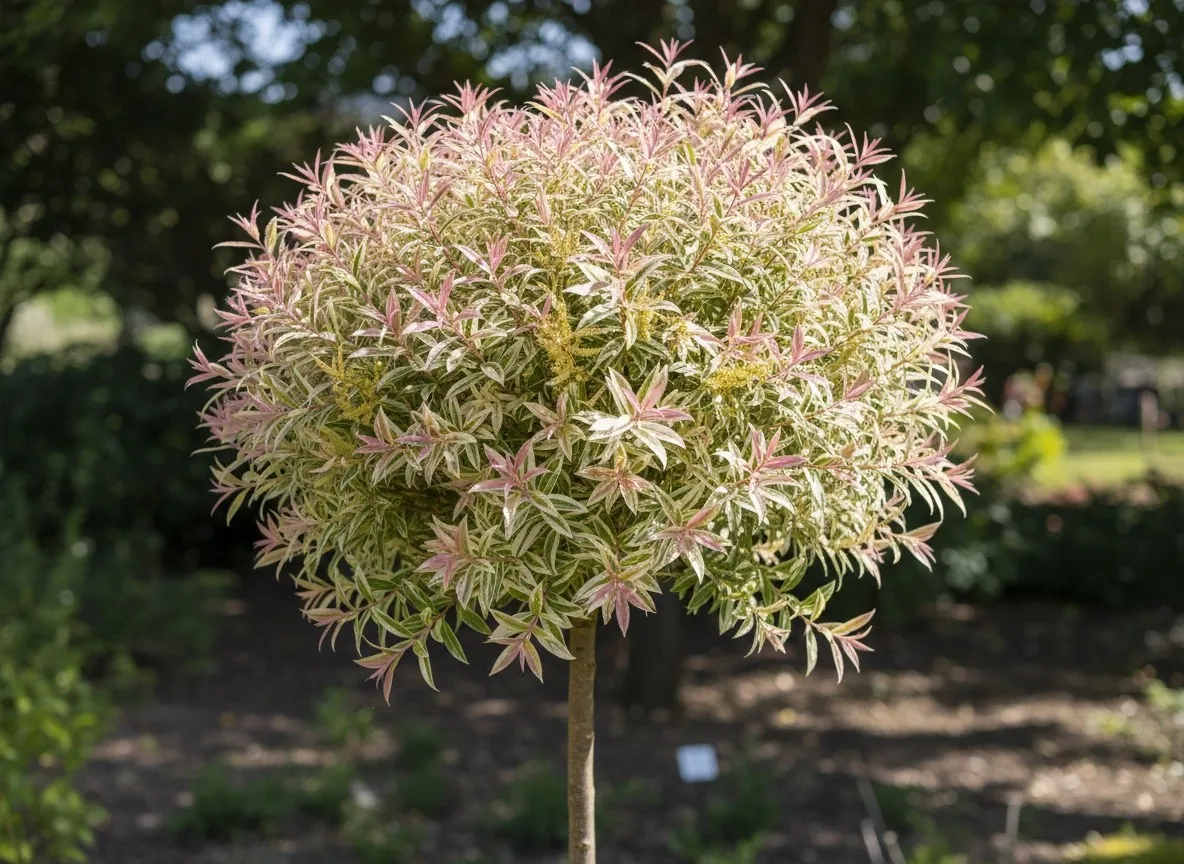
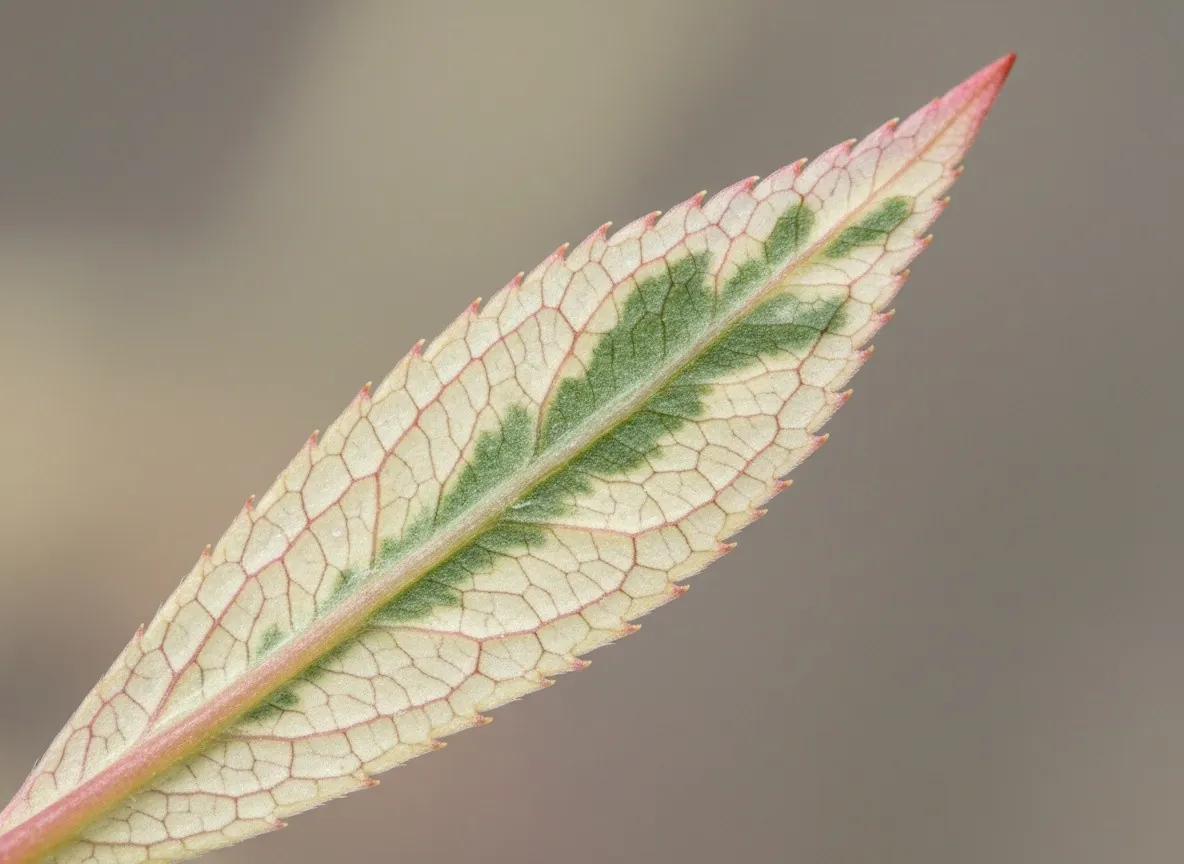
- Distinguishing feature of the species: pink-white-green, tricoloured young leaves.
- Requires an annual, hard spring cut — it refreshes the colour and maintains the rounded habit.
- Frost-hardy to USDA zone 4 — one of the most resistant ornamental willows.
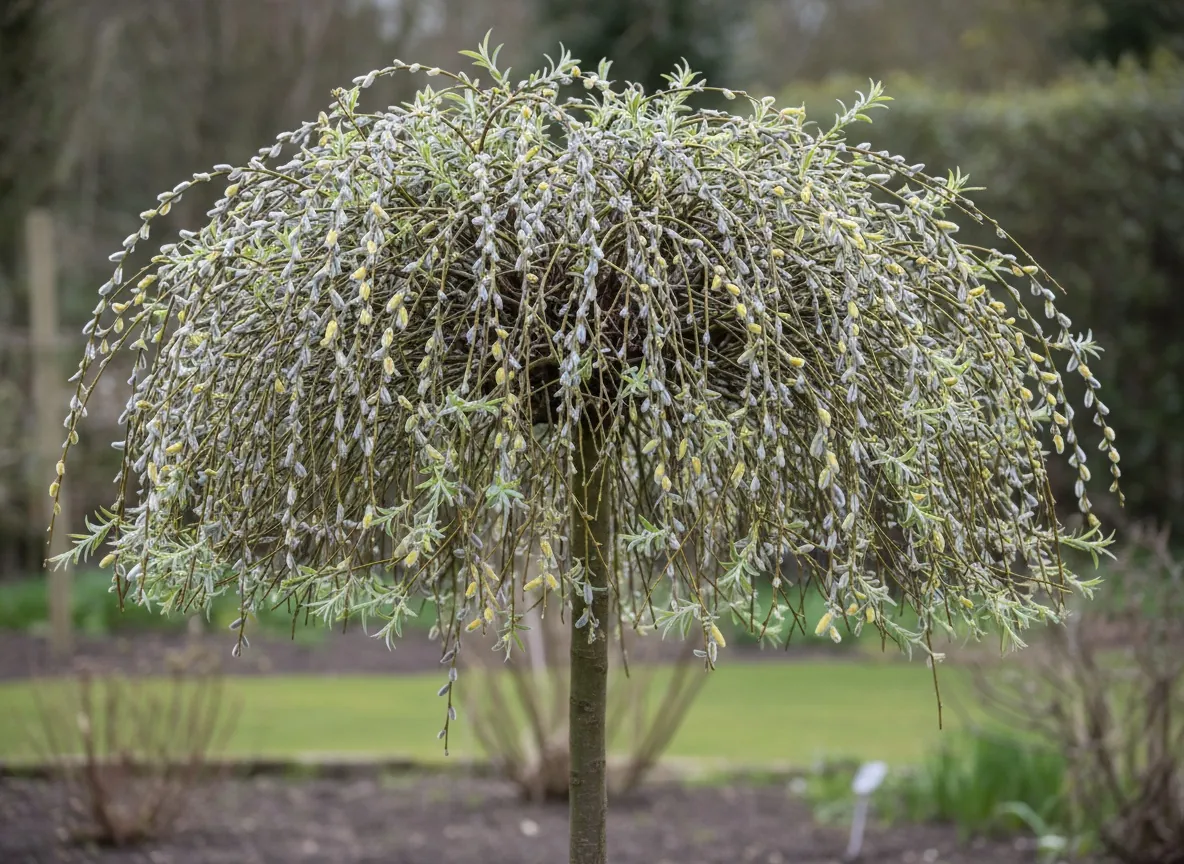
- Popular as a standard grafted onto a stem for small gardens and containers.
Botanical data
- Family
- Salicaceae (Salicaceae)
- Height
- 1.2–2.5 m
- Width
- 1–2 m
- Habit
- Rounded
- Growth rate
- Fast
- Position
- Full sun, Partial shade
- Soil
- Loamy, Humus-rich
- pH reaction
- pH 5.5–7.5
- Moisture
- Moist, Moderate
- Bloom
- March–April
- Hardiness
- USDA 4a–8b
- Propagation
- From cuttings
Characteristics
A shrub (or a form grafted onto a stem) with a dense, rounded habit and narrow-lanceolate leaves. The young growth in spring and after cutting has an intensely pink-white tone that gradually turns creamy green. In early spring, before the leaves emerge, small, silvery catkins appear.
Growing and care
Watering
Likes constantly moist soil and tolerates prolonged drought poorly, but tolerates periodic flooding well — a good choice near a garden pond.
Fertilizing
Moderately — excess nitrogen weakens the intensity of the pink colouring of the young leaves.
Planting
Enrich the planting hole with compost; on well-drained, drier sites add more moisture-retaining organic matter.
Pruning
A hard, annual rejuvenation cut (shortening the shoots by a half to two thirds) stimulates the production of the most intensely coloured young leaves and maintains a compact, rounded crown — especially in standards grafted onto a stem.
Companion plants
Good companions
Similar soil moisture requirements — both species thrive in constantly moist, fertile substrate.
A natural companion along the edges of garden ponds and in the moist parts of the garden, with similar water requirements.
Bad companions
Extremely different water requirements — lavender needs a dry, well-drained site, while the willow needs constant moisture; growing them together side by side harms one of the plants.
The evidence level indicates whether the relationship is backed by research, observation, or gardening tradition.
Toxicity
| For whom | Level | Notes |
|---|---|---|
| Humans | None | — |
| Dogs | None | — |
| Cats | None | — |
History and origin
A cultivar bred in Japan from the species Salix integra, which grows naturally along the riverbanks of East Asia. It reached Europe as an ornamental plant prized for its exceptional, multicoloured foliage — a rarity among willows, which are usually grown for their habit or catkins rather than leaf colour.
Uses
Popular as a specimen plant on a lawn, by a garden pond or in a large container on a terrace. The standard grafted form works excellently as a small garden accent that does not need much space.
Trivia
- The name 'Nishiki' means 'brocade' in Japanese, alluding to the multicoloured, as if woven, pattern of the leaves.
- The youngest leaves have the most intense pink colouring — which is why the annual, hard rejuvenation cut does not harm the plant at all, but actually improves its decorative value.
Frequently asked questions
Why are the leaves of my Hakuro willow losing their pink colour?
This is natural — only the youngest leaves have the most intense pink-white colouring. With age they fade to green-cream. An annual, hard spring cut stimulates the growth of new, intensely coloured shoots and refreshes the plant's appearance.
Does the Hakuro willow need to be pruned every year?
Yes, it is recommended, especially for standards grafted onto a stem — without pruning the crown quickly loses its compact, rounded shape and the new leaves are less colourful. The best time is early spring, before the leaves emerge.
How do you water the Hakuro willow in a container?
Plants in containers dry out faster than those in the ground, and the willow is a moisture-loving species — in summer it may need watering as often as every 2–3 days, especially on hot days. The soil should never dry out completely.
Sources
- Plants of the World Online (POWO)Database (GBIF, POWO…)
- RHS — Salix integra 'Hakuro-nishiki'Institution / botanical garden
My note
A private note for this plant — saved in your browser.