In short
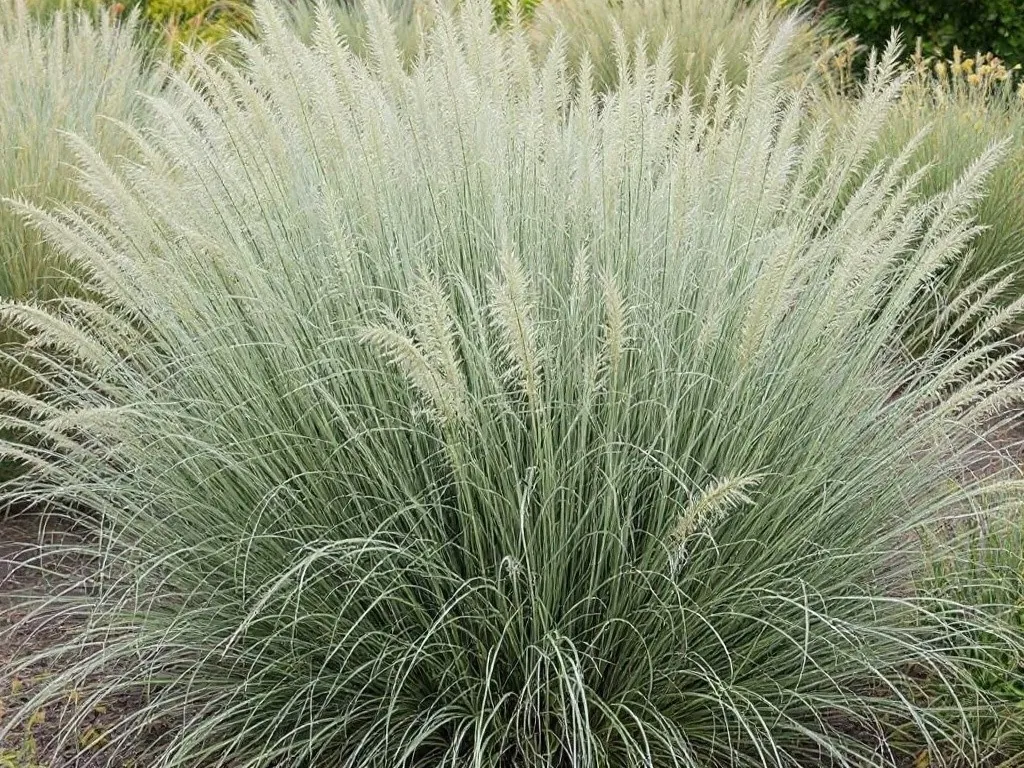
- One of the largest ornamental grasses — up to 3 m tall including the flower plumes.
- Huge, feathery plumes in white, cream, or pink from August to October.
- Needs full sun and well-drained soil; very drought-tolerant.
- Sharp, cutting leaf edges — always wear gloves and long sleeves when working with it.
- In Poland it needs a sheltered site and winter protection.
- A striking specimen plant and architectural garden feature, visible from afar.
Botanical data
- Family
- Poaceae (Poaceae)
- Height
- 2–3 m
- Width
- 1.5–2.5 m
- Habit
- Clump-forming
- Growth rate
- Fast
- Position
- Full sun
- Soil
- Sandy, Loamy, Humus-rich
- pH reaction
- pH 5.5–7.5
- Moisture
- Dry, Moderate
- Bloom
- August–October
- Hardiness
- USDA 7a–10b
- Propagation
- By division, From seed
Characteristics
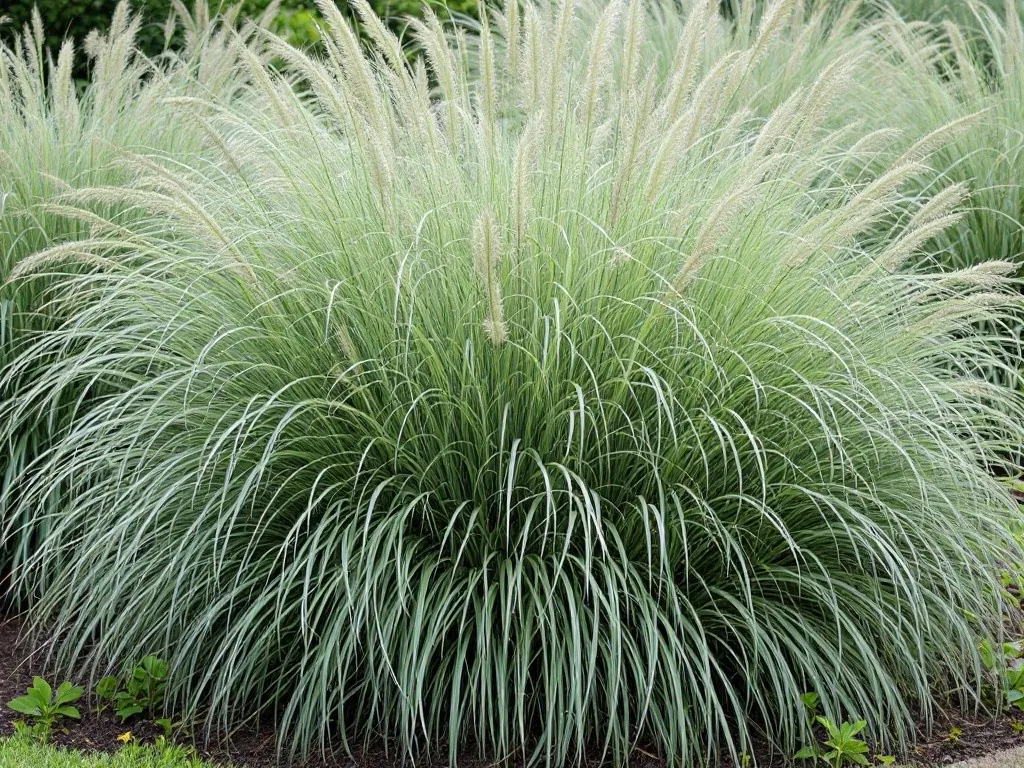
Forms a massive, dense clump of narrow, gray-green to silvery leaves with sharp, serrated edges. In summer, stiff, tall stems shoot up from it, topped with large, fluffy plumes — dense and snow-white on female plants, more modest and narrower on male plants. The plumes stay ornamental practically until spring, swaying beautifully in the wind and catching frost.
Growing and care
Watering
Very drought-tolerant after the first season and once fully established; doesn't tolerate consistently wet, heavy soil.
Fertilizing
Undemanding — on very fertile soil it grows excessively lush and overwinters less well.
Planting
Plant in a wind-sheltered spot, in well-drained, not overly fertile soil in full sun; appreciates a warm, south-facing position against a wall or fence.
Pruning
Cut the entire clump back low to the ground, ideally tying it up with rope at several points first, which makes it easier to remove the cut material and protects new shoots from damage.
Companion plants
Good companions
Similar needs — full sun and well-drained soil; low, autumn-blooming perennials create a nice contrast with the huge, towering clump of pampas grass.
Shared dry, sunny site typical of Mediterranean- or coastal-style plantings, where pampas grass serves as a striking architectural accent.
Bad companions
The huge, dense clump, up to 3 m tall, casts heavy shade and draws water away from plants growing right next to it, and its sharp leaves make maintenance nearby difficult.
The evidence level indicates whether the relationship is backed by research, observation, or gardening tradition.
Toxicity
| For whom | Level | Notes |
|---|---|---|
| Humans | None | Non-toxic, but the sharp leaf edges can cause mechanical cuts. |
| Dogs | None | — |
| Cats | None | — |
History and origin
It reached Europe in the 19th century as a sensational novelty from South America and quickly became a symbol of Victorian and Edwardian gardens, where it was planted as a single, striking accent on the lawn. In some warm-climate regions (including the UK, USA, New Zealand, Australia, and Portugal) it has escaped cultivation and is considered an invasive species that displaces native vegetation in coastal and disturbed habitats.
Uses
A striking specimen plant in the middle of a lawn, in large gardens, parks, and expansive borders as an architectural focal point. It also works well as a natural, seasonal screen from view or wind in large spaces. Dried plumes are used in decorations and floral arrangements.
Trivia
- Pampas grass flower heads are dioecious — female plants have denser, more magnificent plumes than male plants, which is why nurseries mainly recommend female cultivars or sterile cultivars.
- In some countries (such as New Zealand, Hawaii, or parts of the USA), the sale and planting of pampas grass is restricted or banned due to its invasiveness — in Poland, the risk of self-seeding is much lower because of the climate.
- When dried, the plumes hold their shape and color for a long time, which is why they're often used in interior decor and dried flower arrangements.
Frequently asked questions
When should pampas grass be pruned?
In early spring, in March, before new growth starts — cut the whole clump back low to the ground. It helps to tie it up with rope first, which makes the work and cleanup easier; leave the dry plumes standing over winter as decoration. Always work with gloves and long sleeves, since the leaves have sharp, cutting edges.
Is pampas grass invasive, and will it spread through the garden?
In warmer climates (such as parts of the USA, New Zealand, and the UK) it can self-seed and is considered invasive there. In Poland's cooler climate, self-seeding is much rarer, and the plant itself grows into a compact clump that slowly expands — not by runners.
Will pampas grass survive a Polish winter?
Its cold hardiness (zones 7a–10b) is lower than that of most popular ornamental grasses, so in Poland it needs a sheltered, warm site (e.g., against a wall, in a city) as well as winter protection — tying the stems into a bundle and mounding/covering the base of the clump with a layer of bark, leaves, or garden fleece. In cooler regions of the country, it's better grown in a large pot that can be moved to an unheated space.
Sources
- Plants of the World Online (POWO)Database (GBIF, POWO…)
- RHS — Cortaderia selloanaInstitution / botanical garden
My note
A private note for this plant — saved in your browser.