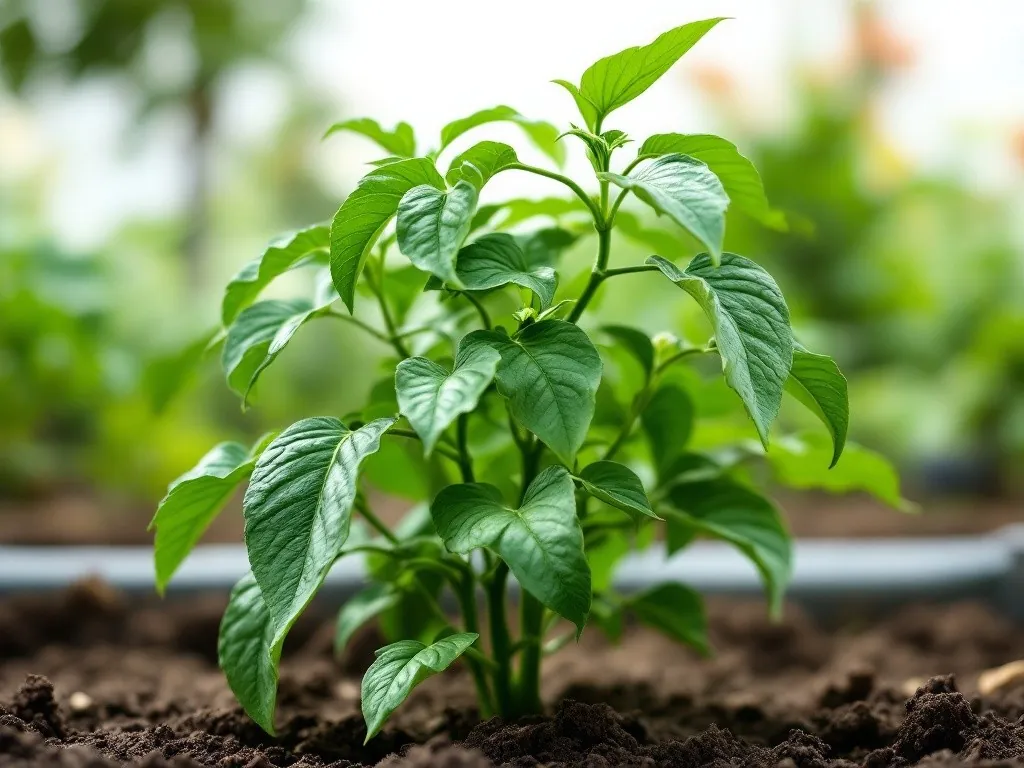
In short
- Warmth-loving — plant out only after the last frosts.
- Requires full sun, warmth and a sheltered position.
- Regular watering prevents blossom-end rot of the fruits.
- The heat of chilli varieties comes from capsaicin.
- Grows well in containers on a sunny balcony.
Botanical data
- Family
- Solanaceae (Solanaceae)
- Height
- 0.4–1 m
- Width
- 0.3–0.5 m
- Habit
- Upright
- Growth rate
- Moderate
- Position
- Full sun
- Soil
- Humus-rich
- pH reaction
- pH 6–6.8
- Moisture
- Moderate
- Bloom
- June–August
- Hardiness
- USDA 9a–11b
- Propagation
- From seed
Characteristics
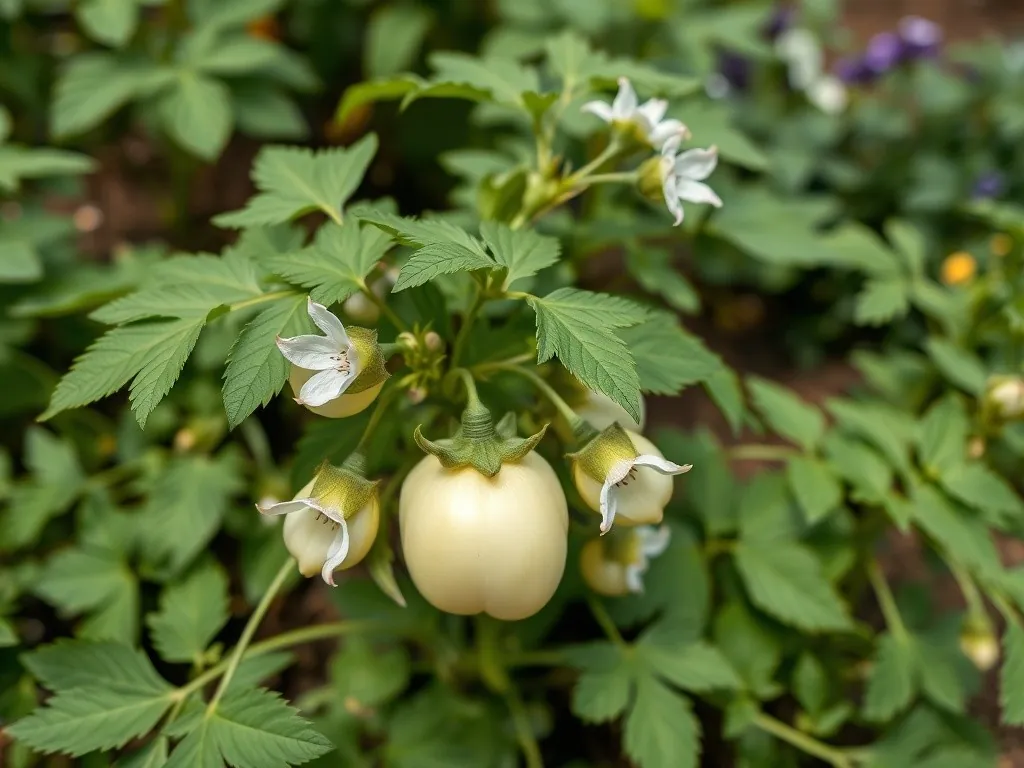
A bushy plant with a branched stem, oval leaves and small, white flowers. The fruit is a hollow berry that varies in shape, size, colour and heat depending on the variety.
Growing and care
Watering
Requires regular, even watering at the base; irregular watering encourages blossom-end rot of the fruits.
Fertilizing
High potassium supports fruiting; excess nitrogen produces lush foliage at the expense of fruit.
Planting
Fertile, warm, free-draining soil; a very sunny and sheltered position — the pepper is warmth-loving.
Pruning
Remove the first flower (the so-called crown flower) for better branching; support plants laden with fruit.
Companion plants
Good companions
Basil, as with tomatoes, can repel some of the pests that attack peppers; both like warmth and sun.
Bad companions
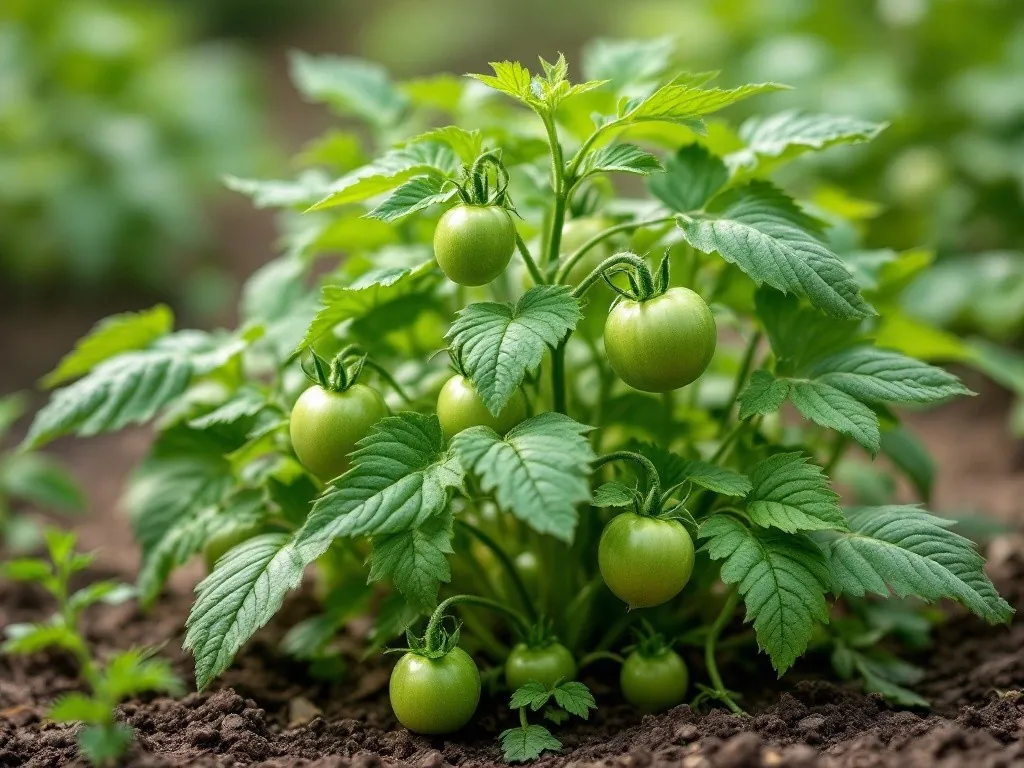
Both nightshade vegetables are susceptible to the same diseases (e.g. blight) and pests — proximity increases the risk of their transmission.
The evidence level indicates whether the relationship is backed by research, observation, or gardening tradition.
Diseases and pests
A white, powdery coating on leaves, shoots and buds. The leaves turn yellow, become deformed and drop prematurely.
AphidsSmall (1–3 mm) soft-bodied insects, green, black or pink, feeding in clusters on young shoots and the underside of leaves. They excrete sticky honeydew.
Greenhouse whiteflyTiny (1–2 mm) white insects resembling minuscule moths that rise in a cloud when the plant is disturbed. They feed on the underside of leaves, sucking sap and excreting honeydew. This causes yellowing and weakening. Common on tomatoes, peppers, cucumbers and pelargoniums, especially in polytunnels and greenhouses.
Spider mitesTiny (0.3–0.5 mm) arachnids, hard to spot with the naked eye, feeding on the underside of leaves. Symptoms: fine, pale speckling (feeding punctures); over time the leaves turn grey, yellow and dry out. Under heavy infestation a fine webbing becomes visible. Warm, dry air favours their development — a common problem for houseplants in winter near radiators.
Toxicity
| For whom | Level | Notes |
|---|---|---|
| Humans | None | — |
| Dogs | Mild | Hot varieties (capsaicin) can irritate animals' digestive tract. |
| Cats | Mild | — |
History and origin
Peppers were cultivated in Central and South America for thousands of years. After Columbus's voyages they reached Europe and Asia, revolutionising cuisines around the world — especially the hot chilli varieties.
Uses
For growing in the ground, in polytunnels, greenhouses and in containers on a sunny balcony. The fruits are eaten raw, cooked, dried and ground into a spice.
Trivia
- The heat of peppers is measured on the Scoville scale; sweet peppers have 0 units, while the hottest varieties exceed 2 million.
- Capsaicin, the compound responsible for the heat, is not perceived by birds — a natural mechanism for seed dispersal.
Frequently asked questions
Why do peppers set fruit poorly?
The most common causes are too low a temperature (the pepper is warmth-loving), lack of pollination in the heat, or excess nitrogen producing leaves at the expense of fruit. Warmth, sun and a potassium fertiliser are key.
Can sweet and hot peppers grow next to each other?
They can, but if you are growing them for your own seed there is a risk of accidental cross-pollination, which may change the heat in the next generation. For simply eating the fruit in a given season, the proximity does no harm.
Can peppers be grown in a container?
Yes, excellently — especially compact and chilli varieties. It needs a large, sunny container, regular watering and feeding with potassium.
Sources
- Plants of the World Online (POWO)Database (GBIF, POWO…)
- RHS — PeppersInstitution / botanical garden
My note
A private note for this plant — saved in your browser.