In short
- Flowers earliest of all fruit trees, as early as the end of March — frosts destroy the flowers in many years.
- Fruits irregularly: in Polish conditions one can realistically count on a good crop roughly every 2–3 years.
- Likes well-drained, warm soils rich in calcium — as one of the few fruit trees it tolerates a slightly alkaline reaction well; it does not, however, tolerate standing water, which leads to apoplexy (the sudden death of the tree).
- Prune only in summer, after harvest — winter pruning risks gummosis and bacterial canker.
- Most cultivars are self-fertile, so a second cultivar is not necessary, although it improves the crop.
- The seeds inside the stones contain a lot of amygdalin — they must not be eaten raw.
Botanical data
- Family
- Rosaceae (Rosaceae)
- Height
- 3–6 m
- Width
- 3–6 m
- Habit
- Spreading
- Growth rate
- Moderate
- Position
- Full sun
- Soil
- Sandy, Loamy, Chalky, Humus-rich
- pH reaction
- pH 6.5–7.8
- Moisture
- Dry, Moderate
- Bloom
- March–April
- Hardiness
- USDA 5a–9a
- Propagation
- From cuttings, From seed
Characteristics
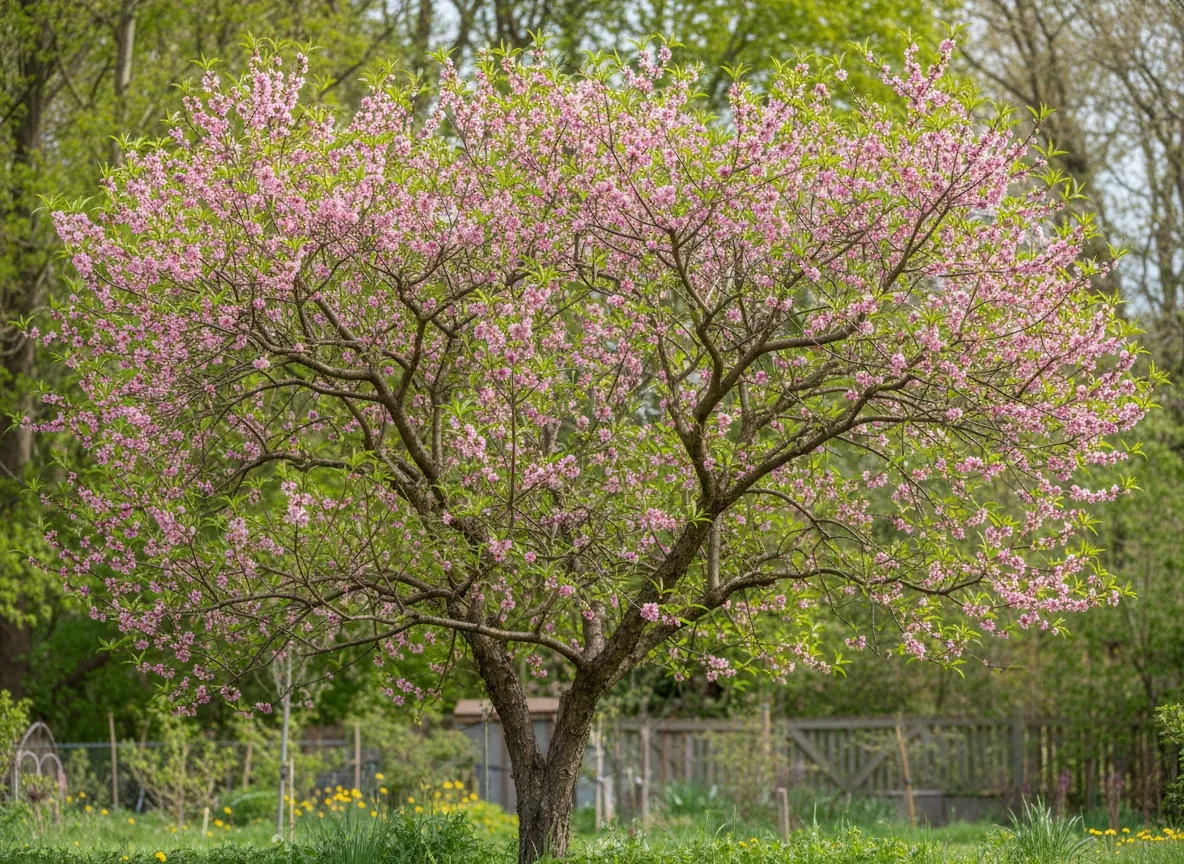
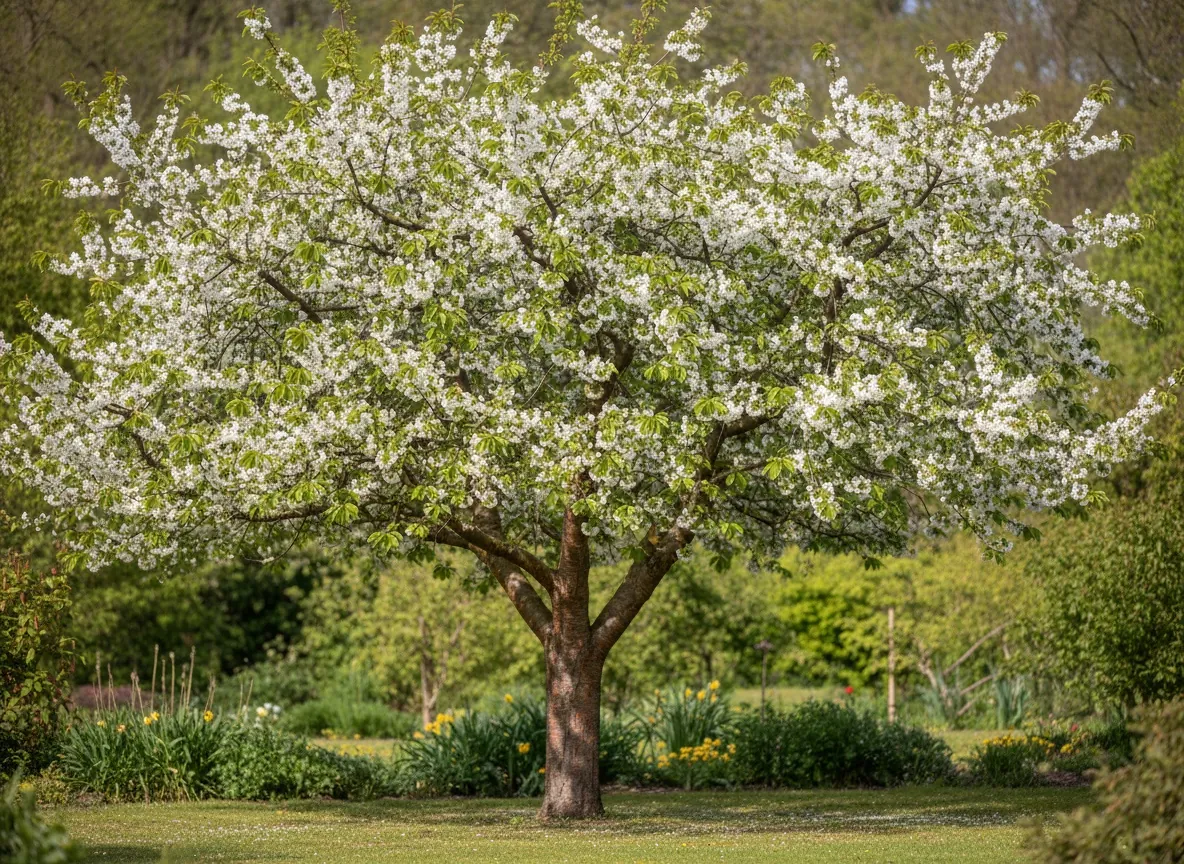
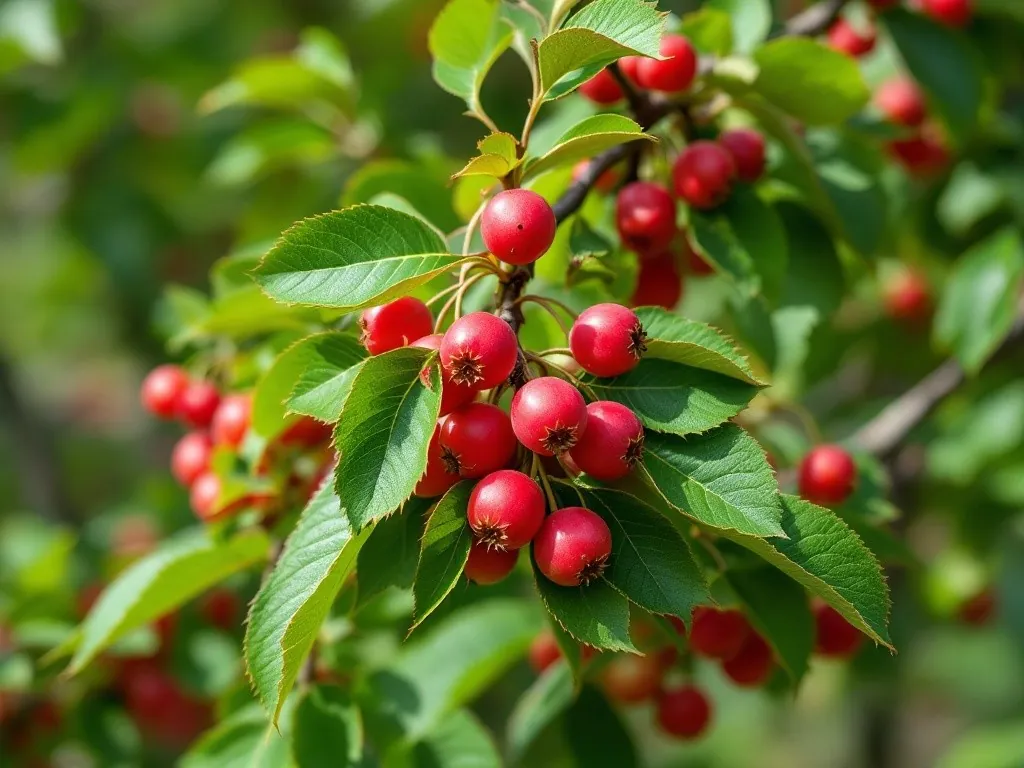
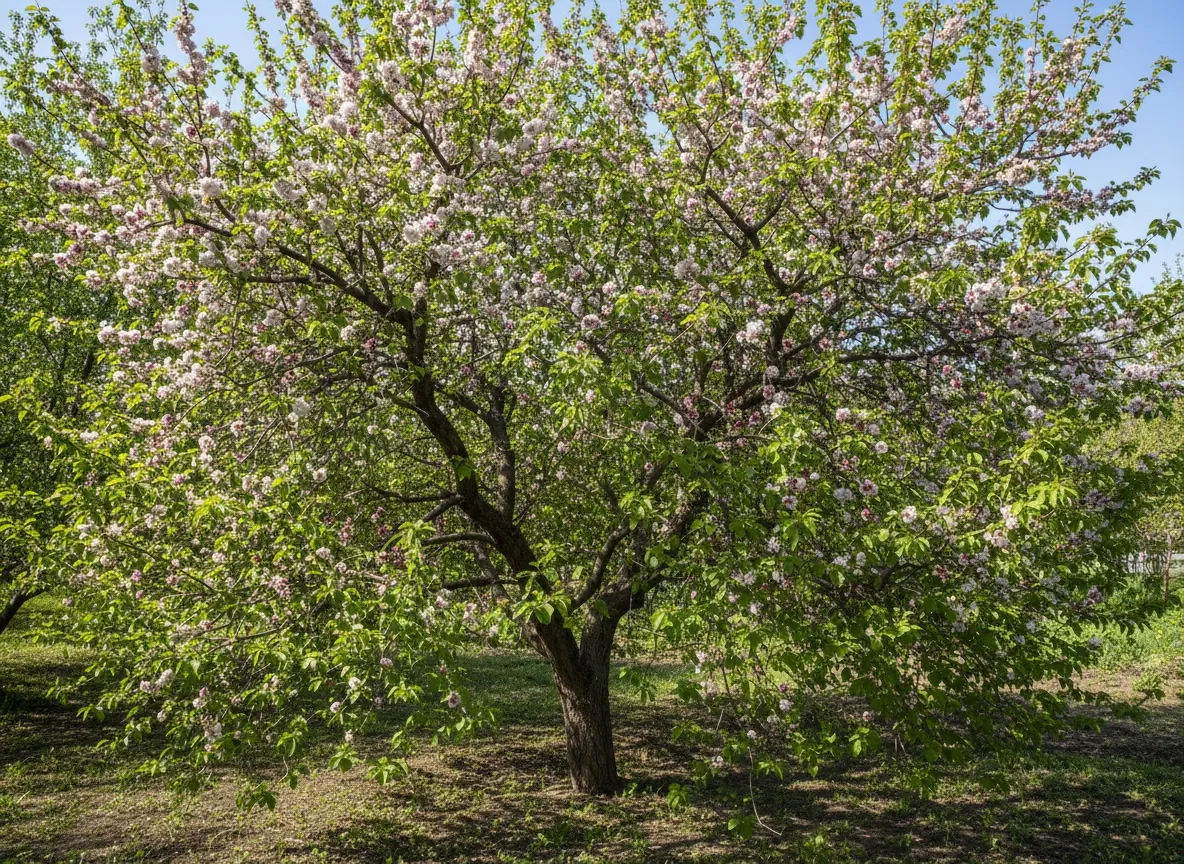
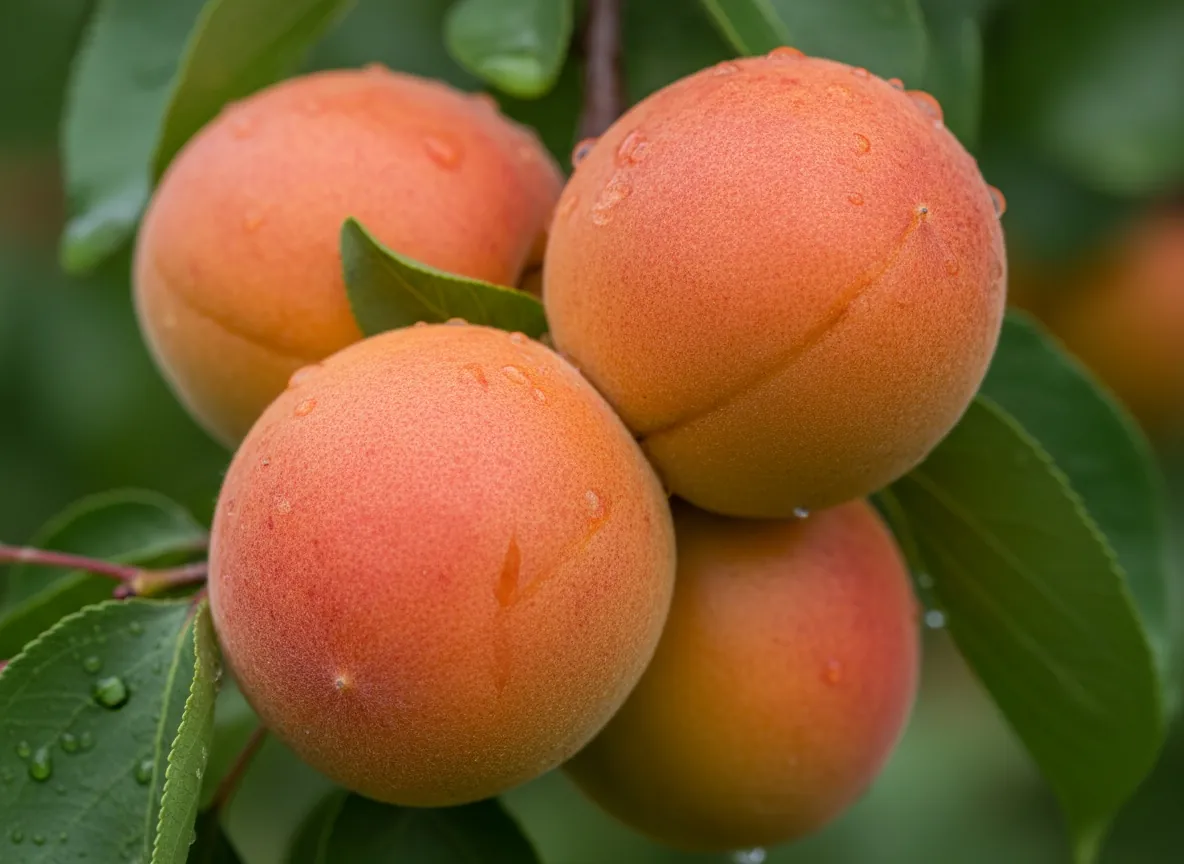
A tree with a broad, spreading, fairly low crown and red-brown bark that cracks with age. The leaves are the key to identifying the species: broadly ovate to almost round, with a heart-shaped base and a short-pointed tip, on long stalks — quite unlike the narrow, lanceolate leaves of the peach. The flowers are white to pale pink, almost sessile, and open on bare shoots before the leaves, giving the characteristic effect of flowering, leafless branches. The fruit is a velvety drupe, orange with a reddish blush, with a stone that is smooth and separates easily from the flesh — unlike the deeply furrowed stone of the peach.
Growing and care
Watering
The apricot withstands drought better than the peach, but does not tolerate standing water at all. Disturbances of the water balance and root diseases on heavy, waterlogged soils are one of the causes of so-called apricot apoplexy — the sudden death of an apparently healthy tree within a few weeks.
Fertilizing
Sparingly. Excess nitrogen prolongs shoot growth into late summer, lowers their winter hardiness and markedly aggravates gummosis and bacterial canker — and these are the main causes of apricot dieback in Polish gardens.
Planting
A well-drained, warm soil rich in calcium — the apricot is one of the few fruit trees that does well on a slightly alkaline substrate. An airy position, never in a hollow (a frost pocket). A paradox worth knowing: the warmest, south-facing wall can be a bad choice — it hastens flowering and increases the frost risk, whereas a cooler north or east aspect delays flowering by a few days and can be safer.
Pruning
Limit yourself to thinning the crown and removing diseased, damaged and inward-growing shoots. The apricot fruits on spurs and on one-year-old shoots, so it needs moderate rejuvenation, but not pruning as hard as the peach.
Companion plants
Good companions
Both species flower very early and need the same warm position sheltered from wind — in the garden it is worth grouping them together in the best-protected spot.
Planted in the tree circle, its strong scent traditionally deters aphids feeding on the young shoots of the apricot.
It has almost identical requirements — full sun, dry, well-drained, calcareous soil — so it will fill the apricot's tree circle without conflict, while attracting pollinators at the same time.
Bad companions
Species of the genus Prunus are very sensitive to juglone — an allelopathic compound released by the roots of black walnut, inhibiting their growth and leading to dieback.
Keeping the substrate permanently wet in the apricot's tree circle favours root diseases and apoplexy — the sudden death of the tree. The apricot needs a well-drained and rather dry soil.
The evidence level indicates whether the relationship is backed by research, observation, or gardening tradition.
Toxicity
| For whom | Level | Notes |
|---|---|---|
| Humans | Mild | The flesh of the fruit is fully edible and safe. Beware of the seeds hidden inside the stones: they contain large amounts of amygdalin, which releases hydrogen cyanide in the body. EFSA warns that even a few raw apricot kernels can cause symptoms of poisoning in an adult, and in a child one is enough. Apricot kernels sold as “vitamin B17” or “laetrile” do not cure cancer and are dangerous. |
| Dogs | Mild | The hazard is chewed stones and leaves; the flesh is safe. A whole stone swallowed by a dog also risks obstructing the digestive tract. |
| Cats | Mild | The risk concerns mainly chewed stones and leaves. |
| Horses | Moderate | Wilting leaves of plants in the genus Prunus release particularly large amounts of hydrogen cyanide — prunings must not be thrown onto pasture. |
History and origin
The apricot comes from China and Central Asia, where it was cultivated for millennia, and in the valleys of Central Asia it remains to this day the mainstay of local fruit growing and dried fruit production. It reached the Mediterranean world through Persia and Armenia — and it was Armenia that the Romans mistakenly took for its homeland, entrenching the error in the scientific name Prunus armeniaca. In Poland the apricot was for centuries a rarity of manor and monastery gardens; its wider cultivation by amateurs became possible only thanks to cultivars with a later flowering time.
Uses
For home gardens in the warmer regions of the country, in the best-sheltered and airy positions — only with the realistic assumption that the crop will not be annual. The fruits are eaten raw and processed into jams, preserves, liqueurs and dried fruit. Flowering on bare shoots, the apricot is one of the first and most striking accents of early spring in the garden.
Trivia
- The species name armeniaca is a historical mistake — the Romans thought the apricot came from Armenia, whereas its homeland is China and Central Asia.
- The apricot is most easily distinguished from the peach by leaf and stone: the apricot has broad, almost heart-shaped leaves and a smooth stone; the peach — narrow, lanceolate leaves and a deeply furrowed stone.
- Apricot flowers die at around −2 °C, which is why in cooler regions it is deliberately planted on the north side of a building — the cooler position delays flowering by a few days and can be the salvation of the crop.
Frequently asked questions
Why does the apricot flower but not fruit?
In Polish conditions frosts are almost always to blame. The apricot flowers earliest of all fruit trees — as early as the end of March — and open flowers die at around −2 °C. Added to this is the absence of bee flight in cool weather (below about 12 °C the flowers remain unpollinated) and the freezing of flower buds during the thaw-frost cycle typical of early spring. The lack of a second pollinating cultivar is usually not the cause, because most apricot cultivars are self-fertile. Realistically: a good crop happens in Poland roughly every 2–3 years.
Where should an apricot be planted so that it fruits more often?
The position should be warm and sheltered from wind, but airy — never in a hollow, where on windless nights cold air flows down and stagnates. Counter-intuitively, the warmest south wall can be a poor choice: it hastens flowering and increases the frost risk. A north or east aspect delays flowering by a few days, which is often enough for the flowers to survive. The soil must be well-drained, warm and rich in calcium. The biggest difference, however, is made by choosing a late-flowering cultivar.
Are apricot stones poisonous?
The seeds hidden inside the stones contain large amounts of amygdalin, which releases hydrogen cyanide in the body. The European Food Safety Authority (EFSA) assessed that a safe single portion for an adult is about three small raw kernels, while for a small child even one may be too many. Eating the kernels as a supposed anti-cancer remedy under the name “vitamin B17” or “laetrile” is particularly dangerous — there is no evidence of efficacy, but there are documented poisonings. The flesh of the fruit itself is of course completely safe.
Sources
- Plants of the World Online (POWO)Database (GBIF, POWO…)
- RHS — Prunus armeniaca (apricot)Institution / botanical garden
- EFSA — Ocena ryzyka związanego z obecnością glikozydów cyjanogennych w pestkach moreliInstitution / botanical garden
My note
A private note for this plant — saved in your browser.